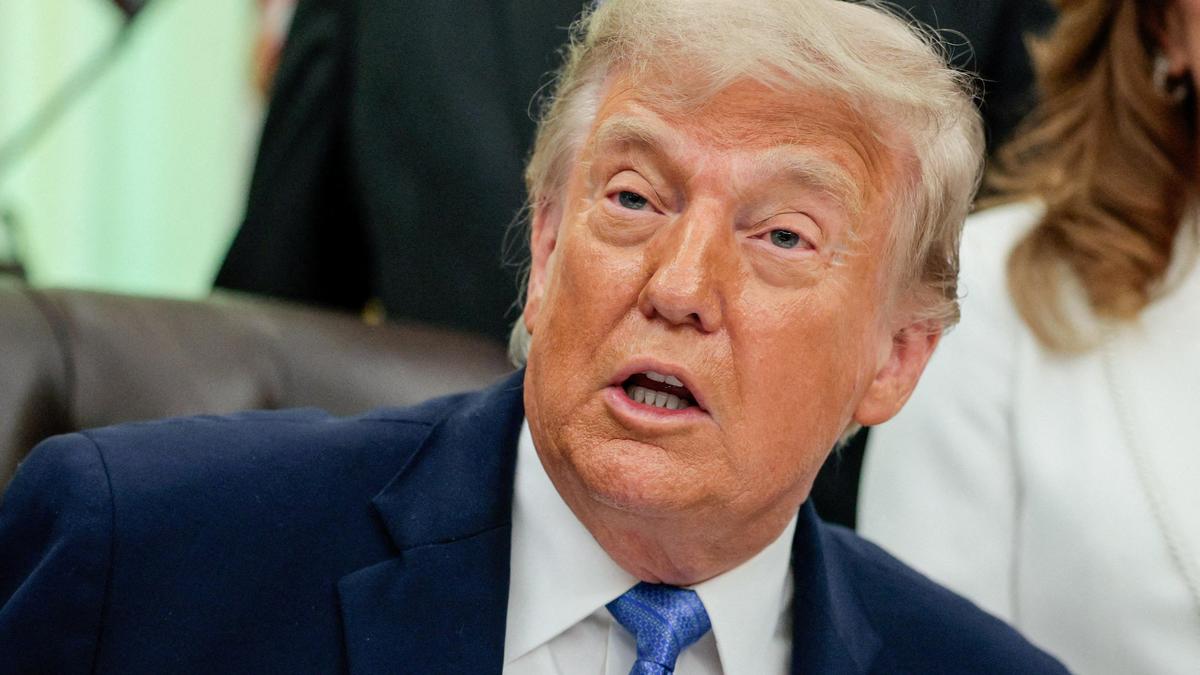
Brent crude jumped 5.8% to $91.40 after Trump threatened to seize Iran's Kharg Island terminal. The Strait of Hormuz closure is the bigger risk for global supply.
Crude oil surged past $90 a barrel on Thursday after President Donald Trump threatened to seize Iran's Kharg Island, the terminal that handles roughly 90% of the country's crude exports. The threat came alongside a warning of renewed US strikes "very hard tonight" against Iranian military targets.
Brent crude rose 5.8% to $91.40 a barrel in afternoon trading. West Texas Intermediate hit $87.70. The jump was the largest single-day move since the initial US strikes on Iran began last week.
Trump's post on Truth Social said the US would "assume total control of their Oil and Gas Markets, much like we have with Venezuela." He drew a direct line between the Kharg Island threat and the ongoing military campaign, which Centcom said Wednesday had targeted Iranian military surveillance, communication systems, and air defense sites.
Kharg Island sits in the northern Persian Gulf, roughly 30 km off Iran's coast. It handles most of Iran's 1.5 million barrels per day of crude exports. A seizure would effectively cut off Iran from the global oil market overnight.
What a seizure would mean for flows
Iran exported roughly 1.5 million bpd in March, mostly to China via ship-to-ship transfers in the South China Sea and off Malaysia. A Kharg Island seizure would halt those flows at the source. China's independent refiners – the main buyers of Iranian crude – would need to replace those barrels with Russian ESPO, Saudi Arab Light, or other grades, likely at higher delivered costs.
The Strait of Hormuz remains the bigger risk. Iran closed the strait on Wednesday after the first wave of US strikes, according to Iranian state media. The strait handles about 20 million bpd of crude and products – roughly a fifth of global consumption. A prolonged closure would push oil well above $100, traders said.
Supply cushion is thin
OPEC+ has roughly 5 million bpd of spare capacity, mostly in Saudi Arabia and the UAE. That cushion assumes the strait stays open. If Hormuz is blocked, spare capacity inside the Gulf is as trapped as Iranian barrels. The only swing barrels outside the strait are in the US, Brazil, and Guyana – about 2 million bpd of combined spare capacity.
The US Strategic Petroleum Reserve holds about 370 million barrels, down from 638 million in 2021. The IEA's coordinated release mechanism could add another 1.5 million bpd for six months, that assumes member states have the logistics to deliver.
Diplomatic track is still alive
CNN reported Thursday that US-Iran talks continued overnight despite the exchange of strikes, citing a diplomatic source. Trump's post came hours after those reports. The mixed signals – simultaneous threats and negotiations – are consistent with the administration's approach to Venezuela, where sanctions pressure and back-channel talks ran in parallel for months.
Traders are watching for any confirmation that the Kharg Island threat is operational planning rather than negotiating posture. A US naval buildup near the island would be the clearest signal. So far, Centcom has not announced any change in force posture beyond the existing carrier strike group in the Arabian Sea.
What would confirm the risk
The threat is real if the US moves amphibious or Marine assets into the northern Gulf. It is posture if the diplomatic track produces a framework deal within days. The Venezuela comparison cuts both ways: the US took control of Citgo's refineries and PDVSA's US assets, never seized Venezuelan oil infrastructure inside the country.
For crude, the next marker is the Strait of Hormuz. If Iran reopens it, the Kharg Island threat becomes a premium on Iranian barrels only. If it stays closed, the entire Gulf supply chain is disrupted, $100 crude becomes the floor, not the ceiling.
Prepared with AlphaScala research tooling and grounded in primary market data: live prices, fundamentals, SEC filings, hedge-fund holdings, and insider activity. Each story is checked against AlphaScala publishing rules before release. Educational coverage, not personalized advice.