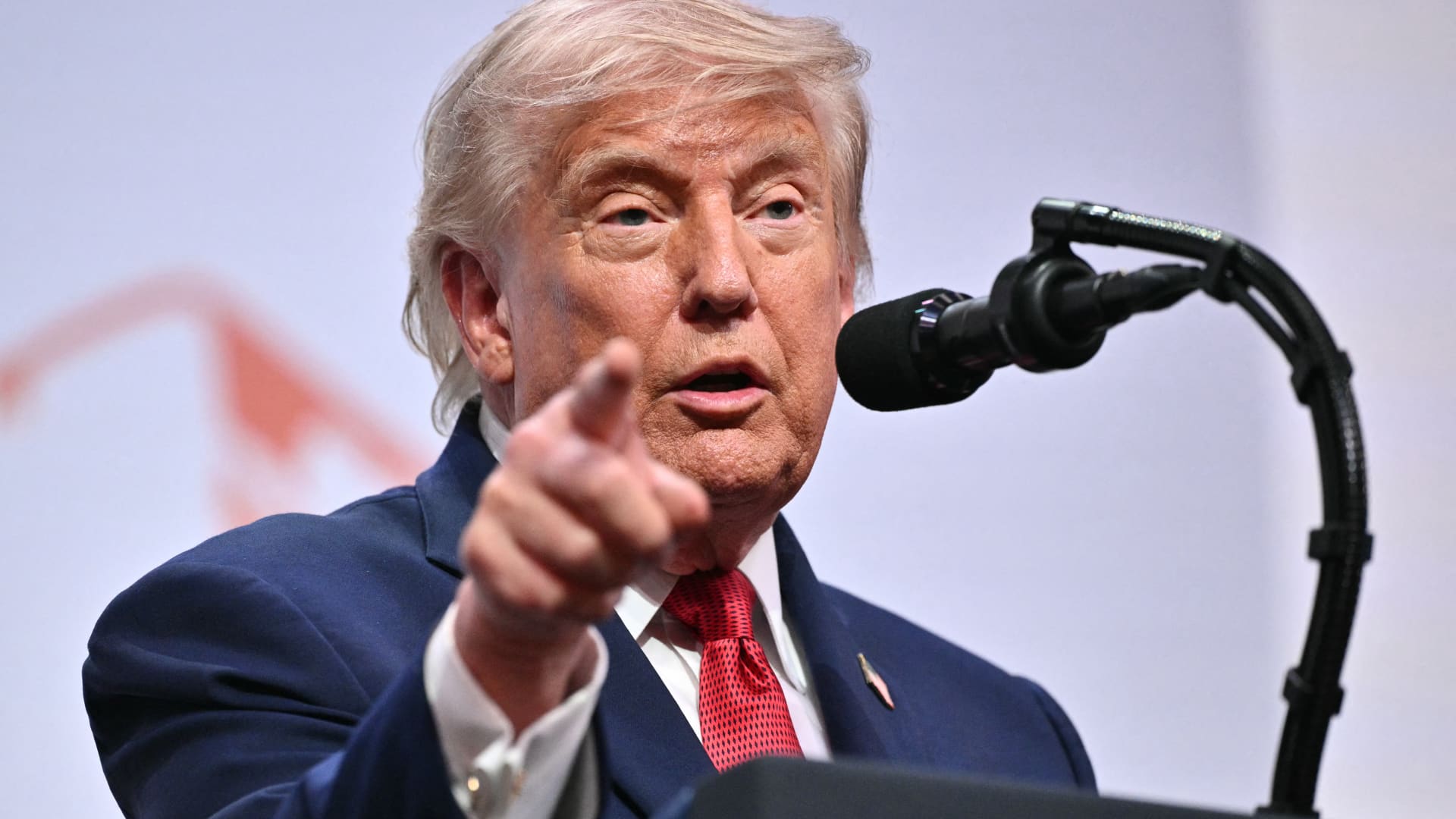
President Donald Trump said Wednesday he likes the idea of blaming Vice President JD Vance if the Iran negotiations collapse. Speaking at the G7 summit in Évian-les-Bains, France, Trump told reporters he might stay in Europe to sign a memorandum of understanding with Iran. He immediately added he might not.
Fox News' Peter Doocy asked why Trump would not stick around for the signing ceremony. When Trump hedged, Doocy floated a strategy: send Vance to sign, take credit if it works, blame Vance if it fails.
"Sure, this way, if it works out, I'm going to take the credit. If it doesn't work out, I'm blaming JD," Trump said.
He then warned Vance: "You better be careful, JD. He's going to turn his plane around and get the hell out of here." Trump called the idea "a good idea."
The comments inject a fresh dose of uncertainty into already fragile talks. The Iran negotiations have swung between progress and stalemate for months. The U.S. and Iran are exploring a new framework after the 2015 nuclear deal collapsed. An agreement would lift sanctions on Iranian oil exports, potentially adding millions of barrels per day to global supply. That prospect has kept crude prices under pressure whenever deal rumors surface. A failure would likely push oil higher.
Trump's willingness to sidestep responsibility if talks fail raises questions about the administration's commitment. The memorandum of understanding is not a full treaty. That distinction matters for markets because a memorandum is easier to walk away from. Traders reading the president's remarks will see a leader already preparing an exit ramp.
The dynamic also creates a new layer of political risk for the dollar and stocks exposed to Middle East tension. A stable Iran deal would lower geopolitical risk premiums, benefiting airlines and consumer discretionary sectors while pressuring defense stocks and oil producers. A collapse would have the opposite effect.
Trump's comment about blaming Vance is more than a quip. It signals that the president views the deal's success as optional, not essential. That perception alone can move markets. Currency traders may price a higher risk premium into the dollar if negotiations stall. Oil options will likely see increased volatility as the deadline for a firm agreement approaches.
The press conference gave no specific timeline for a deal. Trump said he might stay in Europe to sign the memorandum, then immediately suggested he might not. That ambiguity is itself a catalyst. Until the memorandum is signed or abandoned, the market must weigh two sharply different outcomes: a deal that opens Iran's oil supply and stabilizes the region, or a failure that leaves sanctions intact and tensions unresolved.
The only hard fact from Wednesday is that Trump wants to avoid blame if things go wrong. That may be the most market-relevant signal of all.