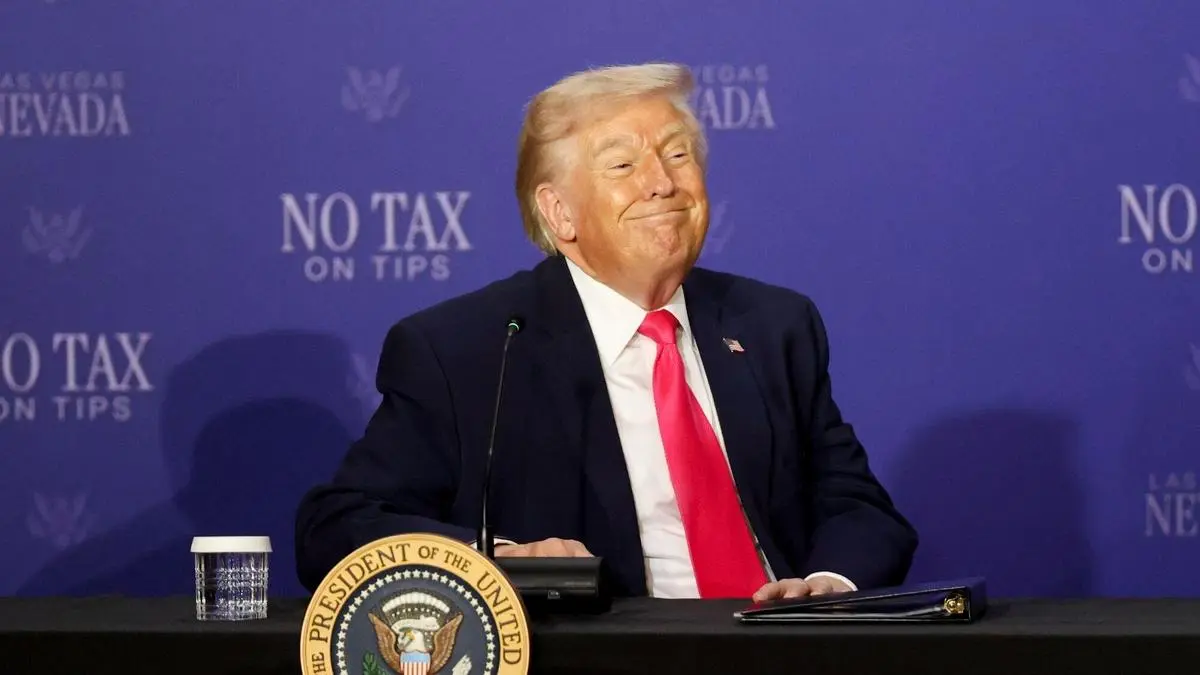
Trump Claims Negotiation Breakthrough on Iranian Nuclear Material

Former President Donald Trump claims Iran has agreed to return nuclear material to the US as part of ongoing peace negotiations.
Former President Donald Trump stated that Iran has agreed to return a quantity of what he described as "nuclear dust" to the United States. The claim emerged as part of his broader rhetoric regarding ongoing peace negotiations aimed at curbing Tehran's nuclear weapon ambitions.
Geopolitical Shifts and Market Pricing
Geopolitical volatility often forces a flight to safety, typically benefiting assets like the gold profile or the U.S. Dollar. While the specific nature of the "nuclear dust" remains technically opaque, any tangible de-escalation in Middle Eastern nuclear tensions carries weight for regional stability. Markets generally price in "geopolitical risk premiums" when tensions flare, so a move toward disarmament can trigger a reversal in safe-haven flows.
Traders should monitor how this narrative impacts crude oil profile futures. The Middle East remains the primary variable in global supply chains, and any sign of a deal that could eventually lead to the easing of sanctions—and the subsequent return of Iranian barrels to the global market—would exert downward pressure on prices. The energy sector often reacts faster to diplomatic signals than to broader macro data.
Evaluating the Diplomatic Signal
From a market perspective, the credibility of such statements is as important as the substance. Institutional desks look for verification from the IAEA or State Department before adjusting long-term positions. Until then, the market treats these claims as tactical noise rather than structural shifts.
- Monitor official IAEA reports for verification of material transfer.
- Watch for shifts in the S&P 500 energy sector components.
- Track USD strength against regional currencies if tensions de-escalate.
Implications for Asset Allocation
If this negotiation path holds, expect a potential compression in energy volatility. Traders currently long on oil based on a "war premium" face the risk of a sharp correction if the narrative shifts toward a verifiable agreement. Conversely, if the claim is dismissed as campaign rhetoric, the focus will quickly return to baseline supply-demand fundamentals.
Markets react to the perception of stability. If investors believe the risk of a regional nuclear conflict is receding, we may see a rotation out of defensive positions and back into higher-beta equity sectors. Keep a close eye on the market analysis desk for updates on how these diplomatic headlines correlate with daily price action in the energy and precious metals complex.
AI-drafted from named primary sources (exchange feeds, SEC filings, named news wires) and reviewed against AlphaScala editorial standards. Every price, earnings figure, and quote traces to a specific source.