Stocks● Neutral
Trump calls Modi, Xi 'greatest leaders': What it means for India-US trade risk
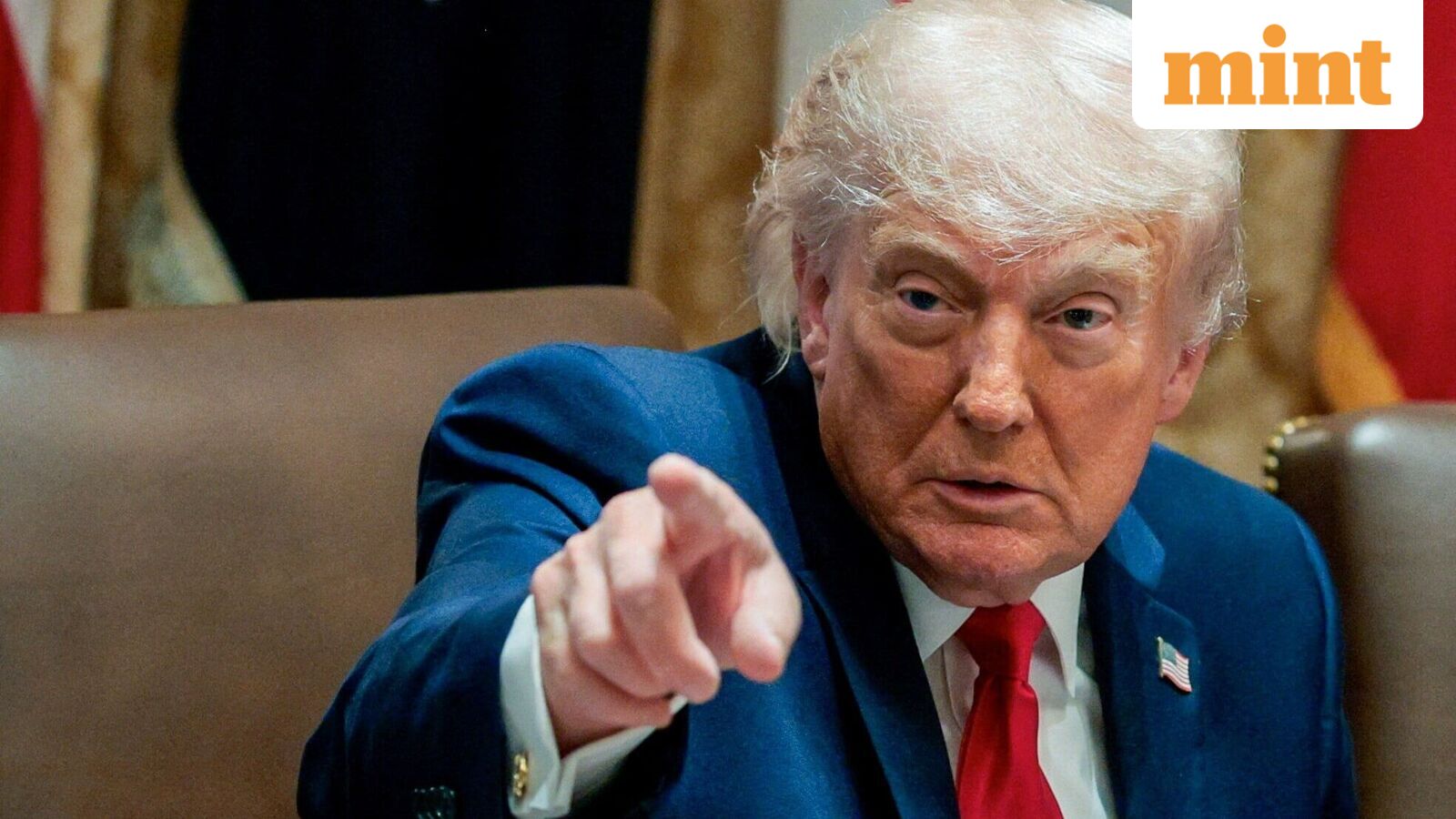
Trump called Modi and Xi the 'two greatest' world leaders in an Axios interview. For India-US trade policy, his language on tariffs and his admiration for Xi signal sustained pressure ahead.
Continue with
Donald Trump called Prime Minister Narendra Modi and Chinese President Xi Jinping the two greatest leaders on the world stage, while sitting for an Axios interview Thursday. The remarks came just after Trump returned from the G7 summit in France. For anyone tracking India, US, and China tariff policy, the language matters more than the compliment.
Trump said Modi “stays out of wars which is smart” and that “India is actually the biggest” at 1.5 billion people. He also said “they used to really rip us off” on tariffs, adding “now we do fair business” and that India “is not happy” about the change. That is the core trade-risk signal: Trump’s baseline assumption is that previous US trade negotiators were weak and India was taking advantage.
The president also called Xi “the greatest” in terms of leadership and described his “look,” “height,” “stature,” and “confidence.” The contrast is not subtle. Trump holds Xi in a different category of raw power. Modi is respected as a “tough cookie” who has governed for 12 years with “great calmness.”
Trade policy read-through
A president who frames India as a former “ripper-off” and China as the gold standard of leadership does not signal a softer second-term trade approach. Trump explicitly linked Modi’s success to India’s population size, not to its trade or manufacturing policy. That suggests he sees India as a market to balance, not a strategic partner with its own leverage.
For sectors exposed to US tariff negotiations – auto parts, pharmaceuticals, IT services, steel, and agriculture – these comments are a reminder that Trump’s “fair business” frame is not a temporary posture. He believes trade deals under past administrations were one-sided and says he corrected them. If he wins a second term, India faces renewed pressure on market access and tariff reductions.
Geopolitical spillover
Trump’s elevation of Xi alongside Modi also matters for the Quad framework, Indo-Pacific strategy, and US defence posture toward China. A president who sees Xi as “the greatest” in leadership may be less inclined to confront Beijing over territory or technology. That could shift risk premiums on Indian equities that depend on US strategic backing, especially defence and semiconductor supply chain plays.