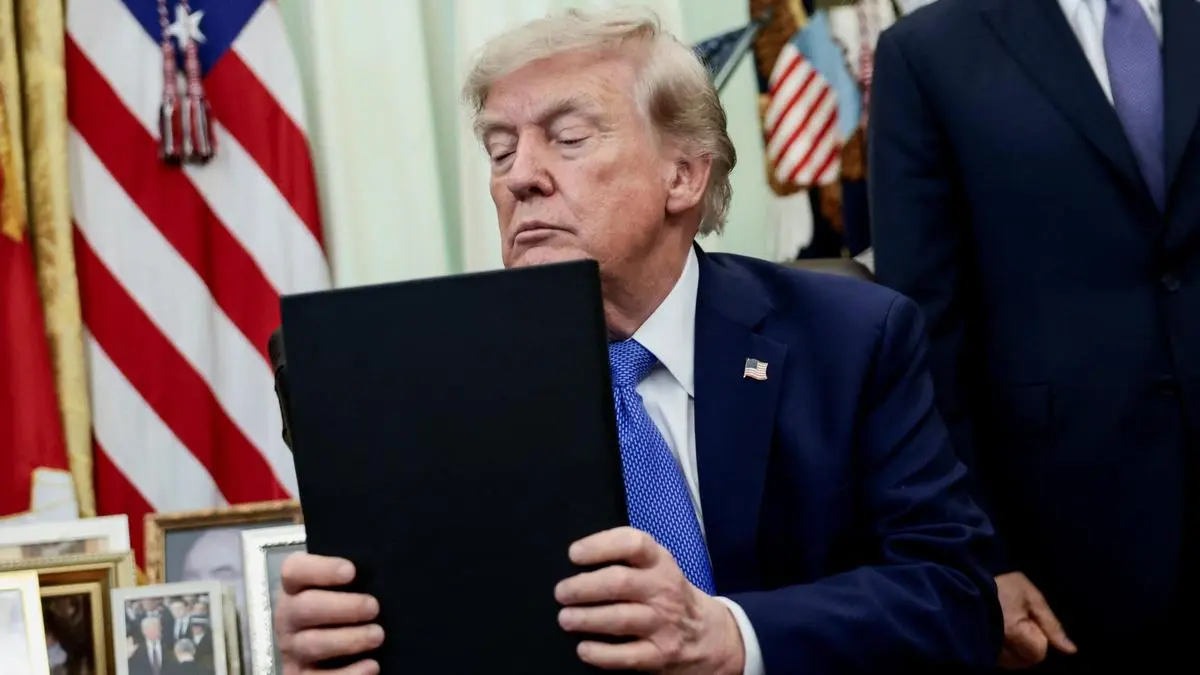
President Donald Trump signed two executive orders Thursday targeting birthright citizenship and commercial birth tourism, weeks after the Supreme Court struck down his earlier directive. One order broadens categories of people deemed ineligible for citizenship documents, including children of foreign government employees, children of terrorist group members, and children born to mothers who entered the U.S. through a commercial birth-tourism arrangement. The second order aims to deny entry to those engaged in the business of facilitating birth tourism.
Trump, speaking in the Oval Office flanked by White House Deputy Chief of Staff Stephen Miller and Commerce Secretary Howard Lutnick, called the Supreme Court's June 30 ruling against his original order “very unfortunate” and described the new moves as “making adjustments.” Miller argued that birth tourism allows foreign nationals to gain “access to welfare benefits, ultimately to the voting booth, and all the other rights and privileges that belong solely to Americans.”
Immigration lawyers and civil liberties groups immediately criticized the orders as unconstitutional. Cyrus Mehta, a New York-based immigration attorney, wrote on X that the language around “commercial transaction” is “too vague and violates the 14th Amendment.” The American Civil Liberties Union said in a statement that the Supreme Court already decided the issue and that the new order “will meet the same fate as President Trump's last one.”
A federal judge in Seattle blocked Trump's first birthright citizenship order within days of its signing. The case reached the Supreme Court, which ruled 6-3 that the president lacks authority to override the 14th Amendment. Legal experts expect the same courts to review the new orders, potentially delaying implementation for months.
The Migration Policy Institute estimates that 22,000 to 26,000 babies are born annually in the U.S. through birth tourism, though government data for 2024 recorded just 9,600 births to mothers with foreign addresses. Those births support a niche but meaningful slice of the medical-tourism economy. Hospitals in cities like Los Angeles, New York, and Miami that cater to foreign expectant mothers could see a drop in revenue if the orders hold. Hotel chains and short-term rental platforms serving families during extended stays also face reduced demand. Airlines that carry medical tourists from China, Russia, and the Middle East may see softer bookings on certain routes.
The broader immigration policy uncertainty could weigh on companies that depend on foreign-born talent, though the direct link to workforce visas is indirect. Trade groups representing hospitals and travel operators have lobbied against restrictions on medical tourism, arguing that each birth tourist generates an estimated $10,000 to $50,000 in local spending, according to industry estimates. A sustained legal fight could keep the orders in limbo for a year or more, giving affected sectors time to adjust.
The 14th Amendment, ratified in 1868, grants citizenship to all persons born in the United States. Trump said the amendment was intended for the children of slaves, not for “people building businesses” around birth tourism. The new orders are likely to face immediate legal challenges. A ruling from the same Seattle judge could come within weeks.