TotalEnergies ENEOS Solar Deal Tests Indonesia Coal Risk
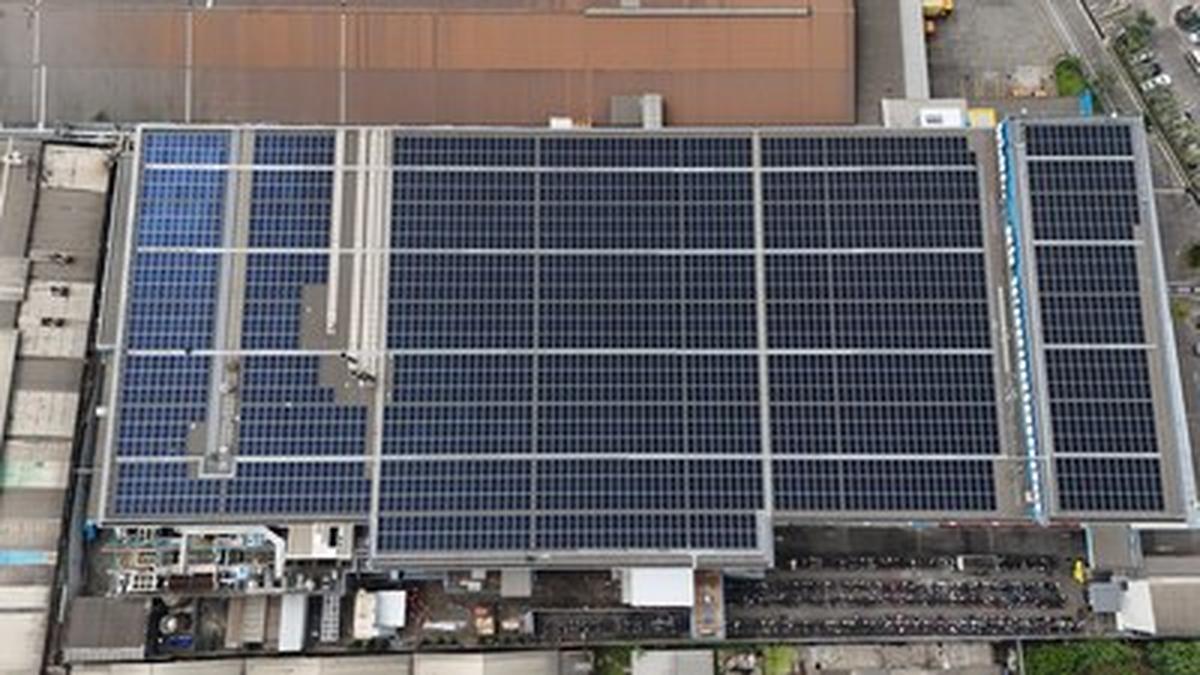
TotalEnergies ENEOS adds 1.4 MWp rooftop solar for Ceres in Bandung. The 3.6 MWp system covers 12% of power needs. The JV's 2 GW target tests whether distributed solar can slow Indonesian coal demand growth.
TotalEnergies ENEOS completed Phase 2 of a rooftop solar project with PT. Perusahaan Industri Ceres in Bandung, adding 1.4 MWp to the existing 2.2 MWp system. The combined 3.6 MWp installation produces 4,630 MWh of clean electricity annually, covering about 12 % of Ceres’ power requirements. The project was delivered under a 15‑year long‑term agreement in which TotalEnergies ENEOS develops, finances, builds and operates the system. Ceres pays only for the renewable electricity produced, with no upfront costs.
This is a test case for the joint venture’s stated plan to develop 2 GW of decentralised solar capacity across Asia over the next five years. For commodity traders tracking Indonesian coal demand, the question is whether distributed solar at industrial scale can materially alter the country’s power mix. The Ceres project alone displaces roughly 4,200 tonnes of CO₂ per year – a rounding error in the national coal fleet. The JV’s 2 GW target, if reached, would cut into incremental coal demand from the industrial sector. The risk event is whether execution, regulatory, and counterparty barriers prevent that scale‑up.
The Distributed Solar Pipeline in Indonesia
Phase 1 and 2 Delivery Details
The Ceres project sits on the manufacturer’s rooftop in Bandung. Phase 1 (September 2024) installed 2.2 MWp. Phase 2 adds about 2,400 PV panels at 1.4 MWp.
| Metric | Phase 1 (Sep 2024) | Phase 2 (Jun 2026) | Total |
|---|---|---|---|
| Capacity | 2.2 MWp | +1.4 MWp | 3.6 MWp |
| Annual generation | – | 1,380 MWh | 4,630 MWh |
| Share of Ceres power | – | – | 12 % |
| CO₂ reduction | – | – | 4,200 t/yr |
The delivery timeline – 21 months from Phase 1 to Phase 2 – shows repeatable installation. The pace would require significant acceleration to reach 2 GW in five years.
The 15‑Year PPA Structure
The core mechanism is a corporate PPA where TotalEnergies ENEOS owns and operates the asset. Ceres pays only for the electricity produced. This removes upfront capital cost for the offtaker. It transfers project risk to the JV. The risk includes permit renewals, grid interconnection stability, and counterparty credit quality. Ceres is a subsidiary of Delfi Limited, a Singapore‑listed chocolate company with a market cap that makes it a moderate credit risk. A default or delay from the offtaker would directly impact the JV’s portfolio return.
JV Pipeline and Financing
TotalEnergies ENEOS plans to develop 2 GW of decentralised solar across Asia. The joint venture is headquartered in Singapore, a stable regulatory base. Its projects will be in jurisdictions with varying policy frameworks. Indonesia’s local content requirements and import tariffs on PV panels can increase capital costs. The JV must secure project finance lines at a blended cost that keeps the PPA price competitive with Indonesia’s subsidised coal power.
What 2 GW of Distributed Solar Changes for Indonesian Coal
Industrial Power Demand Share
Indonesia’s industrial sector accounts for roughly 35 % of total electricity consumption. Most of that is supplied by coal‑fired plants. A 2 GW distributed solar portfolio would supply about 2,800 GWh per year (assuming a 15 % capacity factor). That equals roughly 1 % of Indonesia’s current industrial power use. The figure is modest. It is sufficient to slow the growth rate of coal demand at the margin.
Coal Displacement Mechanism
Distributed solar does not replace baseload coal directly. It reduces the offtaker’s grid draw during daytime hours, shifting the load profile. The coal‑fired plants that serve the grid then see lower daytime utilisation. That can force ramping costs or curtailment if the grid cannot respond. Indonesia’s state utility PLN has limited flexibility in plant dispatch. The risk is that large‑scale solar integration creates grid stability issues that prompt regulatory pushback.
National Grid Integration Risks
Indonesia’s Java‑Bali grid, where Bandung is located, has a 31 GW peak and a high share of coal. Rooftop solar injections at scale can cause reverse power flows on distribution lines not designed for bidirectional flow. Local transformer upgrades and smart inverter mandates are necessary. Enforcement is uneven. The JV’s 2 GW target assumes that grid capacity expands in parallel.
Ceres: The Corporate Offtaker Perspective
Electricity Cost Savings vs Coal
Ceres pays no upfront cost and receives electricity at a contracted rate under the PPA. The alternative would be buying from PLN at the regulated industrial tariff. That tariff is subsidised. It is still higher than the PPA price in many cases. The savings help Ceres manage energy cost volatility – a risk for a chocolate producer where energy is a meaningful input. The PPA locks in a price that does not follow coal or gas fluctuations.
Carbon Reduction Timing
The combined system reduces Ceres’ carbon footprint by 4,200 t/yr. For a consumer‑facing brand like Delfi (owner of SilverQueen, Delfi, Van Houten brands in Indonesia), this supports ESG sourcing claims. The pressure to decarbonise is real. European importers and retail buyers increasingly demand supply‑chain emissions data. Ceres can now report a specific emissions reduction from the project.
Reliance on a Single JV
Ceres is locked into a 15‑year contract with TotalEnergies ENEOS. If the JV encounters financial difficulty, asset maintenance or system performance could suffer. The PPA likely includes performance guarantees and termination clauses. In practice, switching to a new provider mid‑contract is costly. The risk is concentrated in one counterparty.
Key insight: The Ceres project validates the PPA model for Indonesia’s industrial sector. The next test is whether the JV can replicate this with multiple offtakers of varying credit quality.
TotalEnergies’ Broader Renewable Exposure
TTE Alpha Score 70: Moderate Execution Rating
AlphaScala rates TotalEnergies SE at 70 / 100, classified as Moderate in the Energy sector. The score reflects an integrated business with strong cash flows from oil and gas that fund renewable investment. Execution risk in distributed solar – especially across multiple Asian jurisdictions – drags the rating. The JV’s 2 GW target is ambitious relative to the current 36 GW of gross renewable capacity the group reported by end of April 2026. Distributed solar is a small fraction of that total. It is a higher‑touch, higher‑risk segment.
The JV is a 50/50 partnership with ENEOS, a Japanese energy company. ENEOS is using this as its first overseas distributed renewable project. Coordination risk between two parent companies is real. Strategic priorities or funding commitments could diverge. For more on the parent company, see the TTE stock page.
France Windfall Tax Overhang
France has signalled a windfall tax on TotalEnergies amid the oil price surge. That creates a layer of regulatory uncertainty over any profit stream, including from renewable projects. The Indonesian JV’s earnings are not directly subject to French tax. The parent’s overall tax burden could reduce the capital available for JV expansion. See France Signals Windfall Tax on TotalEnergies Amid Oil Surge for context.
What Confirms or Weakens the Thesis
Confirm: Faster Permitting, More PPAs
- The JV signs three or more new PPAs in Indonesia within the next 18 months, demonstrating repeatability.
- Local content requirements are relaxed, lowering panel costs.
- PLN publishes clear net‑metering or grid‑interconnection rules for rooftop solar above 1 MW.
- The offtaker credit quality profile expands to include larger mining or manufacturing firms.
Weaken: Policy Reversal, Grid Bottlenecks
- Indonesia imposes a new import tariff on solar panels above the current 10 %, increasing project cost.
- PLN caps distributed solar injection or imposes standby charges that reduce PPA economics.
- The JV fails to secure project financing on terms competitive with coal-based PPAs.
- A counterparty default on an existing PPA disrupts portfolio cash flow.
Next Catalyst: Commercial Pipeline Visibility
The next data point for traders is the JV’s commercial pipeline: how many MWp are under construction, in advanced negotiation, or in permitting. The Ceres project provides a template. Scale requires volume. Track disclosures in TotalEnergies’ quarterly reports and the JV’s press releases. A pipeline above 500 MWp under contract would indicate the thesis is gaining traction. A stall below 100 MWp would confirm execution risk dominates.
For broader commodities coverage – particularly how renewable penetration changes fossil fuel demand curves – see our commodities analysis section.
The Ceres Phase 2 completion is a single data point. The 2 GW target is a directional signal. Watch for the next PPA signing in Indonesia as the stronger indicator of whether the distributed solar risk event is materialising or remaining niche.
Drafted by a large language model from the source reporting linked above, then screened by automated publishing checks. It is not read by a journalist before publication. Some articles cite our Alpha Score. Verify prices and figures against the original source. Educational coverage, not personalized advice.