TotalEnergies CEO: Hormuz Transit Costs $20M Per Supertanker
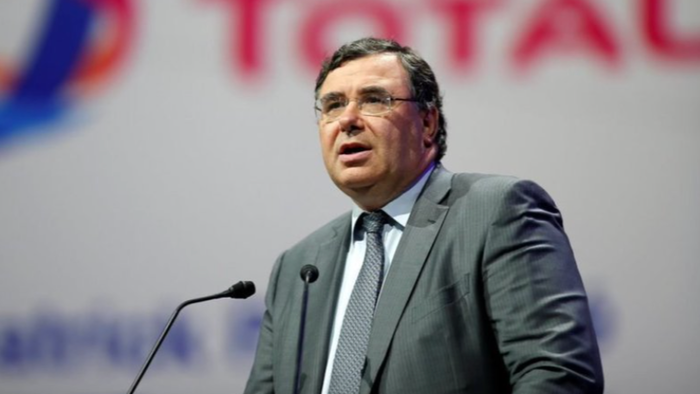
TotalEnergies CEO Patrick Pouyanné said moving crude through the Strait of Hormuz costs $20 million per supertanker, or $10 a barrel. With Brent at $92, margins reach $30 before costs.
Alpha Score of 70 reflects strong overall profile with strong momentum, moderate value, strong quality, moderate sentiment.
The crisis-driven dislocation across Gulf oil markets has positioned TotalEnergies SE as an early mover, capitalizing on heavily discounted Persian Gulf crude priced at $50 to $60 a barrel and moving it through the Strait of Hormuz. CEO Patrick Pouyanné revealed at the Norwegian energy conference on Monday that transiting the waterway now costs roughly $20 million per supertanker.
Bloomberg earlier quoted Pouyanné as saying the added cost of moving crude on supertankers through the Hormuz chokepoint is about $10 per barrel. Brent crude futures trade at $92 per barrel, which leaves a potential profit of upward of $30 per barrel before financing and other costs. Those margins are extraordinary for companies willing to accept the risks of being early movers in one of the world's most dangerous waterways.
TotalEnergies is one of the largest traders of Iraqi and Qatari crude, with both producers continuing to move oil through the Strait of Hormuz.
"We are today probably the largest trader of oil from Iraq or from Qatar ... and I can tell you that today crude oil is moving through the Strait of Hormuz very quietly, not publicly," Pouyanné said.
Pouyanné did not elaborate on whether TotalEnergies-contracted tankers are transiting the U.S. military-supervised shipping corridor off Oman. Recent data have shown a noticeable uptick in transits, raising the question of whether Tehran's grip on the maritime chokepoint has eroded.
Pouyanné also warned that the refined-products market is currently in crisis.
"You have a bearish crude oil market and a very bullish product markets, which is very strange," he said. "Our consumers in Europe will suffer on this one," while in the U.S., "gasoline prices would not go lower than $4 as President Trump would like."
The divergence between crude and product markets, combined with the risk premium embedded in Hormuz transit costs, creates a complex setup for energy traders. Gulf producers are willing to unload discounted crude, while some energy companies accept the risk of sailing through the Strait of Hormuz in pursuit of substantial profits. Yet as Pouyanné warned, there is little that increased crude flows can do to resolve the worldwide refined-products crisis.
TotalEnergies carries an Alpha Score 70/100 with a Moderate label, reflecting the offset between its upstream access to discounted crude and the geopolitical risk it assumes in moving that oil to market.
Commodities analysis shows the crude-product spread as one of the widest in recent memory, a dislocation that may persist as long as refining capacity remains tight and Hormuz transit carries a $20 million per-vessel premium.
Drafted by a large language model from the source reporting linked above, then screened by automated publishing checks. It is not read by a journalist before publication. Some articles cite our Alpha Score. Verify prices and figures against the original source. Educational coverage, not personalized advice.