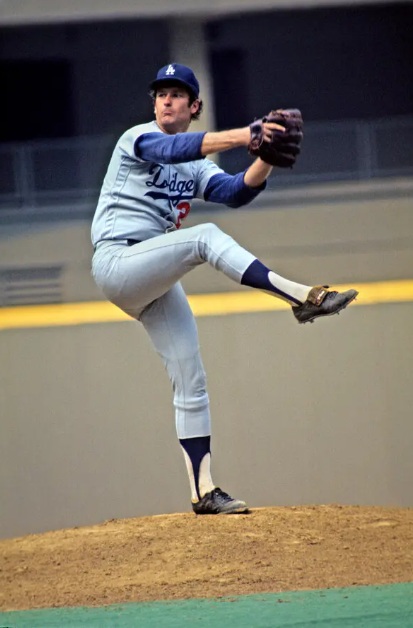
Tommy John, the pitcher whose name defined elbow reconstruction surgery, died at 83. His 1974 comeback changed how teams insure and invest in pitchers, creating a $20,000 procedure that saved careers and millions in replacement costs.
Tommy John died Saturday at his home in Bradenton, Florida. He was 83.
The record books will note 288 wins across 26 seasons, four All-Star teams, and a career that should have ended in 1974. That year, John tore the ulnar collateral ligament in his left arm. Before that moment, a torn UCL was a career-ender. No pitcher had come back from it. An experimental procedure rebuilt his elbow using a tendon from his right forearm. The surgery now carries his name. John returned 18 months later and won 20 games for the Dodgers in 1977, then another 20 for the Yankees in 1979.
For team owners and general managers, the surgery changed the math on pitcher investment. Before 1974, a torn UCL meant a team ate the contract. There was no recovery path. The pitcher's salary became dead money against the payroll. After John's comeback, the procedure turned a catastrophic injury into a 12-to-18-month recovery timeline. Teams could insure contracts differently. They could draft pitchers with higher injury risk profiles, knowing the surgery existed as a backstop. They could extend careers deep into a pitcher's 30s.
The economic impact is hard to overstate. Since the first procedure, thousands of pitchers have undergone Tommy John surgery at a cost of roughly $20,000 to $50,000 per operation in the U.S. That is a fraction of the value of a single season of a major league arm. The surgery effectively created a secondary market in injured pitchers, allowing teams to buy low on talent other clubs were willing to discard.
John won 288 games. His real legacy is the 300 or so additional wins the surgery has enabled for other pitchers over the past five decades. For every pitcher who came back and threw another 1,000 innings, a team saved millions in replacement costs. The procedure turned a career-ending injury into a footnote instead of an ending.
I met John when I was a very young teenager, first as a starstruck fan, then as his bullpen catcher during the comeback year nobody thought would happen. My best friend and I heard he was making an appearance at an event in Century City. We caught a bus down from the suburbs just to see him. We already knew him a little by then. Dodger Stadium was where we spent nearly every free hour of our childhood. John was one of the few players who noticed a couple of kids hanging around and took the time to talk to us. After the event that day, he offered to drive us back to the stadium. I remember sitting in the back of his car feeling like a prince, rolling right past the guard at the stadium gate like we belonged there.
I was there the night he hurt his arm. I walked out to his car with him afterward. The look on his face was fear, plain and simple, the fear of a man who believed he had just thrown his last pitch. Soon after, he underwent the experimental surgery. In the months that followed, he developed a stutter that stayed with him until he finally took the mound again, 18 months later.
A couple of months after his surgery, I got the job every baseball-obsessed kid in Los Angeles dreamed of: ballboy and batboy in the Dodger clubhouse. As I grew older, bigger, and stronger, they started trusting me to throw batting practice and catch bullpen sessions before games. When John began his comeback the following season, someone had to catch those bullpen sessions. That someone was me.
It was not easy work. John still could not fully extend his fingers. His control was horrendous. Pitches bounced in the dirt. Pitches sailed over my head. A few caught me in places a catcher never wants to be caught. It felt like a small war zone back there. I tried to duck out of those bullpen sessions when I could, hiding out in the outfield shagging fly balls during batting practice instead. It rarely worked. Sooner or later I would hear Red Adams, the Dodgers pitching coach, calling me back to the bullpen to catch TJ. What always stayed with me was that John never once gave up on himself.
That winter I went with him to Arizona for winter ball. He told me once that pitching to those young hitters, most of them just out of high school or college and nowhere near the majors, was harder than it looked. A big leaguer had discipline. He would take a pitch off the plate, wait for his spot, give a veteran like John something to work with. These kids had no such patience. They would swing at anything, good pitch or bad. John could not afford to waste a single one testing them.
One afternoon from that winter has stayed with me my whole life. I was working the radar gun behind the plate, clocking his pitches as they crossed it. That was how it was done in those days, before pitch velocity was measured coming out of the pitcher's hand, a method that reads 5-10 mph faster. One fastball came in at 88 by that old measurement. By today's standard, John was likely throwing well into the 90s again. Back to his full, pre-injury self. I shouted out the number. The whole crowd erupted around me. Coaches, Dodger executives, and teammates all cheered at once. Everybody there understood exactly what they had just witnessed. Tommy John was back.
John went on to win 20 games in a season with the Dodgers, and two 20-game winning seasons with the Yankees, on a rebuilt elbow that, by all reason, had no business working that well again.
Baseball lost a legend. The business of baseball lost a quiet architect.
Drafted by a large language model from the source reporting linked above, then screened by automated publishing checks. It is not read by a journalist before publication. Some articles cite our Alpha Score. Verify prices and figures against the original source. Educational coverage, not personalized advice.