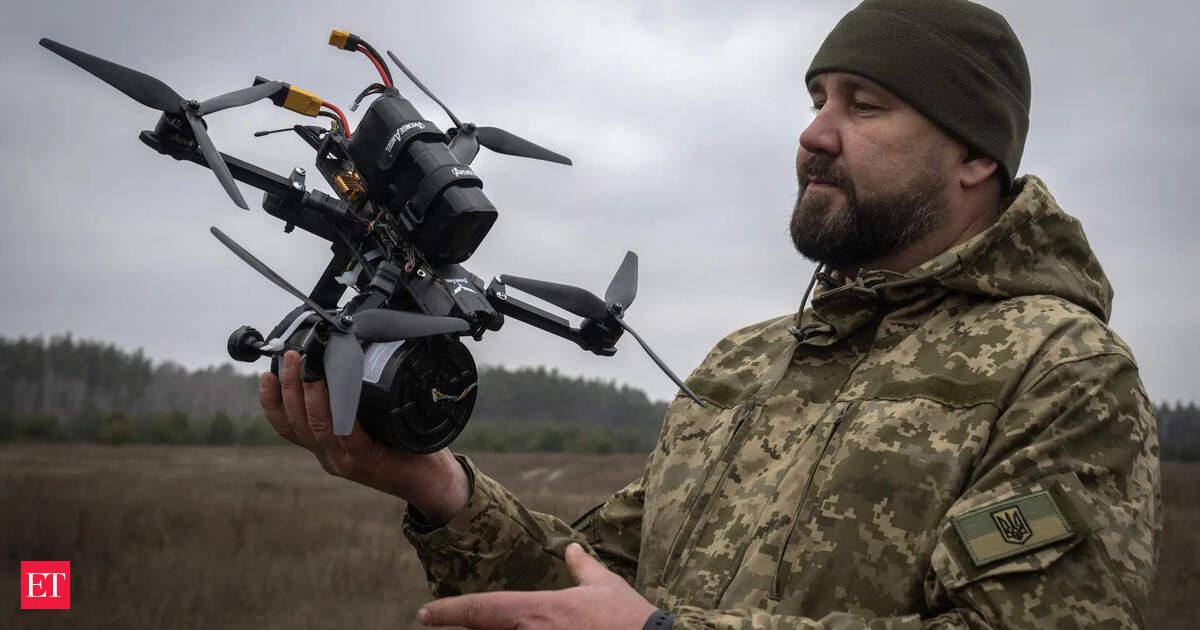
The emergence of fibre-optic guided drones in the conflict between Hezbollah and Israeli forces marks a shift in tactical aerial engagement. Unlike traditional drones that rely on radio frequency signals for navigation and control, these systems utilize a thin fibre-optic cable that spools out from the drone as it flies. This physical connection allows for real-time video transmission and command inputs that are immune to conventional electronic warfare and signal jamming techniques.
Tactical Evasion of Electronic Countermeasures
Electronic jamming has long been the primary defense against small, low-cost unmanned aerial vehicles. By flooding the radio spectrum with noise, defenders can sever the link between a pilot and an aircraft, causing the drone to crash or return to its launch point. Fibre-optic drones effectively bypass this layer of defense because they do not transmit or receive radio signals during flight. The physical tether ensures a secure, high-bandwidth link that allows operators to maintain precision control even in environments saturated with electromagnetic interference.
These systems typically operate at low altitudes to avoid detection by radar arrays designed for larger, faster targets. By combining low-altitude flight paths with immunity to jamming, these drones force a re-evaluation of current air defense priorities. Military planners must now account for threats that do not appear on traditional electronic surveillance screens, necessitating a shift toward kinetic interception methods rather than reliance on signal-based disruption.
Industrial and Defense Sector Read-Through
This development mirrors battlefield tactics observed in the conflict in Ukraine, where the integration of cable-guided systems has forced rapid adjustments in frontline defensive hardware. For the broader defense industrial base, the focus is shifting toward the production of short-range, high-speed interception systems and improved optical sensors capable of detecting low-altitude, low-signature threats. Companies involved in aerospace and defense, such as those tracked on our stock market analysis pages, are increasingly pressured to integrate non-RF-dependent guidance systems into their own portfolios.
AlphaScala data currently reflects a diverse landscape for firms operating within these sectors. For instance, FLY stock page currently holds an Alpha Score of 24/100, reflecting a weak position as the market digests the rapid evolution of drone technology and the capital requirements for new defensive R&D. Conversely, firms with more established footprints in consumer and industrial goods, such as those found on the LOW stock page, maintain an Alpha Score of 45/100, though their exposure to defense-specific supply chains remains distinct from pure-play aerospace contractors.
The Next Marker for Defense Planning
The transition to cable-guided systems creates a new requirement for defensive infrastructure. The primary marker for the next phase of this conflict will be the deployment of specialized point-defense systems designed to physically intercept low-altitude drones. Observers should monitor upcoming defense procurement filings and military budget updates for shifts in funding toward short-range air defense systems and optical detection technologies. As these drones become more prevalent, the ability to counter non-RF threats will become a critical differentiator in both military effectiveness and the valuation of defense contractors tasked with securing regional airspaces.