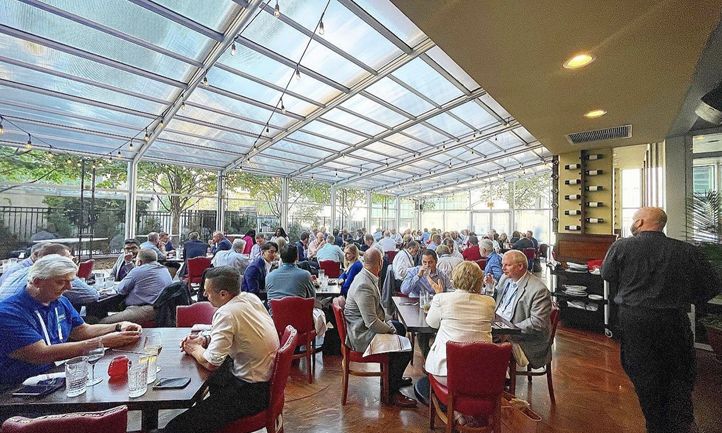
The shift toward year-round utilization of outdoor dining spaces has emerged as a primary lever for restaurant operators looking to stabilize revenue streams against seasonal volatility. By installing retractable enclosures, establishments are transforming transient patio space into permanent, climate-controlled square footage. This structural adaptation allows for consistent seating capacity regardless of weather conditions, effectively decoupling revenue generation from external environmental factors.
Operational Capacity and Revenue Stability
The core value proposition of retractable enclosures lies in the conversion of underutilized real estate into high-margin dining areas. Traditional outdoor seating often suffers from significant downtime due to precipitation, temperature fluctuations, or seasonal closures. Enclosures mitigate this risk by providing a modular environment that can be opened or closed based on immediate needs. This flexibility ensures that fixed costs associated with floor space are offset by continuous revenue potential throughout the calendar year.
Beyond simple capacity expansion, these systems influence the overall throughput of a restaurant. Operators can maintain consistent service levels, staffing schedules, and inventory management when the dining area is not subject to weather-related disruptions. This operational predictability is a critical component of margin protection in the competitive hospitality sector. For those interested in broader stock market analysis, the trend toward optimizing physical assets mirrors the efficiency drives seen in larger retail and service-oriented firms.
Capital Allocation and Asset Lifecycle
Investing in retractable infrastructure requires a clear assessment of the expected return on capital. While the upfront expenditure for custom enclosures is significant, the long-term impact on revenue density per square foot often justifies the cost. Restaurants that successfully integrate these systems report a reduction in the variance of their monthly earnings, which is a key metric for long-term sustainability. The decision to deploy such capital is increasingly viewed as a defensive measure against the rising costs of commercial leases.
When evaluating the viability of these upgrades, operators must consider the regulatory environment and local zoning laws that govern structural changes to storefronts. The ability to pivot between an open-air experience and a protected interior space provides a competitive advantage in urban markets where real estate premiums are high. As businesses look to maximize the utility of every square foot, the integration of these enclosures serves as a case study in how physical infrastructure can be leveraged to drive top-line growth.
For investors tracking the broader consumer discretionary space, the performance of companies like Apple (AAPL) profile or large-cap telecommunications entities like T (AT&T Inc.) often highlights the importance of operational efficiency. AT&T currently holds an Alpha Score of 58/100, reflecting a moderate position within the Communication Services sector. The next marker for the hospitality sector will be the reporting of same-store sales figures that explicitly isolate the performance of locations equipped with all-weather infrastructure compared to those relying on traditional seasonal models.