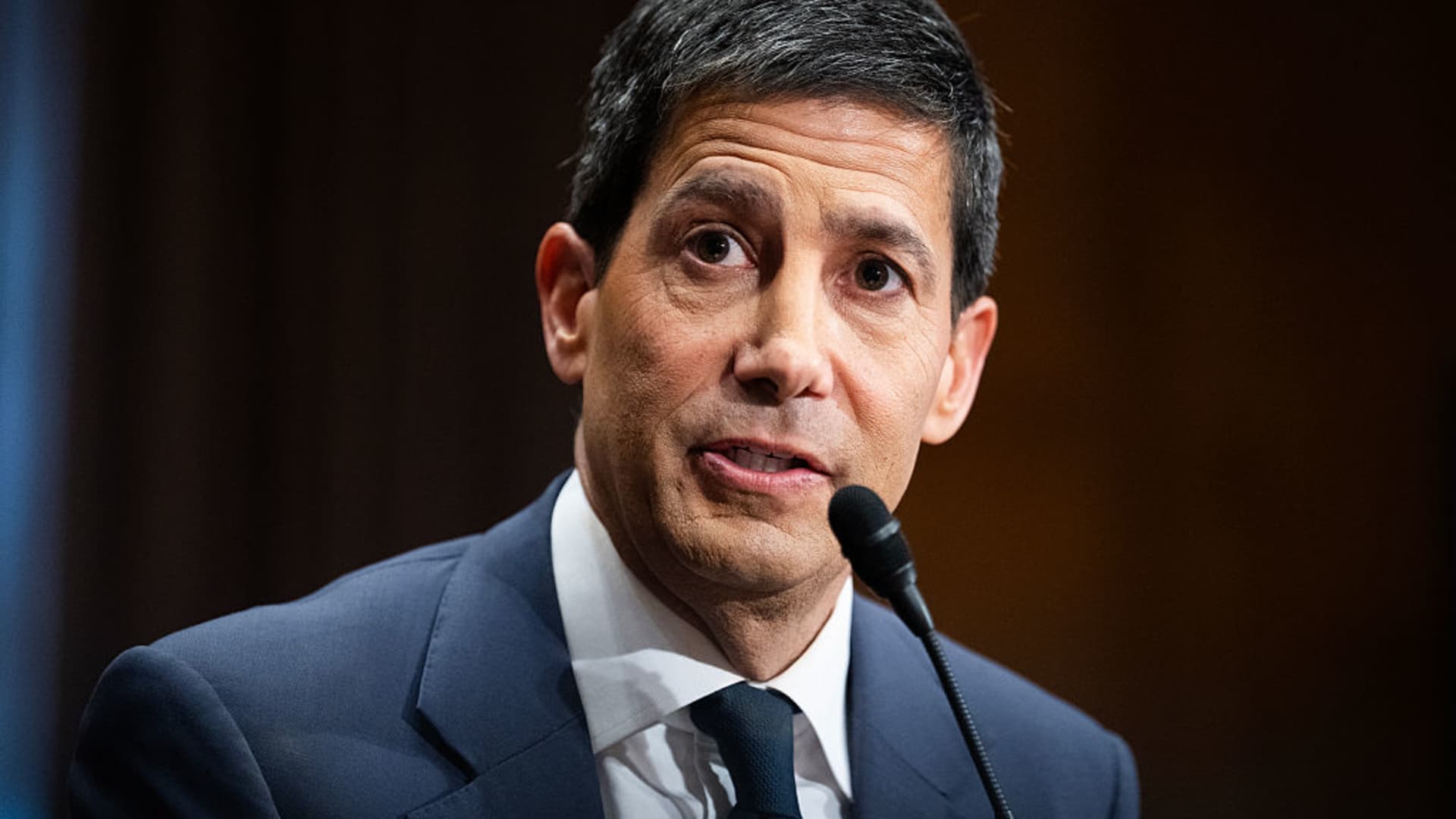
Kevin Warsh, the nominee for Federal Reserve chair, has signaled a desire to fundamentally alter how the central bank measures and targets inflation. By shifting the focus away from traditional metrics toward a framework that potentially prioritizes different price signals, Warsh aims to recalibrate the Fed's reaction function. However, this proposed pivot faces immediate scrutiny regarding its technical viability and the potential for unintended policy outcomes.
The Technical Friction of Inflation Recalculation
Bank of America economists have flagged significant risks associated with this strategic shift. The primary concern is that a recalculation of inflation metrics may not yield the clarity Warsh anticipates. If the central bank adopts a new measurement standard, it risks decoupling its policy decisions from the lived experience of price changes in the broader economy. This disconnect could lead to policy errors where the Fed remains restrictive despite cooling underlying demand, or conversely, remains accommodative while inflationary pressures persist in critical sectors.
Such a change would force a re-evaluation of the transmission mechanism between interest rates and consumer behavior. If the Fed relies on a proprietary or modified inflation gauge, the market must then price in the risk that the central bank is operating on a different set of assumptions than the rest of the financial system. This creates a volatility premium in bond yields, as investors struggle to anticipate how the Fed will interpret incoming data compared to historical benchmarks. For a deeper look at how these shifts influence broader trends, see our analysis on The Shift Toward Opaque Monetary Policy and Market Volatility.
Asset Class Sensitivity and Policy Transmission
Financial institutions are particularly sensitive to these shifts in monetary doctrine. Bank of America, which currently holds an Alpha Score of 63/100, remains a key bellwether for how large-cap financials navigate changing rate environments. You can track their ongoing performance on the BAC stock page. When the Fed changes its measurement criteria, the yield curve often experiences a repricing as the market adjusts its expectations for the terminal rate.
This adjustment process typically follows a predictable sequence:
- Bond yields adjust to reflect the new inflation target, often leading to a steeper or flatter curve depending on the perceived credibility of the new metric.
- The dollar reacts to the divergence between the Fed's new inflation stance and the inflation targets of other major central banks.
- Equity indices, particularly in the financial and consumer sectors, face valuation adjustments as discount rates are recalibrated against the new inflation signal.
As the Fed moves toward a potential change in its mandate, the focus will shift to the upcoming FOMC meetings and the specific technical papers released by the Board of Governors. The next concrete marker will be the first policy statement following a potential confirmation, which will likely contain the first explicit language regarding the adoption of these new measurement frameworks. Investors should monitor whether the Fed provides a transition period or attempts an immediate shift, as the latter would likely trigger significant short-term volatility across fixed-income markets. For further context on how these inflationary pressures impact asset values, refer to our report on The Erosion of Capital: Assessing Purchasing Power in Inflationary Environments.