A leverage ETF that charges just 0.20% in expenses can actually cost investors more than 9% a year, once financing costs are factored in. The gap between the sticker price and the real cost depends entirely on how the fund builds its leverage.
Corey Hoffstein of Newfound Research flagged the issue in a note to clients, using two S&P 500 2x leveraged ETFs as examples. The Corgi-run VOOX charges 0.20% annually. The ProShares Ultra S&P 500 (SSO) charges 0.87%. On paper, VOOX looks cheaper. In practice, the opposite is often true.
VOOX gets its 2x exposure entirely through swaps. Swap costs are not disclosed in the expense ratio. SSO, by contrast, holds about 70% of its 200% target as physical S&P 500 stocks and uses swaps or borrowing for the remaining 130%. That difference in construction means SSO's financing cost applies to a smaller notional amount.
Hoffstein laid out the math. An investor's net return on a 2x leveraged ETF is roughly: 2 x (S&P 500 return minus dividends) minus the expense ratio minus the financing cost. For VOOX, that becomes 2 x (index return minus dividends) minus 0.20% minus the full swap financing cost. For SSO, it is the same formula but with a 0.87% expense ratio and a smaller financing cost.
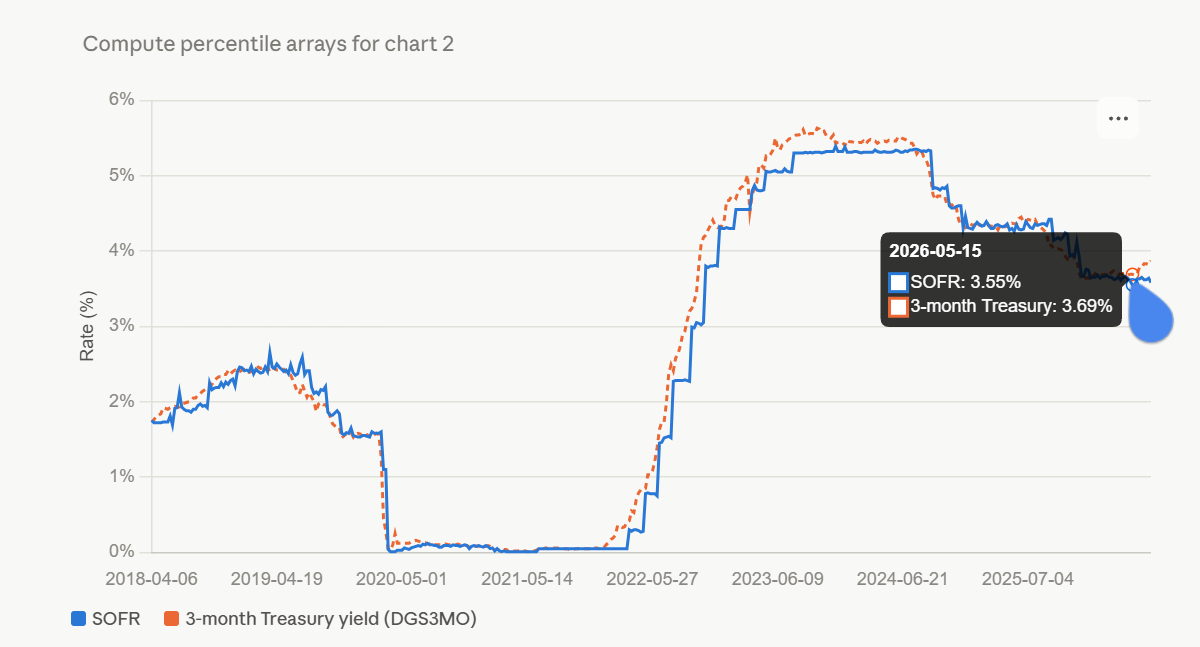
SSO's semi-annual financial statements show its borrowing cost is SOFR plus a spread. As of Nov. 30, 2025, the spread was about 70 basis points. If SOFR plus that spread totals 4.5%, SSO's financing cost on its 130% leverage is roughly 5.85% (4.5% x 1.3). VOOX, using swaps for the full 200%, pays 9% (4.5% x 2).
Add the expense ratio: VOOX's total annual cost comes to about 9.2% (0.20% + 9%). SSO's total is about 6.7% (0.87% + 5.85%). The fund with the lower expense ratio ends up costing the investor 2.5 percentage points more per year.
That cost compounds daily and eats into returns regardless of market direction. If the S&P 500 falls 10%, the 2x ETF loses roughly 20% from the index move plus the financing cost. The total loss can exceed 29% in a year with flat or negative returns.
The financing cost is tied to short-term interest rates. SOFR moves closely with the 3-month U.S. Treasury rate, so the cost rises and falls with the Fed's policy rate. Investors who focus only on the expense ratio miss the bigger number.
Hoffstein's point is straightforward: the implementation of leverage matters more than the headline fee. A fund that uses swaps may appear cheaper but can be far more expensive when rates are elevated. The same logic applies across the growing universe of single-stock and sector leverage ETFs, many of which rely on swaps without disclosing the full cost.