Stocks● Neutral
The French Lunch Survives. The American Lunch Doesn't. Here's Why It Matters.
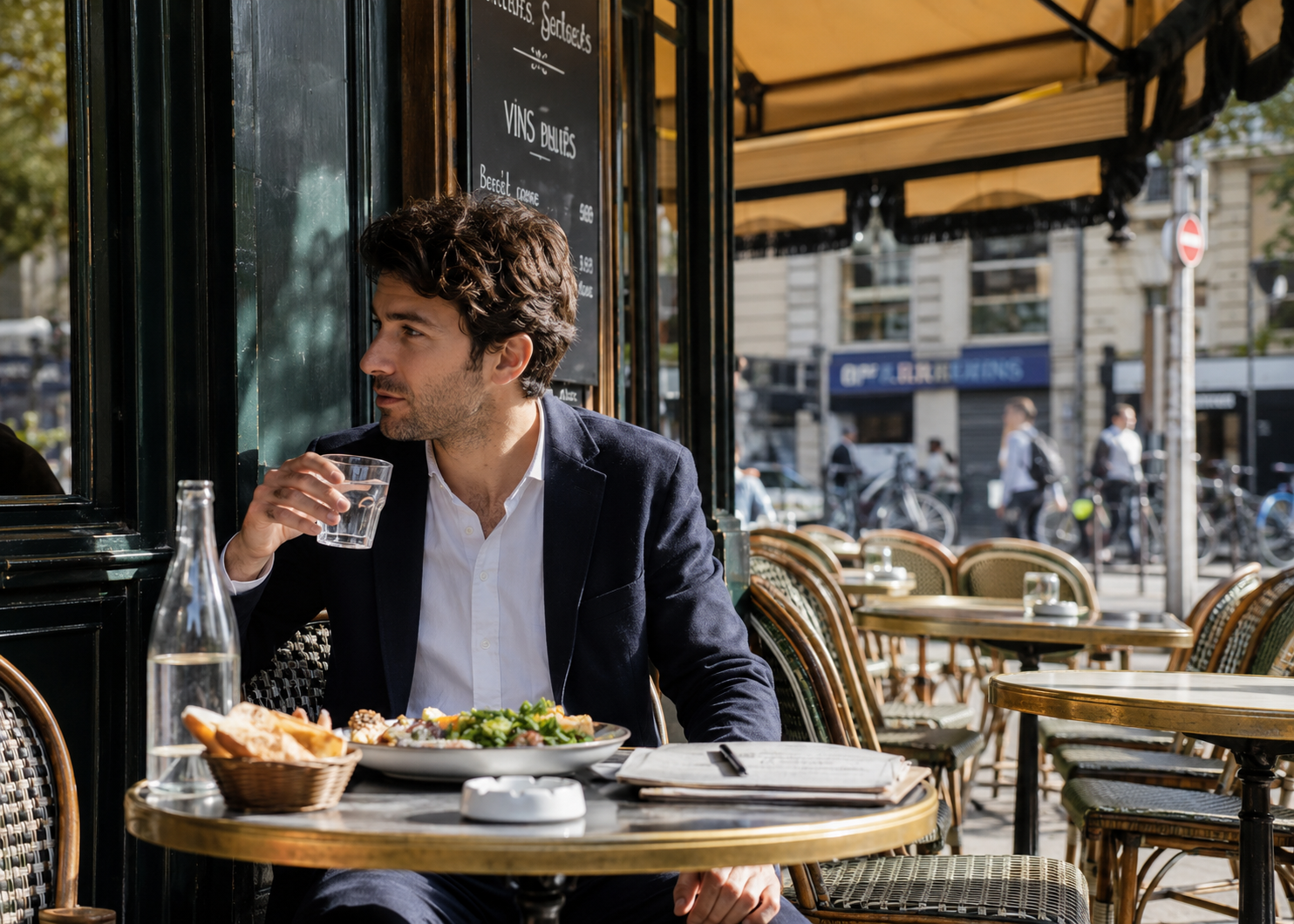
France protects a 90-minute lunch away from the desk. America eats at the keyboard in 20 minutes. The health, productivity, and social consequences compound over decades.
Continue with
A French office in Lyon empties at 12:30. The marketing director, the engineers, the administrative staff, the executives – all leave the building. They walk to nearby restaurants or brasseries. They sit down, order, eat, and talk. By 2:15, they are walking back. The afternoon work begins around 2:30.
An American office in Charlotte keeps working through lunch. The marketing director eats a salad at her desk while answering emails. The engineers order delivery and keep working. The executives have catered sandwiches brought in for a noon meeting. Almost no one leaves the building. The lunch break, if it exists, runs 20 to 30 minutes at the desk where work continues.
The French lunch is one of the few French cultural practices that has stayed substantially intact across forty years of European integration, globalization, and digital workplace pressure. The American working lunch became standard across most white-collar workplaces during the same period. The two patterns produce different physiological, cognitive, social, and economic outcomes. The populations operating within them experience these differences daily without necessarily recognizing the cause.
What the French Lunch Actually Is
The lunch break runs 90 minutes to 2 hours. The French Labor Code mandates a minimum 20-minute break for shifts exceeding 6 hours. White-collar French workplaces protect the longer period structurally. The lunch happens away from the workplace. French workers leave the building to eat. That physical separation matters. Eating in the same building where work happens, even in a designated break area, produces different outcomes than eating elsewhere.
The lunch is a substantial meal. Typically two courses with bread, wine optionally, water, coffee at the end. Total caloric content of 700 to 1,000 calories is normal. The lunch is the day's largest meal, larger than breakfast or dinner. It is eaten sitting down at a table with cutlery, often with colleagues or friends. Phones and screens are typically not used. Checking work email during lunch is socially awkward. Conversation is a feature, not optional.
A glass of wine at lunch is acceptable in most French professional contexts. Not mandatory, not unusual. Many workers drink water or sparkling water. The presence of wine on the lunch table does not produce the social judgments that the same wine at an American workplace lunch would produce. The return to work is gradual. The walk back to the office, the brief settling-in at the desk, the digestion period – the body that returns at 2:15 has had time to process the meal and transition back to work mode.
What the American Working Lunch Produces
The American working lunch is not a French lunch shortened. It is a different practice with different consequences.
Eating while working produces measurably different digestive outcomes than eating while focused on the meal. The autonomic nervous system that supports digestion operates differently when the worker is simultaneously processing work demands. American workers report higher rates of indigestion, acid reflux, and gastrointestinal discomfort than French workers, partly attributable to the lunch pattern difference.
Eating quickly without full attention produces different satiety signaling. The lunch eaten in 15 minutes at the desk often fails to register as a full meal, producing afternoon hunger that drives snacking. The lunch eaten across 60 to 90 minutes at a restaurant produces satiety that carries through to evening.
The American worker who continues working through lunch does not get the cognitive reset that the French worker gets. The afternoon mental fatigue that American workers experience between 2pm and 4pm is more severe than the equivalent French afternoon fatigue. The French lunch maintains social connections. The American working lunch isolates workers at their desks. The cumulative effect across years is reduced workplace relationships, reduced cross-departmental connections, and reduced friendship maintenance across the lunch hour.
Research on work productivity across cultures suggests the French structural break produces equivalent or higher daily productivity compared to American continuous work patterns. The afternoon work that follows a proper lunch is more focused and energetic than the afternoon work that follows a working lunch. The hours-worked metric favors the American pattern. The productivity-per-hour metric often favors the French pattern.
Spending the lunch hour sitting at a desk eating processed food while answering emails produces measurably worse health outcomes than walking to a restaurant, eating real food at a table, and walking back. White-collar American workers in their fifties show cardiovascular and metabolic markers that French equivalents do not show, partly attributable to the lunch pattern difference.
The American worker has no structural break from work stress across the day. The morning blends into the afternoon blends into the evening. Work pressure operates continuously. The French worker has a structural break that allows the morning's work stress to dissipate before the afternoon's begins.
The American working lunch is not a small inefficiency. It is a structural feature of American work life that produces measurable consequences across health, productivity, social experience, and quality of life. The consequences accumulate across years and decades into substantial differences from what the alternative pattern would produce.
Why the French Lunch Survived
The French lunch tradition has survived pressures that dismantled similar traditions in other countries through several preservation mechanisms.
French labor law structurally protects lunch breaks. Working time regulations, collective bargaining agreements, and workplace customs reinforce the protection. The 90-minute to 2-hour lunch is not negotiable in most French workplace contexts. Employers cannot easily eliminate it. Workers expect it as a structural feature of employment.
French restaurant culture supports the lunch tradition. Restaurants near workplaces have business models built around the lunch trade. The menu du jour at €15 to €25 provides quality food at affordable prices during the lunch period. The restaurants need the lunch trade. The workers need the restaurants. The mutually reinforcing arrangement has produced an infrastructure that supports the practice.
French cultural values explicitly support eating well as a daily practice. The French treat eating as one of the central activities of daily life. Rushing through meals is not just inefficient. It is culturally inappropriate. The cultural valuation of the meal supports the structural protection of the lunch time.
French workplace culture maintains social expectations. Workers who eat at their desks during lunch are noticed and gently corrected. The new employee who attempts the American working lunch pattern typically encounters social pressure to join colleagues at restaurants. The pattern reinforces itself across workplace cultures.
French children grow up watching the lunch pattern. Schools have structured lunch periods that mirror the adult pattern, including substantial meals, sitting at tables, eating with peers. The pattern is established in childhood and carries into adult work life.
French economic structure does not produce the same productivity pressure that American workplaces produce. Maximum work hours, mandatory vacation, paid time off – the framework reduces the pressure to extract maximum productivity from each work hour. The reduced pressure makes the structural lunch break sustainable.
French resistance to American workplace influences has been deliberate. When American workplace practices began entering French companies in the 1990s and 2000s, French workers and unions resisted specifically including the working lunch pattern. The resistance was effective. The French lunch has remained substantially intact despite the broader Americanization of business practices that occurred during the same period.
How the American Working Lunch Became the Default
The American working lunch did not exist in 1970. It became standard across the past 35 to 45 years through specific cultural and economic shifts.