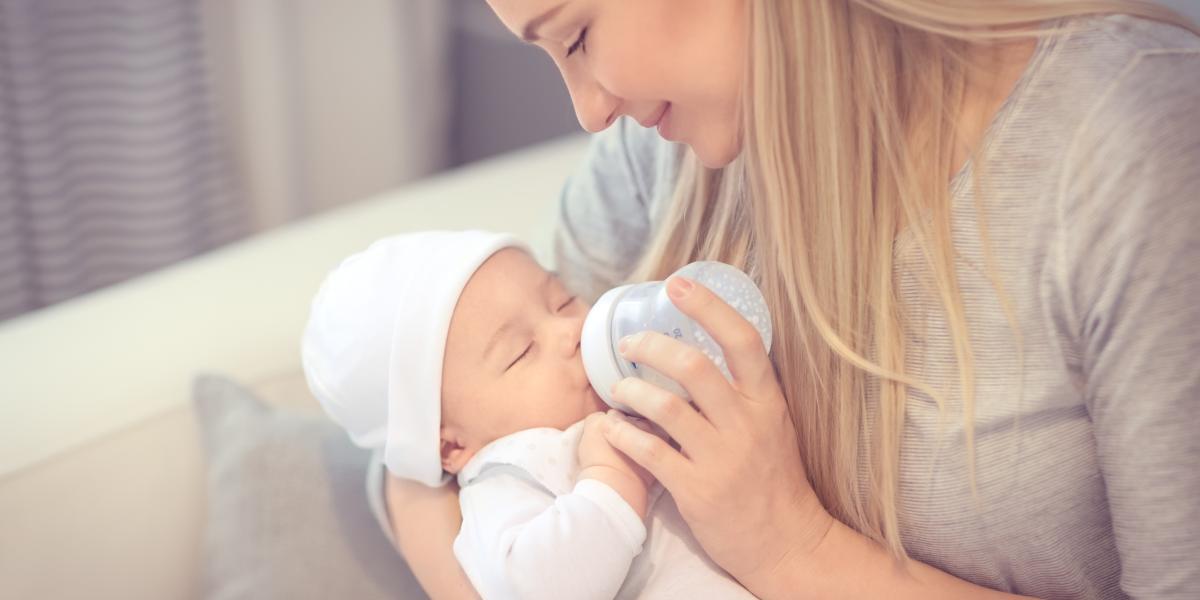
Eight children were never the plan. Catherine Pakaluk's new book asks why so few women choose large families, and why economic incentives fail to change that.
One of the questions I get most often as a mother of eight is, "You know how this happens, right?" Having so many children was never a plan. My husband and I married later in life. I had just been diagnosed with a second autoimmune disease. We did not know if my body could handle pregnancy. Infertility affects roughly 15 percent of couples. We might have been one of them. We were open to children, though. We wanted our marriage to produce fruit.
That openness is a thread running through Catherine Pakaluk's new book, Hannah's Children: The Women Quietly Defying the Birth Dearth. Pakaluk, an economist and social scientist, asks why only five percent of women have five or more children. She wants to know why government programs across the world have failed to move the needle. Most of the world sits at below-replacement fertility.
In our culture, family planning is the default. An unplanned child is an "accident" or a "surprise." In Peter and Wendy, Mr. Darling sits on the edge of his wife's bed after Wendy arrives, calculating expenses while she looks at him imploringly. The passage captures something true about how we think about children. They are mouths to feed.
Children are not just monetary calculations, though. Pakaluk calls them "experience goods" – the economist's term for things whose costs and benefits cannot be fully known before you acquire them. Women make choices about children by weighing subjective personal value against what they will miss. Both sides of that scale include gains and losses.
Children do improve quality of life. You cannot know that until you have one. Children also get a lot of negative press. One woman Pakaluk interviewed put it sharply: "I mean, seriously, children are the scapegoat of this culture…the destroyer of marriages, and individuality and freedom, the suppressor of women - a child. That's irrational." Pakaluk adds her own question: "If children are bearing all the negative emotions of the culture, how could they possibly be an object of desire, something you would make sacrifices to obtain?"
Economic incentives will not fix this. The opportunity costs run too deep. For a woman, having a child demands her whole self. What can answer the weight of your whole self? Only someone you love as much as yourself. No subsidy matches that. Especially when motherhood lowers social status.
Johann Kurtz, in an essay called "It's Embarrassing to be a Stay at Home Mom," argues that lower fertility tracks closely with the status drop women experience when they become mothers. Status is your perceived standing in the group. It shows up as deference, access, inclusion, approval, acclaim, respect, honor – or their opposites: rejection, ostracization, humiliation. An educated woman who leaves a career for motherhood has, in the culture's view, wasted her education and deprived the workforce. "Unfortunately, 'I'm a mother' is not a good answer to this question [what do you do]," Kurtz writes. "This conveys little status within a success framework."
And yet a small percentage of women choose motherhood as their vocation anyway. They are not immune to the social demotion. They simply find something deeper: meaning.
After my first child, I felt I had unlocked some of the meaning of the universe. I rejected the lie that my value came from my career. I rooted it in the unseen labor of shaping my child's character. That work shaped my own character too. The shift happened after birth, not before.
Motherhood as a vocation is not prestigious. It is exhausting, with long hours and rewards that sometimes take years to arrive. The daily grind offers an intimacy unlike any other human relationship, though, except perhaps with a spouse. That intimacy builds secure attachment. Secure attachment is ground zero for every other relationship a person will have. The cost of separating mother and child in the first three years is often permanent. It affects all future relationships. It affects society.
Psychoanalyst Erica Komisar, in Being There: Raising Resilient Children, argues that mothers are biologically unique in their contribution to healthy child development. A mother's contribution cannot be outsourced to a nanny, a daycare, or even a father. Komisar writes that "we have deprioritized family and delegated raising our children to strangers so we can pursue work outside the home." She says that when it comes to spending undistracted time with children, "more is more." Quality time matters less than quantity. Children need their mothers in the mundane. That is where the deeper meaning lives.
I feel sad when I think about how many people forgo the experience of becoming mothers. No career substitutes for it. The state cannot subsidize it. No incentive other than one equal to the sacrifice and meaning would suffice. If you want to know how large families happen, look beyond economics. Look at the women who are, as Pakaluk puts it, "defying the birth dearth."
Drafted by a large language model from the source reporting linked above, then screened by automated publishing checks. It is not read by a journalist before publication. Some articles cite our Alpha Score. Verify prices and figures against the original source. Educational coverage, not personalized advice.