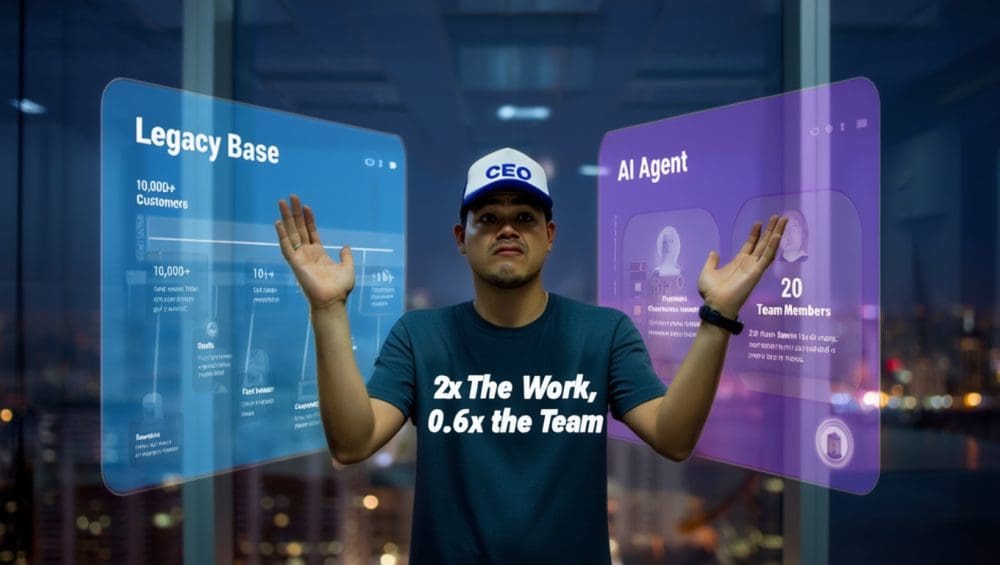
The narrative for B2B software companies crossing the $50 million annual recurring revenue threshold has shifted from pure growth acquisition to a bifurcated operational requirement. Leadership teams are now forced to balance the preservation of their existing installed base with the immediate, aggressive integration of AI agents into their core product suites. This transition marks a departure from the previous era where product expansion was the singular focus of late-stage startups.
The Installed Base Retention Imperative
Maintaining an existing customer base has become the primary defensive moat for companies at scale. As discretionary spending tightens across the enterprise sector, the cost of churn has risen significantly. Companies are finding that the effort required to retain a legacy client now mirrors the intensity of initial sales cycles. This shift necessitates a reallocation of engineering and customer success resources toward stability, feature parity, and deep integration within current workflows. Failure to secure this base leaves firms vulnerable to competitors who are using AI-driven efficiency to offer lower-cost, higher-utility alternatives.
The AI Agent Arms Race
Simultaneously, the competitive landscape is being redefined by the deployment of AI agents. These tools are no longer experimental add-ons; they are becoming the standard for productivity in enterprise software. Companies that fail to transition from passive software interfaces to active, agentic workflows risk obsolescence. The challenge for management is to implement these technologies without disrupting the reliability of the core platform that supports their current revenue. This requires a delicate balance between rapid innovation and the rigorous testing cycles demanded by enterprise-grade clients.
AlphaScala data currently reflects these shifting dynamics across the technology sector. ServiceNow Inc. holds an Alpha Score of 51/100, reflecting a mixed outlook as the company navigates the integration of complex AI workflows into its established enterprise management systems. Investors can monitor the progress of these transitions via the NOW stock page.
Strategic Resource Allocation
The dual-front mandate creates a significant strain on capital and human talent. Organizations are increasingly forced to choose between hiring for legacy support or investing in specialized AI research and development. This tension is visible in the broader stock market analysis as firms report increased operational expenditures to support these parallel initiatives. The path forward for these companies depends on their ability to prove that AI agents are not just a marketing narrative, but a functional extension that increases the stickiness of their existing product.
Management teams must now provide clearer evidence of how AI-driven features directly correlate to net revenue retention. The next concrete marker for this sector will be the upcoming quarterly guidance updates, where companies will be expected to quantify the impact of AI agent deployment on both customer acquisition costs and long-term retention metrics. Investors should look for specific commentary on how these AI initiatives are being integrated into existing service-level agreements.