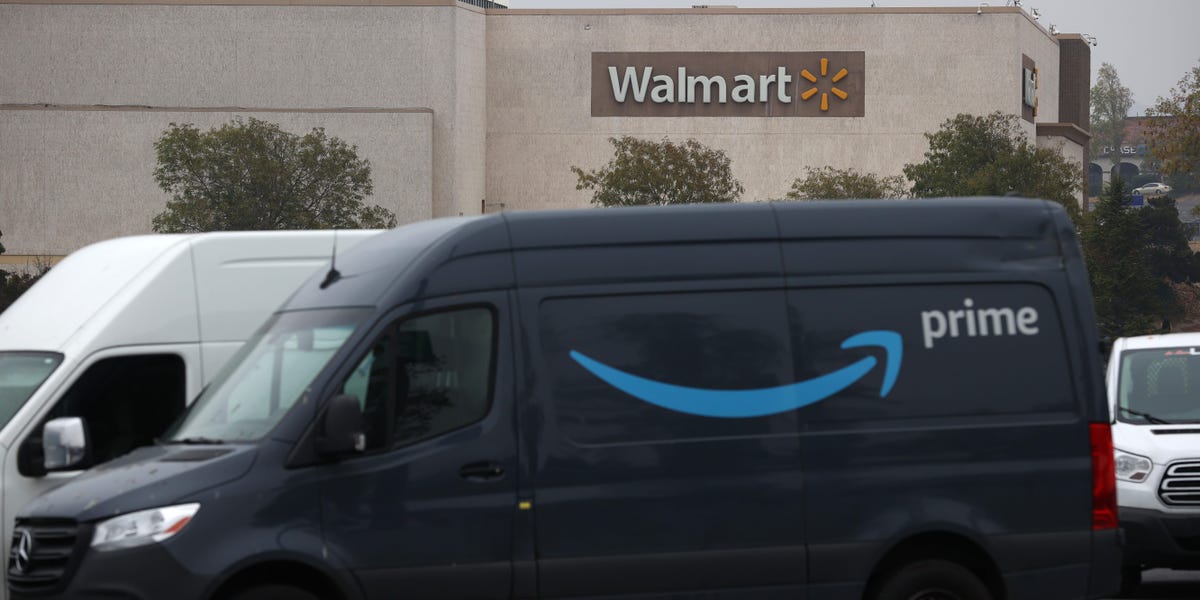
The competitive boundary between Walmart and Amazon is blurring as both companies aggressively adopt each other's core operational strengths. Walmart is leveraging its massive physical footprint to dominate local delivery speed for daily essentials, while Amazon is expanding its logistics network to capture a larger share of the grocery and household goods market. This strategic convergence marks a departure from their traditional business models, forcing a direct confrontation in the high-frequency retail space.
Operational Overlap and Logistics Scaling
Walmart is currently prioritizing the transformation of its physical stores into fulfillment hubs. By utilizing existing inventory closer to the end consumer, the company aims to reduce delivery times for essential goods, a segment historically dominated by Amazon's Prime infrastructure. This shift forces Amazon to reconsider its own footprint, leading to increased investment in regional distribution centers that mirror the efficiency of a traditional big-box retailer. The result is a race to optimize the last mile, where the winner is determined by proximity to the customer rather than just the breadth of an online catalog.
Strategic Diversification and Market Positioning
Amazon continues to lean into its vast selection and digital ecosystem to maintain its lead in non-essential retail. However, the company is increasingly testing methods to streamline grocery delivery, an area where Walmart has long held a structural advantage. Conversely, Walmart is investing heavily in its digital marketplace to compete with Amazon's third-party seller platform. This mutual encroachment creates a cycle where both firms must constantly adjust their capital allocation to defend their legacy advantages while attacking the other's territory.
- Walmart is focusing on store-based fulfillment to drive speed.
- Amazon is expanding regional logistics to capture grocery market share.
- Both firms are scaling digital marketplace capabilities to broaden product selection.
AlphaScala data currently tracks these retail dynamics, with WMT stock page holding an Alpha Score of 60/100, while AMZN stock page maintains an Alpha Score of 54/100. The divergence in these scores reflects the different risks associated with transitioning from a physical-first versus a digital-first infrastructure. As these companies continue to borrow from each other, the primary differentiator will be the efficiency of their respective supply chains and the ability to maintain margins while scaling these new operational models.
The Next Marker for Retail Dominance
The next critical indicator for this rivalry will be the upcoming quarterly guidance regarding capital expenditure on logistics and fulfillment technology. Investors should monitor how these investments impact operating margins, as the cost of maintaining a hybrid physical-digital model remains high. Any shift in the pace of store-to-fulfillment conversions or changes in subscription pricing models will serve as the next signal of which company is successfully executing its pivot. The market will look for evidence of sustained profitability in these new service segments to confirm that the race to converge is yielding tangible returns rather than just increased overhead.