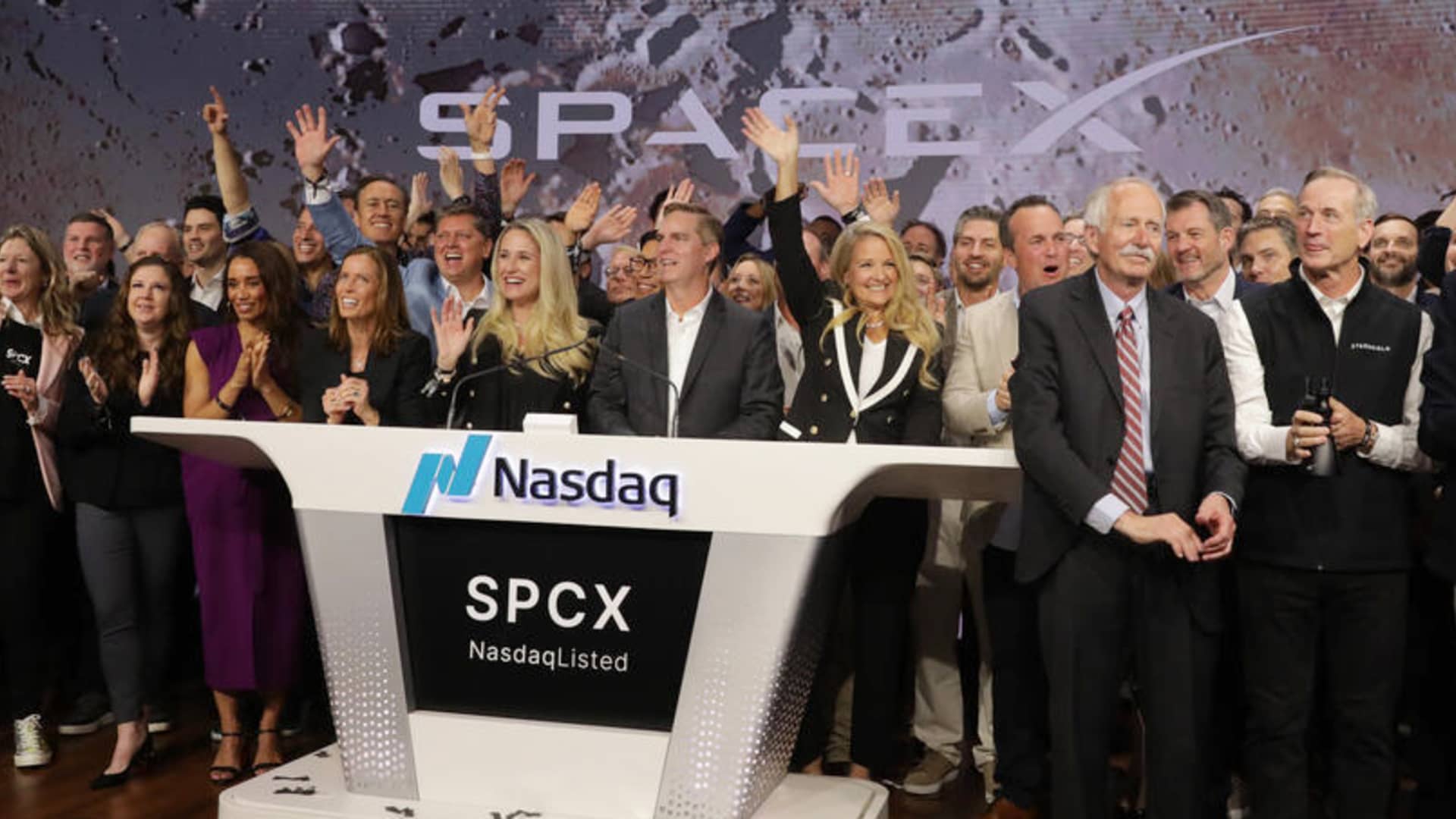
SpaceX shares fell 6% on Thursday to just under $180, a drop that erased most of the gains from the company's blockbuster IPO earlier this week. The five-day volume-weighted average price, or VWAP, now sits at $179 a share, meaning the average investor who bought SpaceX in the open market after the debut is roughly breaking even, according to CNBC data.
VWAP is calculated by dividing the total dollar value of trades by the total trading volume. It gives a more accurate picture of where the average buyer entered than the closing price alone. At $179, the VWAP is just below Thursday's close, indicating that late buyers are already underwater, CNBC data shows.
The stock priced at $135 in the IPO and surged to an intraday high above $225 on Tuesday as demand overwhelmed supply. Since then, shares have retreated 20%, falling back to levels last seen on Monday, the second day of trading. The pullback has wiped out the paper profits for anyone who bought in the open market after the first day.
Retail investors who received IPO allocations through brokerage platforms like Robinhood and Fidelity still hold gains. Those shares were purchased at the $135 offering price, and even after the decline, they remain up roughly 33%. Many individual investors received only a fraction of the shares they requested – in some cases just one or a handful. The allocation price gave them a cushion that open-market buyers lack.
The rapid reversal highlights the volatility that can follow a highly anticipated public listing. SpaceX's market value briefly approached $3 trillion before the selloff began. Traders are now watching whether the stock can hold above the $175 level, a key support from the first day's close.
The selloff accelerated in the final hour of trading, with volume spiking as sellers overwhelmed buyers. More than 80 million shares traded on Thursday alone, exchange data showed. The stock's decline from its peak of $225 represents a 20% drop, a move that has erased roughly $600 billion in market value.
For investors who bought at the IPO price, the paper gain remains substantial. For those who bought in the open market at prices above $200, the losses are mounting. The VWAP of $179 indicates that the majority of post-IPO buyers are now at break-even or slightly negative, according to CNBC.
The IPO allocation process itself has come under scrutiny. Retail investors who requested shares through platforms like Robinhood and Fidelity received only a fraction of what they asked for, a common outcome in hot offerings. Those who did not get allocations and bought in the open market are now the most exposed. The allocation process has drawn criticism from some retail investors who felt shut out. Platforms like Robinhood and Fidelity have defended their methods, saying they aim to give as many customers as possible access to hot IPOs.
The broader market also declined on Thursday, with the Nasdaq Composite falling 1.5%, according to CNBC. The pullback in SpaceX adds to the pressure on high-growth stocks as interest rates rise.
Traders said the VWAP level of $179 is now a key resistance point. A move above it could signal that buyers are stepping in, while a break below $175 could trigger further selling.
CNBC's Chris Hayes and Deena Zaidi contributed to this report.