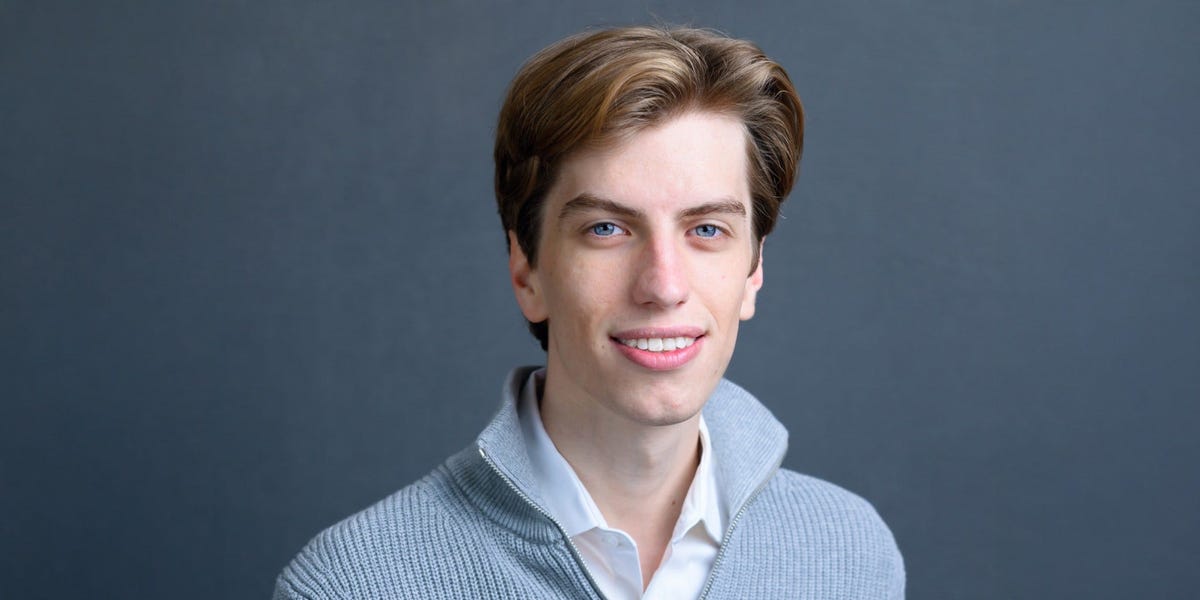
Leopold Aschenbrenner, the 20-something AI prodigy behind the hedge fund Situational Awareness, saw his firm forced to sell its public stocks to Citadel. The fund's private AI bets remain.
The hedge fund Situational Awareness, run by 20-something AI prodigy Leopold Aschenbrenner, was forced to sell most of its public equity holdings to Citadel on Wednesday. The once-$20 billion firm scaled rapidly after launching with less than $1 billion, counting Jane Street, Stripe cofounders Patrick and John Collison, and former GitHub CEO Nat Friedman among its investors.
Aschenbrenner, a German native, arrived at Columbia University at 15, graduated as valedictorian at 19, and joined OpenAI's superalignment team in 2021. OpenAI fired him in 2024, saying he improperly shared internal information. Aschenbrenner denied the account on a podcast: "I did not disclose sensitive information." He attributed the firing to an internal memo about security measures, after which he received a warning from HR and was let go.
In June 2024, he published a 165-page essay titled "Situational Awareness" that argued AI would quickly transform the economy, requiring huge investments in computing power, semiconductors, and energy. "Before long, the world will wake up," he wrote. "But right now, there are perhaps a few hundred people, most of them in San Francisco and the AI labs, that have situational awareness." The essay made him a Silicon Valley darling; podcaster Tim Ferriss called him the "Nostradamus of AI."
Without prior investing experience, Aschenbrenner founded the namesake hedge fund, which had only eight employees and four investment professionals as of a recent regulatory filing. The firm's public portfolio – bought by Citadel – had been the source of its rapid growth. Situational Awareness still holds its private AI investments, including a stake in Anthropic. Aschenbrenner is engaged to Avital Balwit, chief of staff for Anthropic CEO Dario Amodei.
Drafted by a large language model from the source reporting linked above, then screened by automated publishing checks. It is not read by a journalist before publication. Some articles cite our Alpha Score. Verify prices and figures against the original source. Educational coverage, not personalized advice.