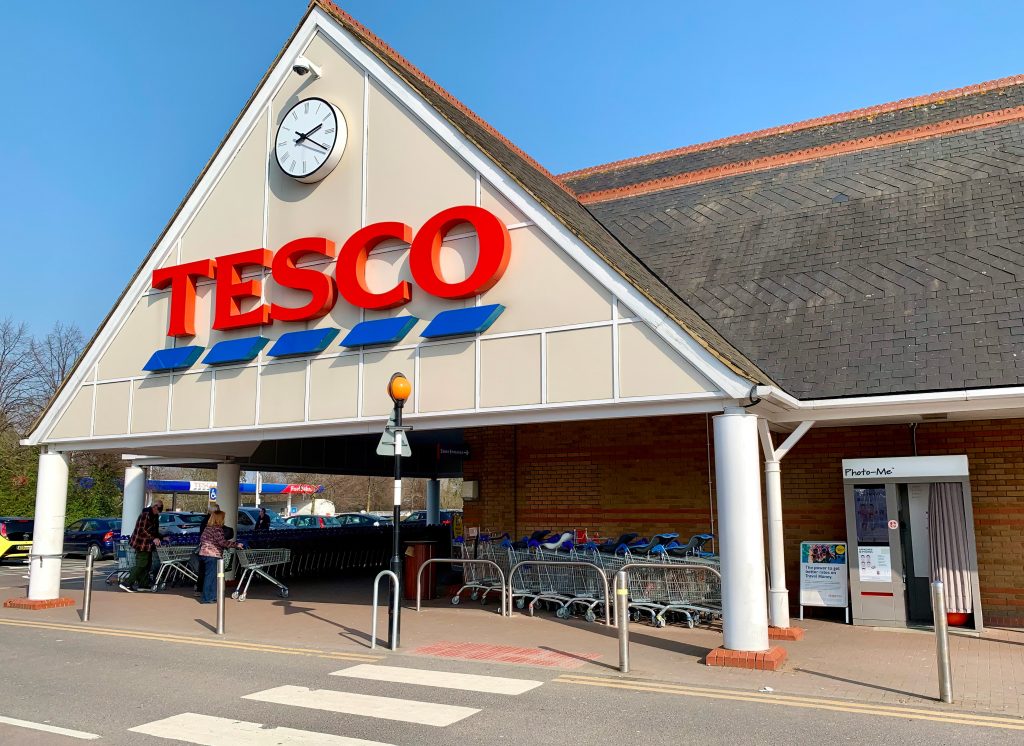
Four of the UK's biggest retailers are testing a shared retail media platform built by dunnhumby, the customer-data firm part-owned by Tesco. Tesco, B&Q, John Lewis and Waitrose are running a series of pilot campaigns designed to let brands buy ads across multiple retailers from a single system. The goal is to solve what the sector calls its biggest scaling problem: fragmentation.
Retail media has grown fast over the past three years. Amazon, Walmart and UK grocers all built their own ad businesses. The landscape is split. A brand trying to advertise on Tesco's platform, then on John Lewis's, then on B&Q's, has to manage separate logins, different measurement standards and incompatible data sets. That friction limits how much brands spend. Dunnhumby's pitch is that a common infrastructure, using its shopper-data model, can lift the ceiling.
The alliance is still in pilot phase. Retail Gazette reported that the four retailers are running "a series of pilot" campaigns. Dunnhumby has not disclosed revenue targets or a launch date for a full commercial rollout. The participants represent significant reach. Tesco alone accounts for roughly 27% of UK grocery sales. John Lewis and Waitrose, both part of the John Lewis Partnership, cover upmarket food and general merchandise. B&Q, owned by Kingfisher, adds a home-improvement vertical that most grocers do not touch.
The read-through for the sector is about infrastructure, not ad revenue. If the pilots prove that a shared retail-media layer can work, it gives medium-sized retailers a way to attract brand ad budgets that currently flow only to the largest platforms. It also pressures Amazon, whose UK advertising business has no such cross-retailer standard and relies on closed-loop data. For brands, the value is simpler: one buying point, one measurement set, less waste.
Dunnhumby is a logical builder. The company has run Tesco's Clubcard analytics for decades and sells its customer-insight models to consumer-goods firms. Its existing relationships with CPG giants like Unilever and P&G mean the pilot already has access to the buyers who write the ad cheques. The question is whether the four retailers are willing to share enough data and enough control to make the platform genuinely interoperable.
Retailers guard their first-party data closely. Tesco, John Lewis and Waitrose all have their own retail-media units. Handing campaign management to dunnhumby would mean ceding part of that profit pool and giving a third party visibility into customer behaviour that each retailer currently owns alone. The pilot structure suggests dunnhumby is moving slowly. A series of pilots implies staged testing, likely starting with non-competing categories, before a broader rollout.
For investors in the listed names, the immediate impact is negligible. Tesco and Kingfisher, B&Q's parent, do not break out retail-media revenue as a material segment. The John Lewis Partnership is private. The significance is structural. If the alliance scales, it could reshape how CPG budgets are allocated across UK retail media, tilting spend away from single-retailer deals toward cross-platform buys.
The next marker is whether dunnhumby announces additional retailers, particularly from the grocery or drugstore chains that overlap with Tesco's core catchment, or a timeline for moving from pilot to product. A commitment from a retailer that competes directly with one of the four, such as Sainsbury's or M&S, would signal that the model has traction beyond the initial group. So far, no such names have been attached.