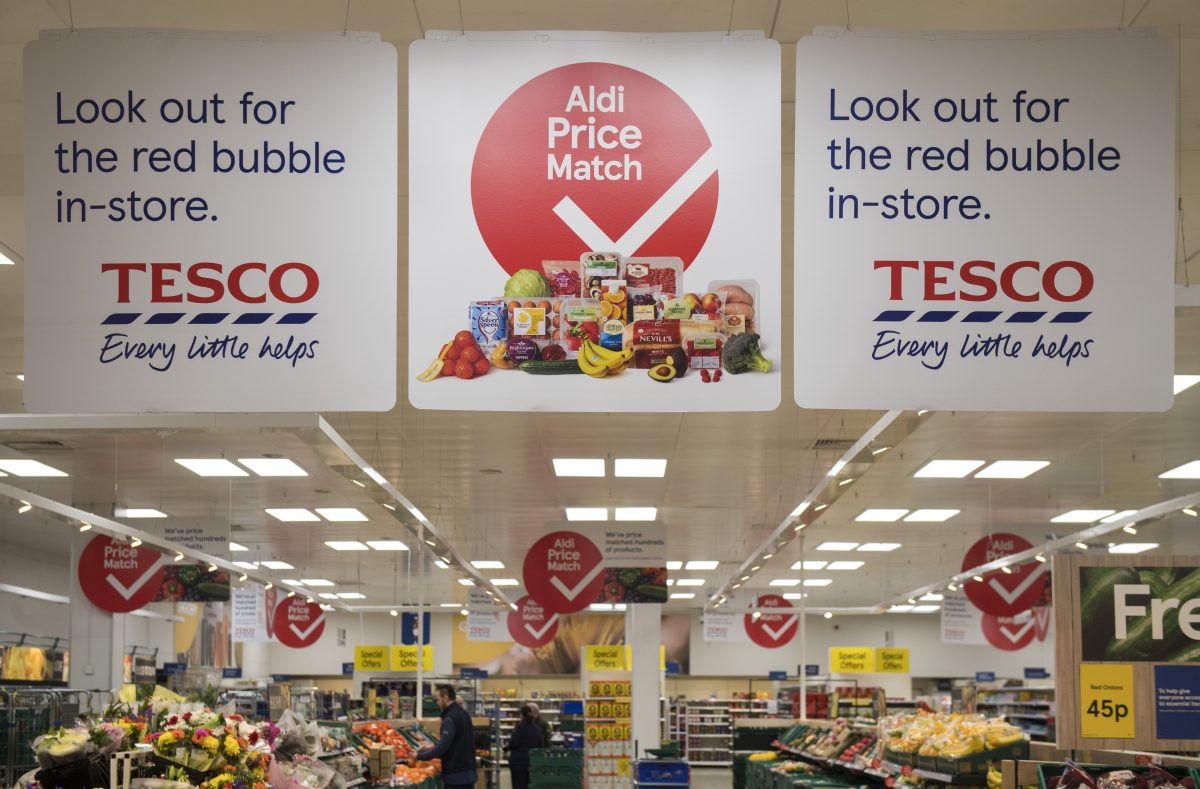
Tesco reported full-year sales of £66.6bn, a 4.6% increase on a comparable basis, as the UK’s largest retailer successfully leveraged its value-focused pricing strategy to capture market share. Despite the top-line expansion, adjusted operating profit rose only 0.8% to £3.15bn, reflecting the heavy cost of maintaining competitive pricing against discounters.
Margin Compression in a Value-First Market
The modest profit growth, relative to the robust sales performance, highlights the squeeze currently facing major grocers. Tesco’s strategy of prioritizing "lower prices and improved quality" is effectively a margin-sacrifice play designed to defend its dominant position. Cash generation remains a bright spot, with free cashflow climbing 11.8% to £1.96bn, providing the balance sheet flexibility needed to sustain this aggressive pricing model.
| Metric | Result | Change (YoY) |
|---|
| Comparable Sales | £66.6bn | +4.6% |
| Adjusted Operating Profit | £3.15bn | +0.8% |
| Free Cashflow | £1.96bn | +11.8% |
Market Implications for Retail Equities
For equity traders, the divergence between sales volume and operating margins is the key signal. When a market leader like Tesco struggles to convert a 4.6% sales increase into significant profit growth, it suggests that the inflationary environment for input costs remains sticky.
- Sector Rotation: Investors should watch peers like Sainsbury’s and Marks & Spencer, as the pricing war initiated by the leaders forces a race to the bottom that could impair sector-wide margins.
- Consumer Spending Proxies: Grocer performance acts as a real-time barometer for UK consumer sentiment. If Tesco continues to trade margin for volume, it indicates that the average household remains highly sensitive to price, limiting the ability of retailers to pass through cost increases.
- Correlated Pressures: The cost-of-living squeeze influences how capital flows into broader consumer staples. Traders often look at these results to gauge when the pivot to "value" might reach its limit, potentially opening up opportunities in higher-margin luxury or discretionary retail if consumer confidence stabilizes.
What to Watch
Management commentary regarding the trajectory of food inflation and wage pressures will be the primary catalyst for the stock price in the coming sessions. Investors should monitor the £1.96bn free cashflow figure closely; if that number begins to contract, the current strategy of price-cutting will become unsustainable without a significant shift in operational efficiency or a reduction in competitive intensity.
"Tesco has reported higher full-year sales and cashflow after stepping up investment in ‘lower prices and improved quality’."
Market participants should watch for any signs that the price-matching initiatives are beginning to hit the bottom line harder than expected, as this would likely trigger a re-rating of the sector. The focus remains on whether the volume gains can eventually translate into operating leverage once pricing strategies normalize.
Ultimately, Tesco is winning the war for the customer’s wallet but paying a heavy price in operational profitability.