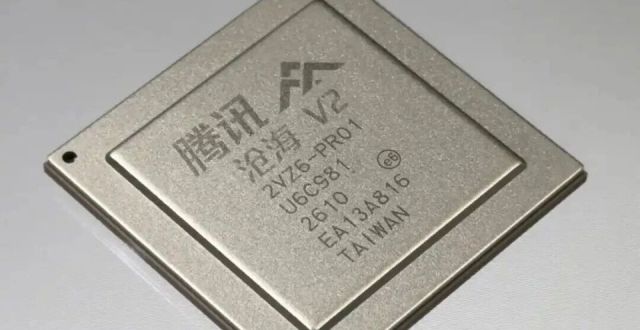
Tencent has started mass production of its self-developed Canghai V2 video transcoding chip after the processor topped all MSU hardware encoding rankings. The new silicon delivers H.266 compression that is 30% ahead of the previous generation, according to the company. The move marks a step change in Tencent's ability to control its own video infrastructure costs and reduce reliance on third-party suppliers.
Canghai V2: Mass Production and the MSU Benchmark Lead
The Canghai V2 is a video transcoding chip designed to handle high-efficiency video encoding at scale. Topping the MSU benchmarks – a widely cited independent test for hardware encoders – gives Tencent a credible claim to best-in-class performance for live streaming, video-on-demand, and cloud-based media processing. The 30% improvement in H.266 compression over the prior generation means lower bandwidth consumption per stream, which directly cuts delivery costs for Tencent's massive video ecosystem, including WeChat Channels, Tencent Video, and its cloud customers.
Mass production is the critical inflection point. Chip design wins mean little without yield and volume. By moving to volume manufacturing, Tencent signals that the Canghai V2 has passed internal reliability and cost targets. The company can now begin deploying the chip across its own data centers and, eventually, offer it as a service to enterprise clients through Tencent Cloud.
Why Silicon Self-Sufficiency Matters for Tencent Now
Tencent has been investing in custom silicon for years. The Canghai V2 arrives at a moment when cloud margins are under pressure across the industry. Hyperscalers are racing to build their own chips for AI inference, networking, and media processing. For Tencent, the video encoding workload is one of the largest cost drivers. Owning the silicon gives the company a direct lever to improve gross margins in its cloud and content delivery segments, without waiting for Intel, AMD, or NVIDIA to optimize their roadmaps.
The chip also strengthens Tencent's competitive position against Alibaba and ByteDance, both of which have their own in-house silicon efforts. Alibaba's Hanguang and ByteDance's chip projects target similar workloads. A benchmark lead in encoding efficiency gives Tencent a tangible differentiator for its cloud video services, especially in markets where bandwidth costs are high.
The Decision Point for TCEHY Investors
For holders of TCEHY (Tencent's OTC-traded shares), the Canghai V2 is a long-term margin story, not an immediate earnings catalyst. The chip's impact will show up gradually as deployment scales across Tencent's infrastructure. The key question is whether the cost savings are large enough to move the needle on Tencent's overall profitability, which has been squeezed by regulatory costs and slower gaming revenue growth.
AlphaScala's proprietary data gives TCEHY an Alpha Score of 46 out of 100, labeled Mixed, in the Communication Services sector. The score reflects a balanced risk-reward profile, with the chip development offering a potential upside catalyst that is not yet priced into consensus estimates. Investors should watch for mentions of Canghai V2 deployment in Tencent's quarterly earnings calls, particularly any disclosure of the number of chips deployed or the impact on cloud segment margins.
The next concrete marker is the ramp timeline. If Tencent confirms that Canghai V2 is being deployed across a material portion of its video infrastructure within the next two quarters, the chip could become a meaningful driver of margin expansion. If deployment is slow or limited to internal use only, the competitive advantage will take longer to materialize. Either way, the MSU benchmark win gives Tencent a credible story to tell – and a chip that actually works at scale.
For more on Tencent's broader market positioning, see the TCEHY stock page and stock market analysis.