Commodities● Neutral
Teikoku Seiyaku Taps AGC Biologics for rhMMP-7 Manufacturing
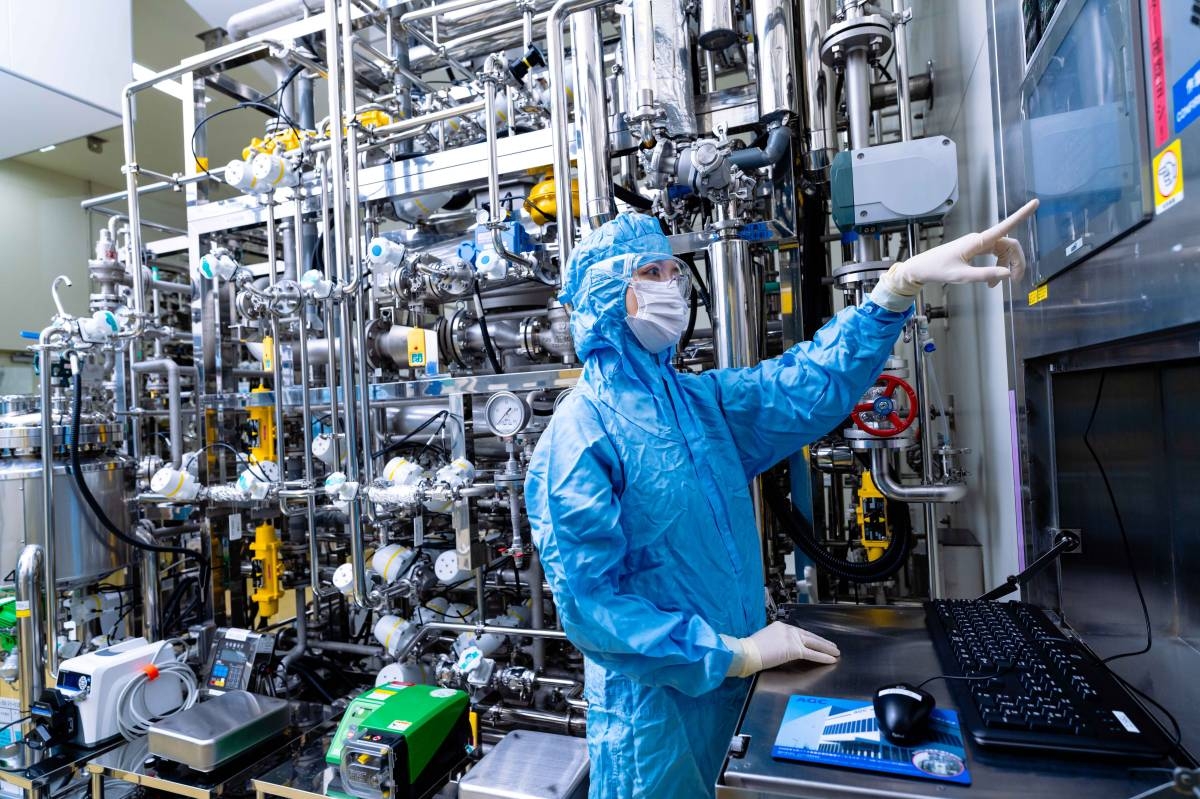
AGC Biologics will manufacture Teikoku Seiyaku's novel therapy rhMMP-7 using a two-continent strategy. The deal reduces supply chain risk but introduces tech transfer execution challenges between Heidelberg and Chiba.
Continue with
Teikoku Seiyaku (TYO:4572) has selected AGC Biologics to manufacture the drug substance for its novel therapy rhMMP-7. The contract covers process development and GMP manufacturing for clinical trials, with work split between a site in Germany and a site in Japan. The structure itself is the story: a deliberate two-continent manufacturing strategy designed to reduce supply chain risk in an environment where single-source production is a liability.
The naive read is that this is a routine CDMO deal – one company hiring another to make a biologic. The better market read focuses on the execution risk embedded in the hand-off between continents and the premium that geographic redundancy commands in today's biotech supply chain.
The Two-Site Manufacturing Path and Its Execution Risk
Under the agreement, AGC Biologics will leverage its global microbial network. The project begins with cell bank creation at its Microbial Center of Excellence in Heidelberg, Germany. The process then transitions to the Chiba, Japan facility for process development and GMP manufacturing to support clinical trials.
The drug substance is rhMMP-7, a recombinant matrix metalloproteinase-7 that could offer a less invasive treatment option. Teikoku Seiyaku brings its transdermal absorption expertise; AGC brings its microbial manufacturing track record.
“Partnering with AGC Biologics was a clear choice. Their team has a proven track record in microbial manufacturing, and their global presence gives us the flexibility and security we need,” said Dr. Hiroyuki Kubo, Director and Executive Officer at Teikoku Seiyaku.
Dieter Kramer, General Manager of the AGC Biologics Heidelberg site, added: “Our role here in Heidelberg is to be a reliable and collaborative partner from the very beginning, applying our microbial development experience to build a robust foundation for this therapy.”
Susumu Zen-In, General Manager of the AGC Biologics Chiba site, said: “We are delighted to support the Teikoku Seiyaku team on such an innovative project.”
The sequence matters. Heidelberg handles the early-stage cell bank creation, leveraging a 40-year microbial development history. Chiba takes over for process development and GMP manufacturing. That hand-off requires smooth tech transfer – a risk in itself. The alternative of keeping everything in one location is riskier, given the geopolitical and operational vulnerabilities of single-site production.
Why Geographic Redundancy Matters for Biologic Supply Chains
AGC Biologics is the only CDMO offering microbial manufacturing on three continents: Asia (Chiba, Japan), North America (Seattle, USA), and Europe (Heidelberg, Germany and Copenhagen, Denmark). That is the key structural advantage in this deal.
Supply chain security for biologic drugs typically depends on single-site production. If a facility shuts down – due to contamination, regulatory action, natural disaster, or trade restrictions – the entire program halts. By splitting cell banking in Europe and GMP manufacturing in Japan, Teikoku builds a redundant pathway: the process can be transferred to another site if needed, using harmonised quality systems.
For a drug developer, a global network provides crucial flexibility and de-risks the supply chain by offering geopolitical stability and redundancy of supply. It allows for efficient tech transfer between sites with harmonised quality systems, offers multi-continent production options to meet regional market demands, and ensures business continuity. With facilities in the U.S., Europe, and Asia, AGC Biologics helps partners build a resilient manufacturing strategy that is not dependent on a single site or region.