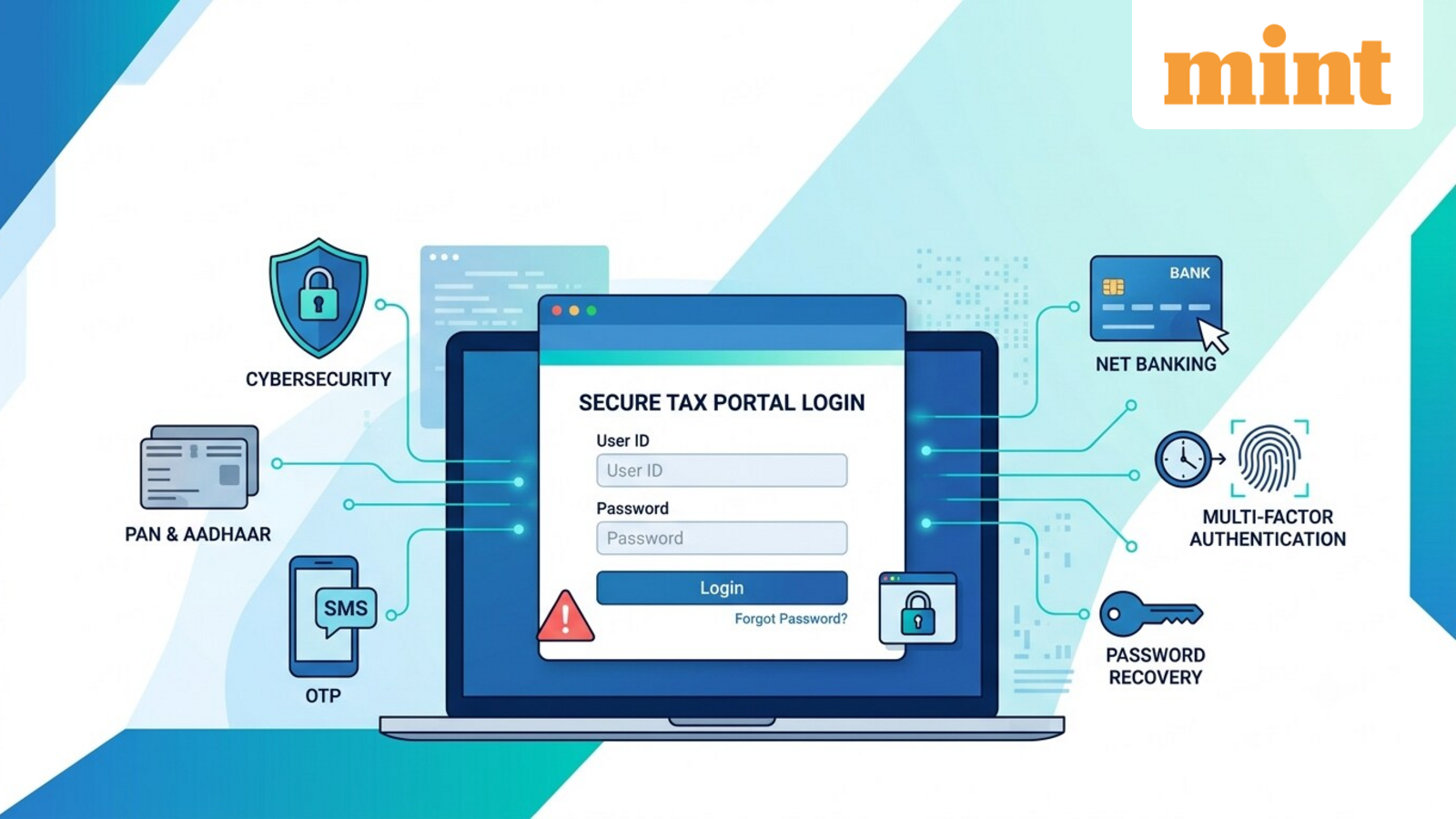
Five failed login attempts lock your Income Tax e-filing account for 30 minutes. Net banking bypasses the password check entirely. Learn the triggers and how to avoid the lockout.
Taxpayers who forget their Income Tax Department e-filing password risk losing access to their accounts faster than many realize. The portal locks an account after five consecutive failed login attempts, according to the department's login guidelines.
That lock stays in place for 30 minutes unless the user manually unlocks the account through the portal's unlock option. The rule applies to all individual taxpayers who log in using their PAN as the user ID.
A locked account means no filing, no return status checks, no access to Form 26AS or past filings. For someone trying to meet a deadline, that half-hour window can be the difference between on-time and late filing.
What triggers the lock. The count resets after a successful login. But a string of typos, forgotten passwords, or caps-lock errors can trigger the lock quickly. The portal does not warn before the fifth attempt.
Who is exposed. Any taxpayer with a registered PAN on the e-filing portal. The lock applies regardless of whether the PAN is linked to Aadhaar. Even users who have not linked their Aadhaar can still log in, though some portal features remain restricted, the guidelines say.
What reduces the risk. The simplest safeguard is using the net banking login option. If the taxpayer's bank supports it, they can bypass the e-filing password entirely. The bank's own authentication replaces the portal's password check, removing the lockout risk.
Another option is using a Digital Signature Certificate or Aadhaar OTP as a secondary factor. But those require prior setup. If the account is already locked, none of these alternatives work until the lock expires or the account is manually unlocked.
What makes it worse. Enabling the e-filing Vault's higher security adds a second-factor authentication step. That extra layer can block access if the user loses access to the configured method, such as the mobile number linked to Aadhaar. The portal allows login through other pre-configured methods like bank account EVC or DSC, but only if those were set up before the Vault was enabled.
A compromised account presents a more serious risk. The guidelines advise reporting the incident to cybercrime authorities or local police immediately. Changing the password at the earliest possible moment is recommended, even if the account is still accessible.
The bottom line. The five-attempt lockout is a mechanical risk, not a security breach. But for a taxpayer with a filing deadline approaching, it can cause real disruption. The simplest fix is to use net banking login or keep the password manager handy.
Drafted by a large language model from the source reporting linked above, then screened by automated publishing checks. It is not read by a journalist before publication. Some articles cite our Alpha Score. Verify prices and figures against the original source. Educational coverage, not personalized advice.