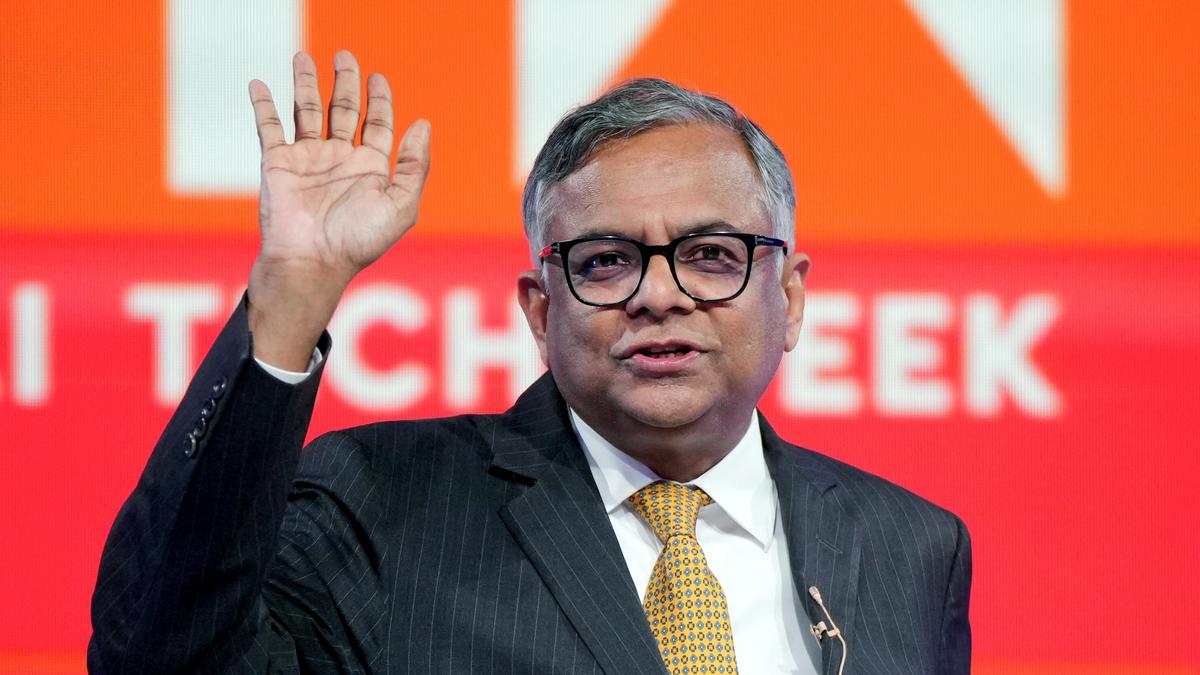
The Sir Dorabji Tata Trust accepted Chandrasekaran's resignation and will set up a selection committee to pick his successor. His term runs until February 2027, giving the group six months to name a new leader.
N. Chandrasekaran will step down as chairman of Tata Sons when his current term ends on February 20, 2027. The Sir Dorabji Tata Trust, which holds 27.9% of Tata Sons, accepted his resignation on August 12 and has started looking for a replacement.
Chandrasekaran notified his decision by email, saying he would not offer himself for reappointment. The trust placed on record its "deepest appreciation for his contribution and stewardship of Tata Sons and the Tata group over the past decade."
A resolution passed by the trustees kicks off a Selection Committee process, per the company's Articles of Association, to recommend a new chairman. The trust promised "full support to Tata Sons in ensuring a smooth, timely and orderly transition of leadership."
Chandrasekaran was appointed chairman in January 2017, stepping into a role that had been stormy since the ouster of Cyrus Mistry. His tenure covered a period of rapid group expansion, consolidation of business lines, and navigation through antitrust scrutiny in sectors from telecom to aviation. Under his watch, Tata Sons regained control of Air India through privatization and deepened the group's push into semiconductor manufacturing and electronics production.
The trust's statement made no mention of potential candidates. The articles of association give the selection committee broad latitude, but the trust's influence over the nomination is substantial given its 27.9% stake–the largest single block in Tata Sons, which is not publicly listed. Chandrasekaran's term ends in roughly six months, leaving the committee a tight window to settle on a successor.
His departure was voluntary; the trust did not push for a change. But the timing places a leadership transition in the middle of high-stakes capital commitments. The group has pledged tens of billions of dollars into the chip fab project in Gujarat and the electronics assembly business, both at early stages where management continuity matters for investor confidence and government clearances.
A change at the top carries more weight at Tata Sons than at most holding companies. The chairman's role is not just governance but strategic direction across 100-plus operating companies. Succession talks will likely focus on whether the next chairman comes from within the group's executive pool, or from outside–two different messages about the preference for continuity versus fresh perspective.
Chandrasekaran, 63, had been managing director of Tata Consultancy Services before taking the top job at the group holding company. His background at the group's most profitable subsidiary gave him credibility with operating company CEOs. An outside successor may come from a different track entirely, potentially an industrialist or government-connected figure.
Drafted by a large language model from the source reporting linked above, then screened by automated publishing checks. It is not read by a journalist before publication. Some articles cite our Alpha Score. Verify prices and figures against the original source. Educational coverage, not personalized advice.