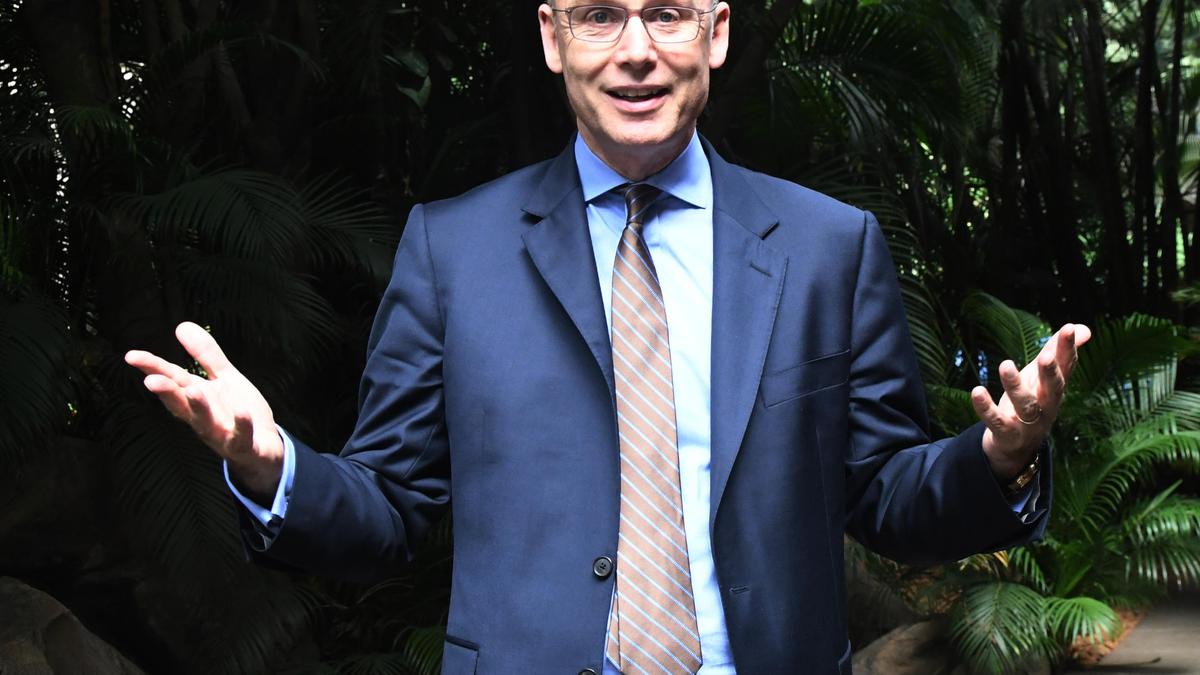
Tata Technologies CEO Warren Harris says the company expects a 'breakout year' as automakers outsource full vehicle development programs. Revenue rose 33.8% in Q1.
Warren Harris, the CEO and Managing Director of Tata Technologies, told PTI the company expects a "breakout year" in the current fiscal year as automakers accelerate investment in new products and shift more engineering work to outside firms.
Harris pointed to a structural change: original equipment manufacturers are narrowing their focus to what they consider core to their brand identity. Everything else will increasingly be outsourced, he said. Tata Technologies is winning full vehicle development programs as a result.
Among the recent wins is a $100 million deal with Tenneco covering engineering, digital, and business process transformation, using AI and automation. A Japanese luxury automaker has selected the company for a full vehicle engineering program. A European luxury OEM signed a multi-year engagement spanning engineering, manufacturing, supply chain, purchasing, and IDT domains.
"All of these things certainly reinforce our confidence that this is going to be a breakout year for the company," Harris said.
The company's first-quarter results back that claim. Total operating revenue came in at Rs 1,664.6 crore, up 33.8% year on year. Harris called that "breakout performance."
He acknowledged headwinds in the broader auto environment. Volkswagen is restructuring. BMW issued a profit warning. Geopolitical issues linger. Harris said those factors have helped Tata Technologies.
"Somehow counterintuitively those decisions and those announcements have provided tailwinds for us in a context that allows those organizations to scale capability in lower cost locations than Germany," he said.
Harris said the company is confident it will hit its "strong double-digit growth guidance for the full year" despite those restructurings.
The CEO framed the shift as a permanent one. He predicted the engineering services market will split into two tiers. Companies that take on responsibility for full vehicle development and large work packages will do well. Those that just deliver services will remain dependent on OEM capital spending.
"We think we are on the right side of that divide," Harris said. The improvement in growth trajectory over the past nine months, he added, "is likely to sustain and quite probably expand in terms of growth and margins."
Harris also said uncertainty about the viability of electric vehicles has largely resolved. Policy changes in the U.S. and regulatory shifts in Europe created a period of caution. Automakers have now settled on more balanced portfolios of propulsion systems.
"They are clear now on their future product strategy. Investment decisions are being made," Harris said. That clarity is fueling the improvement in new orders, he added.
Tata Technologies' position as a full-service engineering partner for global automakers means it benefits when OEMs increase spending on product development, even if the underlying mix of powertrains shifts. The key variable is the pace at which outsourcing expands.
Harris cited super car company McLaren as an example of the trend. "Driving experience is what is core to their brand. Everything else we believe will increasingly be outsourced."
"We are doing well because of our value proposition," Harris said. "The industry from a product perspective is having the catch up from a period of under-investment and we are the beneficiaries of that because we won a number of full vehicle programmes in the first quarter. That is helping us."
Drafted by a large language model from the source reporting linked above, then screened by automated publishing checks. It is not read by a journalist before publication. Some articles cite our Alpha Score. Verify prices and figures against the original source. Educational coverage, not personalized advice.