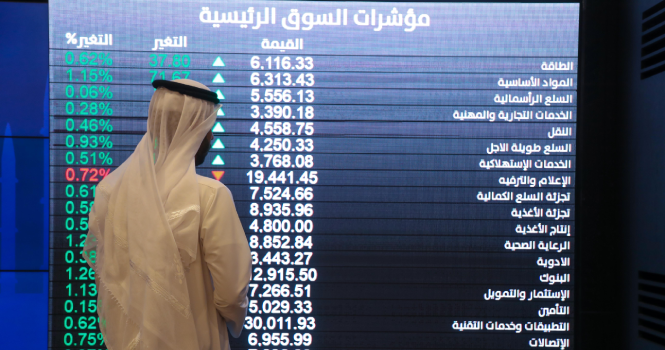
TASI Momentum: Bahri and Petro Rabigh Hit 52-Week Highs

Bahri and Petro Rabigh have reached 52-week highs on the TASI, signaling a shift in investor focus toward maritime logistics and regional petrochemical refining capacity.
Alpha Score of 46 reflects weak overall profile with strong momentum, poor value, poor quality, moderate sentiment.
Alpha Score of 47 reflects weak overall profile with moderate momentum, poor value, moderate quality. Based on 3 of 4 signals — score is capped at 90 until remaining data ingests.
Alpha Score of 53 reflects moderate overall profile with poor momentum, strong value, strong quality, weak sentiment.
Alpha Score of 58 reflects moderate overall profile with poor momentum, strong value, strong quality, moderate sentiment.
The Saudi Exchange (Tadawul) saw a distinct shift in momentum as both the National Shipping Company of Saudi Arabia (Bahri) and Rabigh Refining and Petrochemical Co. (Petro Rabigh) reached 52-week highs during the latest trading session. This dual milestone reflects a broader rotation into industrial and energy-linked equities on the TASI. The move suggests that investors are recalibrating their exposure toward companies with direct links to maritime logistics and regional refining capacity.
Bahri and the Maritime Logistics Shift
Bahri’s ascent to a 52-week high underscores the market's focus on regional shipping capacity. As a primary carrier for energy products, the company remains a central proxy for the flow of regional commodities. The recent price action indicates that institutional capital is prioritizing firms with established infrastructure and long-term contracts. This move follows a period of heightened interest in Petro Rabigh’s SAR 25.3M quiet deals signal institutional positioning, which previously signaled that large-scale participants were building positions in the petrochemical sector.
Investors are now evaluating whether the current valuation of Bahri accounts for the sustained demand in global shipping lanes. The company’s ability to maintain its trajectory depends on its operational efficiency and the stability of regional trade routes. Any disruption in these corridors could force a reassessment of the current premium, but for now, the technical breakout remains the dominant narrative for the stock.
Petro Rabigh and Refining Sector Dynamics
Petro Rabigh’s move to a 52-week high highlights the resilience of the petrochemical sector despite fluctuating global margins. The company has navigated a complex environment by focusing on its integration with regional refining assets. As noted in recent Petro Rabigh breakout: technicals flash overbought, but regional petchem strength persists, the stock has benefited from a persistent bid in the petrochemical space. This strength is often tied to the broader stock market analysis regarding the Saudi industrial base.
The following factors are currently influencing the sector:
- Increased focus on downstream refining efficiency.
- Stabilization of petrochemical input costs.
- High demand for refined products within the regional energy ecosystem.
Valuation and Catalyst Path
Both companies are now trading at levels that invite scrutiny regarding their forward-looking guidance. The market is looking for confirmation that these 52-week highs are supported by fundamental earnings growth rather than just sector-wide rotation. For Bahri, the next marker is the upcoming quarterly report on fleet utilization rates. For Petro Rabigh, the focus remains on the operational stability of its refining units and any updates on debt restructuring efforts.
AlphaScala data indicates that the recent volume spikes accompanying these highs are significantly above the 30-day moving average. This suggests that the move is driven by high-conviction institutional buying rather than retail speculation. The next concrete marker for these stocks will be the next set of financial disclosures, which will determine if the current price levels can be sustained through the next fiscal quarter. If the companies fail to provide clear evidence of margin expansion, the current technical breakout may face a period of consolidation.
AI-drafted from named sources and checked against AlphaScala publishing rules before release. Direct quotes must match source text, low-information tables are removed, and thinner or higher-risk stories can be held for manual review.