Taseko Mines Limited (TSX: TKO; NYSE American: TGB; LSE: TKO) reported a significant financial pivot in the first quarter of 2026, driven by sustained production at the Gibraltar mine and the successful commissioning of the Florence Copper facility. The company posted Adjusted EBITDA of $93 million alongside earnings from mining operations of $115 million, representing year-over-year improvements of 172% and 195%, respectively. While these headline figures suggest a robust operational environment, the underlying mechanics of the company's production profile and the transition at Florence Copper require a more granular look for those tracking TKO stock page.
Gibraltar Operational Consistency and Throughput
The Gibraltar mine remains the primary engine for Taseko’s current cash flow, producing 30 million pounds of copper and 717 thousand pounds of molybdenum during the quarter. The total operating cost, or C1 cost, settled at US$2.63 per pound of copper produced. This cost structure is supported by copper grades of 0.25%, which the company notes is consistent with the life-of-mine average. Mill throughput reached 7.0 million tons, a slight decrease from the previous quarter. This reduction was a deliberate operational choice to optimize copper recoveries, which climbed to 83% during the period. The trade-off between volume and recovery efficiency is a standard lever in mining operations, but it highlights the sensitivity of Taseko’s margins to mill performance and maintenance cycles. Unscheduled maintenance also played a role in the throughput variance, serving as a reminder that operational uptime remains a key variable for investors assessing the consistency of these cash flows.
Florence Copper Integration and Production Scaling
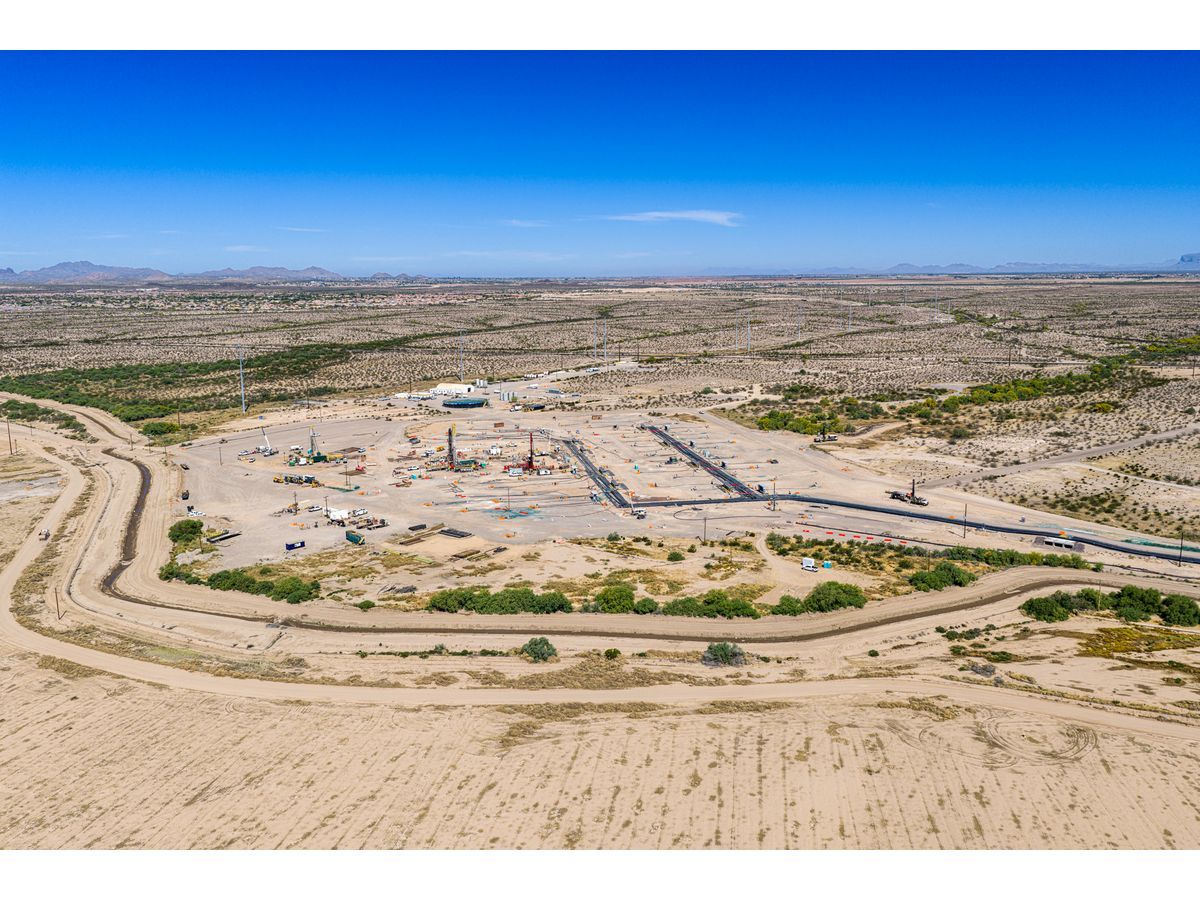
The most significant development for Taseko’s growth profile is the transition of the Florence Copper project from a development asset to a producing one. The SX/EW plant commenced operations in February, with the first copper cathodes harvested by the end of that month. Total production for the quarter reached 1.5 million pounds of copper cathode. The ramp-up phase is currently defined by the acidification of the wellfield, which proceeded faster than initial expectations due to higher-than-anticipated flow rates.
Management has maintained its 2026 production guidance for Florence Copper in the range of 30 to 35 million pounds. Achieving this target depends on the integration of new well groups throughout the year. With five drill rigs currently active on-site, the company is attempting to accelerate the expansion of the wellfield. The mechanism for growth here is straightforward: as more wells are constructed, tested, and tied into the existing SX/EW circuit, the volume of solution processed should increase. The risk for the remainder of the year lies in the execution of this wellfield expansion and the ability to maintain steady solution grades as the scale of the operation increases.
Financial Position and Capital Allocation
Taseko reported net income of $17 million, or $0.05 per share, with Adjusted net income of $28 million, or $0.08 per share. Revenue for the quarter totaled $237 million, derived from the sale of 27 million pounds of copper and 708 thousand pounds of molybdenum. These figures provide a baseline for the company's ability to self-fund its ongoing development projects, including the Yellowhead copper project. Environmental assessment work for Yellowhead is ongoing, with the next major milestone being the filing of a detailed project description, expected this summer. This filing will incorporate feedback from Indigenous communities, the general public, and regulatory agencies.
For those evaluating the broader sector, Taseko’s current Alpha Score of 34/100, labeled as Weak, suggests that despite strong quarterly results, the stock faces broader market or sector-specific headwinds that may be impacting sentiment relative to its peers. Investors should look for the company to demonstrate sustained, predictable production from Florence Copper in the second and third quarters to potentially improve this standing. The ability to manage the transition from the initial wellfield startup to full-scale production will be the primary determinant of whether the company can maintain its current cost profile and margin expansion.
Risk Factors and Future Milestones
Operational risk at Taseko is concentrated in two areas: the maintenance of recovery rates at Gibraltar and the successful scaling of the Florence wellfield. While the first quarter showed strong recovery rates, any deviation in mill performance could impact the C1 cost per pound. Similarly, the ramp-up at Florence is sensitive to the timing of wellfield integration. If the construction or testing of new wells faces delays, the 30 to 35 million pound production target for 2026 could be compromised.
Market participants should monitor the upcoming detailed project description filing for Yellowhead as a signal of the company’s long-term growth pipeline. While the immediate focus is on the current production assets, the market will likely begin to price in the capital requirements and regulatory hurdles associated with the next phase of development. The current financial results provide a solid foundation, but the path forward requires consistent execution across both producing assets and the regulatory front. For those interested in broader stock market analysis, Taseko’s performance serves as a case study in managing the transition from a single-asset producer to a diversified operation.