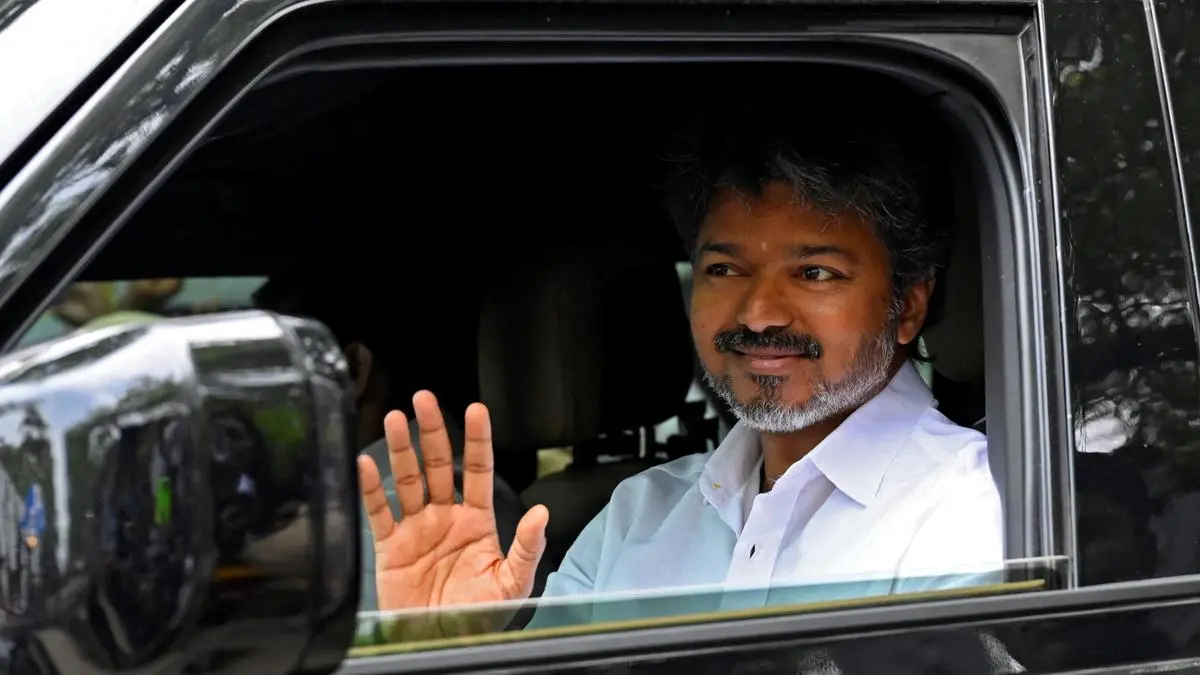
TVK's 108-seat victory leaves it 10 seats shy of a majority, forcing complex negotiations with the AIADMK and other factions to avoid a fragile minority.
FIVE BELOW, INC currently carries an Alpha Score of n/a, giving AlphaScala's model a neutral read on the setup.
The political landscape in Tamil Nadu has entered a period of high-stakes negotiation following the recent Assembly elections. C. Joseph Vijay’s Tamilaga Vettri Kazhagam (TVK) emerged as the single largest party with 108 seats, yet the party remains 10 seats short of the 118-seat majority required to govern the 234-member Assembly. This numerical shortfall forces TVK into a complex coalition-building exercise, as the party must now navigate the competing interests of established regional players and smaller political factions to secure a stable mandate.
While the Indian National Congress (INC) has confirmed that TVK approached it for support, the five seats held by the Congress are insufficient to reach the majority threshold. Even with the inclusion of smaller parties such as the Desiya Murpokku Dravida Kazhagam (DMDK) and various Left formations, the math remains precarious. These smaller entities are currently aligned with the Dravida Munnetra Kazhagam (DMK), and their reluctance to switch sides leaves TVK with limited options for a comfortable majority. Political analysts suggest that for long-term governance stability, TVK requires the backing of at least 125 MLAs, a target that necessitates a strategic pivot toward the major opposition blocks.
The most significant development in these negotiations is the informal signal from the All India Anna Dravida Munnetra Kazhagam (AIADMK) regarding its willingness to support TVK. This potential alignment is rooted in the campaign rhetoric of C. Joseph Vijay, who framed his electoral platform as a direct challenge to the DMK while notably avoiding criticism of the AIADMK. However, the path to a formal arrangement is fraught with internal friction. Within the AIADMK, one faction advocates for unconditional outside support, while another insists on securing a formal role within the government. Analysts note that a key point of contention is the potential demand for AIADMK leader Edappadi K. Palaniswami to be appointed Deputy Chief Minister, a concession that could undermine the authority of the incoming TVK administration.
For those evaluating the broader stock market analysis of regional political stability, the precedent of minority governments in Tamil Nadu provides a mixed outlook. Historical data shows that minority governments can function, as evidenced by M. Karunanidhi’s 2006 administration, which completed a full term with 96 seats through external support. Conversely, the 1988 collapse of the Janaki Ramachandran government serves as a cautionary tale regarding the volatility of fragile coalitions. In that instance, a promised support base from the Congress evaporated on the day of the confidence motion, leading to unprecedented legislative violence and the subsequent imposition of President’s Rule.
Despite the current impasse, there is no immediate urgency for TVK to finalize its coalition partners. As the leader of the single largest party, C. Joseph Vijay is expected to be invited by the Governor to form the government. Standard procedure suggests he will be granted a window of up to one month to prove his majority on the floor of the House. This timeline provides a critical buffer for back-channel negotiations. During this period, the DMK and AIADMK may opt to extend temporary outside support to avoid the political and economic costs of fresh elections, effectively creating a 'minority' government arrangement while the underlying political equations continue to evolve.
Investors and observers should monitor the series of meetings currently being held by the Tamil Nadu Congress Committee (TNCC), as these will likely dictate the initial direction of the coalition. The primary risk to the current setup is the potential for shifting allegiances among smaller parties or a breakdown in the delicate talks between TVK and the AIADMK. Should the negotiations fail to produce a stable majority, the prospect of a prolonged period of political uncertainty could weigh on the state's legislative agenda. For now, the market read remains cautious, as the transition from a single-party plurality to a functional coalition government requires navigating both the legislative math and the personal political ambitions of veteran party leaders. The stability of the next administration will be confirmed only when a formal confidence motion is successfully cleared on the floor of the Assembly, ending the current period of speculative maneuvering.
AI-drafted from named sources and checked against AlphaScala publishing rules before release. Direct quotes must match source text, low-information tables are removed, and thinner or higher-risk stories can be held for manual review.