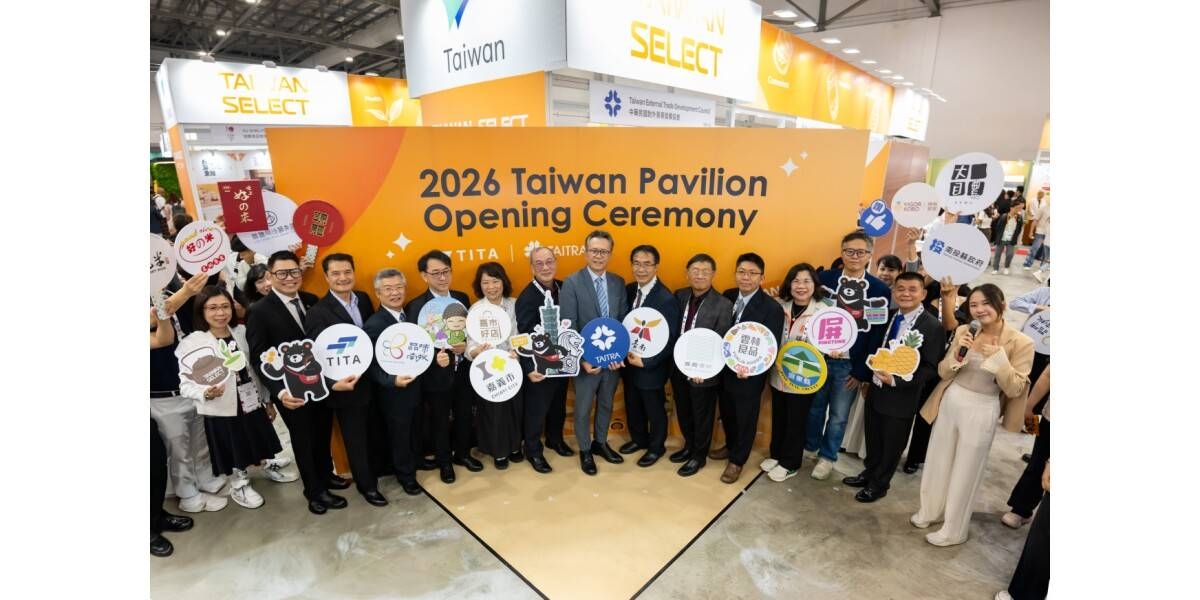
The opening of the Taiwan Pavilion at FHA-Food & Beverage 2026 in Singapore marks a strategic push to expand the regional footprint of Taiwanese food manufacturers. By consolidating a diverse range of producers under a single national banner at the Singapore Expo, the initiative aims to bridge the gap between local production capabilities and the procurement needs of international buyers. This event serves as a primary venue for establishing distribution channels across Southeast Asia and beyond.
Export Channel Expansion and Regional Integration
The presence of the Taiwan Pavilion highlights a concerted effort to leverage Singapore as a logistics and trade hub for the broader Asian market. For companies operating within the food and beverage sector, this event is a critical juncture for securing supply contracts and testing product viability in competitive international markets. The focus on a comprehensive showcase suggests that Taiwanese exporters are prioritizing brand recognition and volume growth to counter domestic market saturation.
This push into international trade shows is a recurring theme in current stock market analysis as companies seek to diversify revenue streams outside of their home markets. The ability to convert these trade show interactions into long-term supply agreements will be the primary indicator of success for the participating firms. The pavilion structure allows smaller, specialized producers to gain exposure that would otherwise be difficult to achieve through independent marketing efforts.
Sectoral Impact and Supply Chain Positioning
While the event focuses on consumer goods, the underlying narrative is one of supply chain integration. The food and beverage sector is increasingly sensitive to regional trade policies and the cost of logistics. By positioning themselves at a major regional exhibition, Taiwanese firms are signaling a readiness to scale operations to meet the specific requirements of international retail and hospitality chains.
AlphaScala data currently tracks various industrial and healthcare components that reflect broader market sentiment, such as Bloom Energy Corp (BE stock page) with an Alpha Score of 46/100 and Agilent Technologies, Inc. (A stock page) with an Alpha Score of 55/100. While these firms operate in different sectors, they share the common challenge of navigating global supply chain volatility that also impacts the food export industry.
- Direct engagement with regional procurement officers.
- Standardization of export-ready product lines.
- Expansion of distribution networks in Southeast Asia.
The next concrete marker for this sector will be the post-event reporting on signed memoranda of understanding and the subsequent adjustments to export volume guidance for the remainder of the fiscal year. Investors should monitor how these trade engagements translate into quarterly revenue growth for the participating food and beverage entities. The success of this pavilion will be measured by the depth of the partnerships formed during the two-day event and the speed at which these new channels are integrated into existing supply chains.