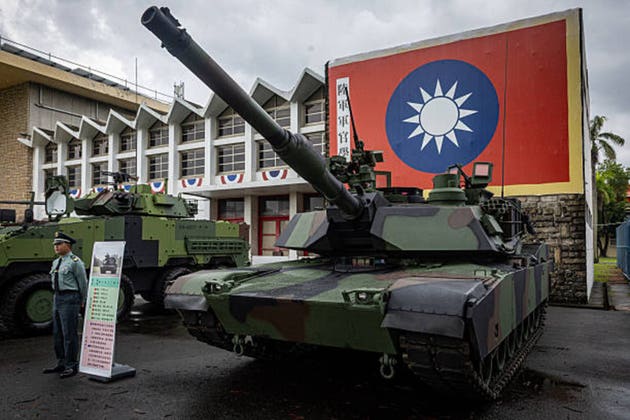
Taiwan kicked off a five-day combat readiness drill Monday, a live-fire exercise spanning ground, air, and naval units across multiple training zones near the Taiwan Strait. The drill, scheduled through Friday, tests the island's ability to repel a fast-moving incursion from China's People's Liberation Army. Taiwan's defense ministry said the exercise was planned months ago and is not tied to any single Chinese action. The timing, however, places it inside a period of elevated military activity on both sides of the strait.
China's PLA has run its own drills around Taiwan in recent weeks, including a three-day operation that simulated a blockade. Taiwan's Taiex index opened flat Monday. The Taiwan dollar held steady near 32.50 against the U.S. dollar. For markets, this is a scheduled event, not a surprise.
The broader trend matters more for investors tracking the region. Taiwan's defense budget has climbed sharply in recent years, reaching a record NT$606.8 billion ($18.6 billion) in 2025, up 7.7% from 2024. That spending flows to local contractors such as state-owned Aerospace Industrial Development Corp. and private firms like Thales Taiwan. The drill reinforces the political consensus in Taipei that higher defense spending is a permanent shift, analysts said.
Semiconductor supply chains remain the largest market risk. Taiwan produces more than 60% of the world's semiconductors and over 90% of the most advanced chips. TSMC, the island's largest company, runs its most advanced fabs in Hsinchu and Tainan, both within range of Chinese missile systems. A real conflict would halt global chip supply for months, hitting every electronics maker from Apple to NVIDIA.
That risk is well understood. The market has priced a Taiwan risk premium into TSMC's ADR for years, visible in its elevated volatility relative to the broader semiconductor index. That premium has narrowed since 2022 as investors grew accustomed to rising tensions without actual conflict. This week's drill is a reminder that the status quo is not static, several fund managers said.
For now, the exercise is a test of military readiness, not a trigger for market dislocation. The next concrete milestone is the annual Han Kuang exercise in July, which is larger and includes civilian evacuation drills. If China responds to this week's drill with its own live-fire exercise in the strait, the risk premium will widen again. If not, the market will treat it as another routine rotation on the calendar.
The Taiwan dollar and the Taiex index are the two most direct proxies for geopolitical risk in the region. A sustained move below the Taiwan dollar's 32.50 support against the greenback would signal that investors are hedging for real escalation. That level has held through every drill and every Chinese military operation since 2023. The PPA aerospace and defense ETF, which holds a mix of U.S. and allied defense names, has seen inflows this year, though not directly tied to Taiwan-specific events.