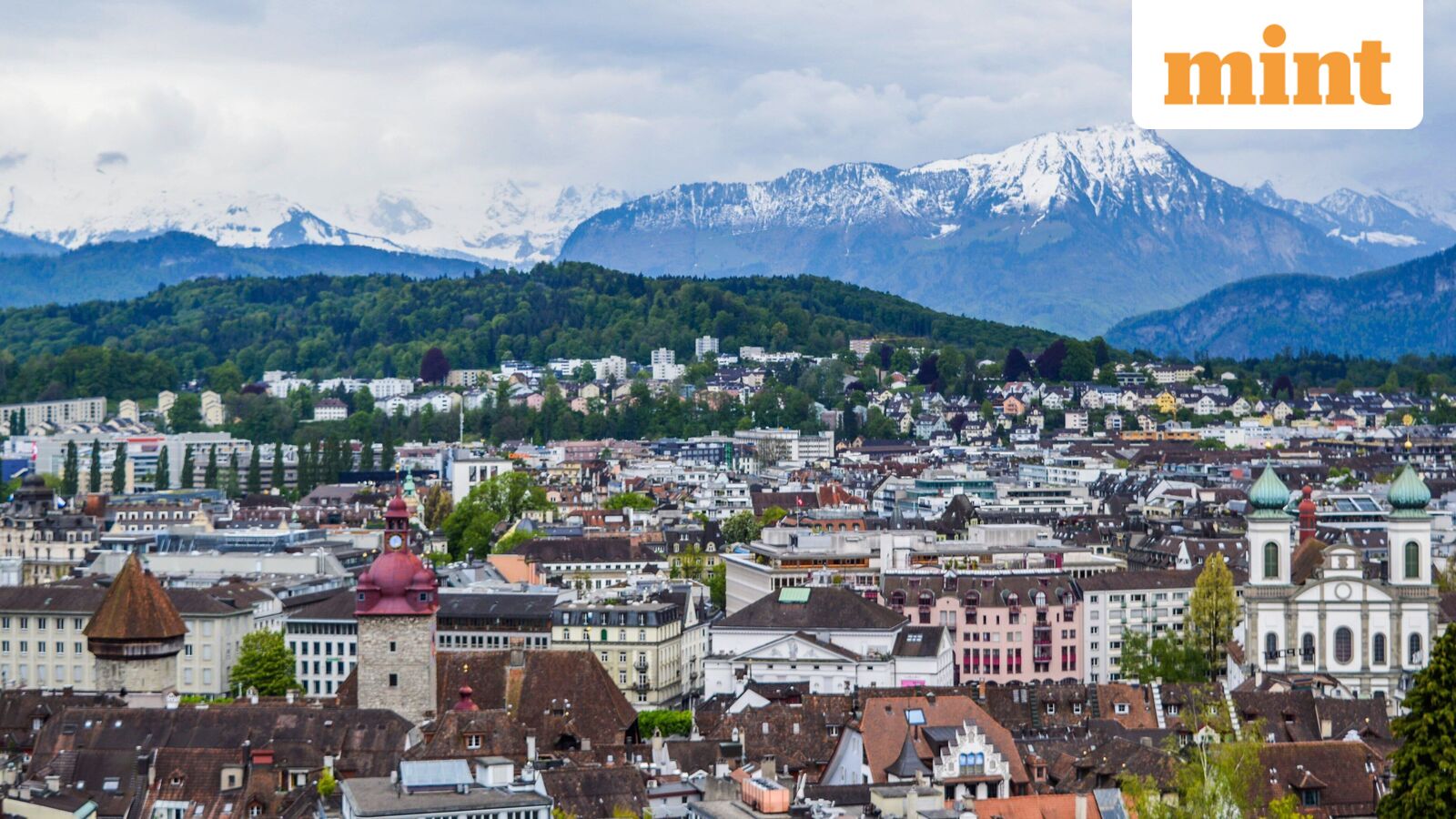
Switzerland votes Sunday on a proposal to cap the country's population at 9.5 million, with a trigger that could terminate the free movement agreement with the European Union if the count hits 10 million. The referendum asks whether the government should impose a legal ceiling and tighten immigration rules to enforce it through 2050.
The backdrop is a decade of demographic change. Switzerland's population grew 10% in the ten years to end-2025, reaching just over 9.1 million. For the first time, there are now more people over 65 than under 20. Net migration and the birth rate both fell last year. At end-2024, 41% of the population had a "migration background," a term covering immigrants and their Swiss-born children. Some 32.5% of permanent residents are first-generation immigrants. An estimated 1.4 million EU citizens live in Switzerland, about 16% of the total, while another 340,000 cross the border daily to work.
Under the proposal, if the population exceeds 9.5 million at any point over the next 24 years, the government must tighten immigration systems. Asylum and family reunification would face cuts first. Should the count climb above 10 million, Switzerland's free movement agreement with the EU could be terminated. That agreement lets EU and Swiss citizens live and work in each other's territories with a job or income source. Switzerland is also part of the Schengen border-free zone.
A recent poll found 52% of respondents would reject the cap, while 45% were in favour. The result looks close.
Who Is Pushing the Cap
The proposal comes from the right-wing SVP party, which has urged voters to send a signal against what it calls overwhelming population growth. The SVP said voting for the cap would still allow 40,000 people to move to Switzerland each year. Lawmaker Piero Marchesi argued that growth had caused problems for public services, wages, rent, education and the labour market.
The Corporate Opposition
Switzerland's business establishment has lined up against the proposal. Companies headquartered in the country argue that significant caps on immigration would dent its competitive edge and weigh on an economy already facing sluggish growth, a surging currency, disinflation and US President Donald Trump's tariff regime.
Economiesuisse, a trade body whose 100,000 members include Amazon Web Services, Roche, Google and Johnson and Johnson, has formally opposed the initiative. Chief Economist Rudolf Minsch said in a statement that Switzerland's prosperity depends on "openness, innovation and strong economic relations with Europe." He pointed to the country's reliance on highly qualified foreign workers, particularly in pharmaceuticals, technology and healthcare. "Major restrictions on immigration would weaken innovation, growth and competitiveness, while making it harder for companies to attract international talent," he said.
Speaking at the Swiss Economic Forum last week, Nestle chief executive Philipp Navratil described how attractive Switzerland remained to outside investors. "It is important that these conditions in Switzerland are maintained," he said. Navratil noted that Nestle operates nine factories and three research centres in the country. "Our main share of research and development still takes place in Switzerland, this has been the case for 160 years."
At the same forum, UBS chief executive Sergio Ermotti said he worried about what he described as "extreme initiatives." UBS employs around 33,500 people in Switzerland, making it one of the country's largest private sector employers.
The Economic Mechanism
Joao B. Duarte, a professor of economics at Portugal's Nova School of Business and Economics, told CNBC that a population cap could damage Switzerland's credibility in ways that precede any formal legal trigger. "If firms believe access to European labour may become more uncertain, investment decisions can shift well before the legal trigger is reached," he said.
Duarte pointed to Britain's departure from the EU as a cautionary example. "Ending free movement did not create a smooth transition to domestic labour self-sufficiency. It created shortages, recruitment frictions and higher costs in sectors that had relied on flexible EU workers."
He warned that the consequences of a yes vote could extend beyond immigration policy. The EU is Switzerland's main trading partner, and free movement is tied to the broader bilateral framework that gives Swiss firms privileged access to European markets. "If a 'yes' vote eventually forces Switzerland to terminate the free movement agreement, the strain would not be limited to migration policy. It could spill over into the entire Swiss-EU economic relationship," Duarte said.
Switzerland's appeal to global business rests on relatively low taxation, political stability, a highly educated workforce and deep integration with European supply chains and markets. Low taxation has helped make it home to global conglomerates including Nestle, Novartis and major players across finance, luxury goods and technology. It has one of the world's highest concentrations of billionaires and a GDP per capita that outperforms most other developed economies.
Whether Sunday's vote narrows or preserves that position depends on Swiss citizens and on a question countries across the developed world are wrestling with: at what point does managing growth become limiting it?