Stocks● Neutral
Sweden Visit Puts India's USD 7.75B Trade, Defence Links in Play
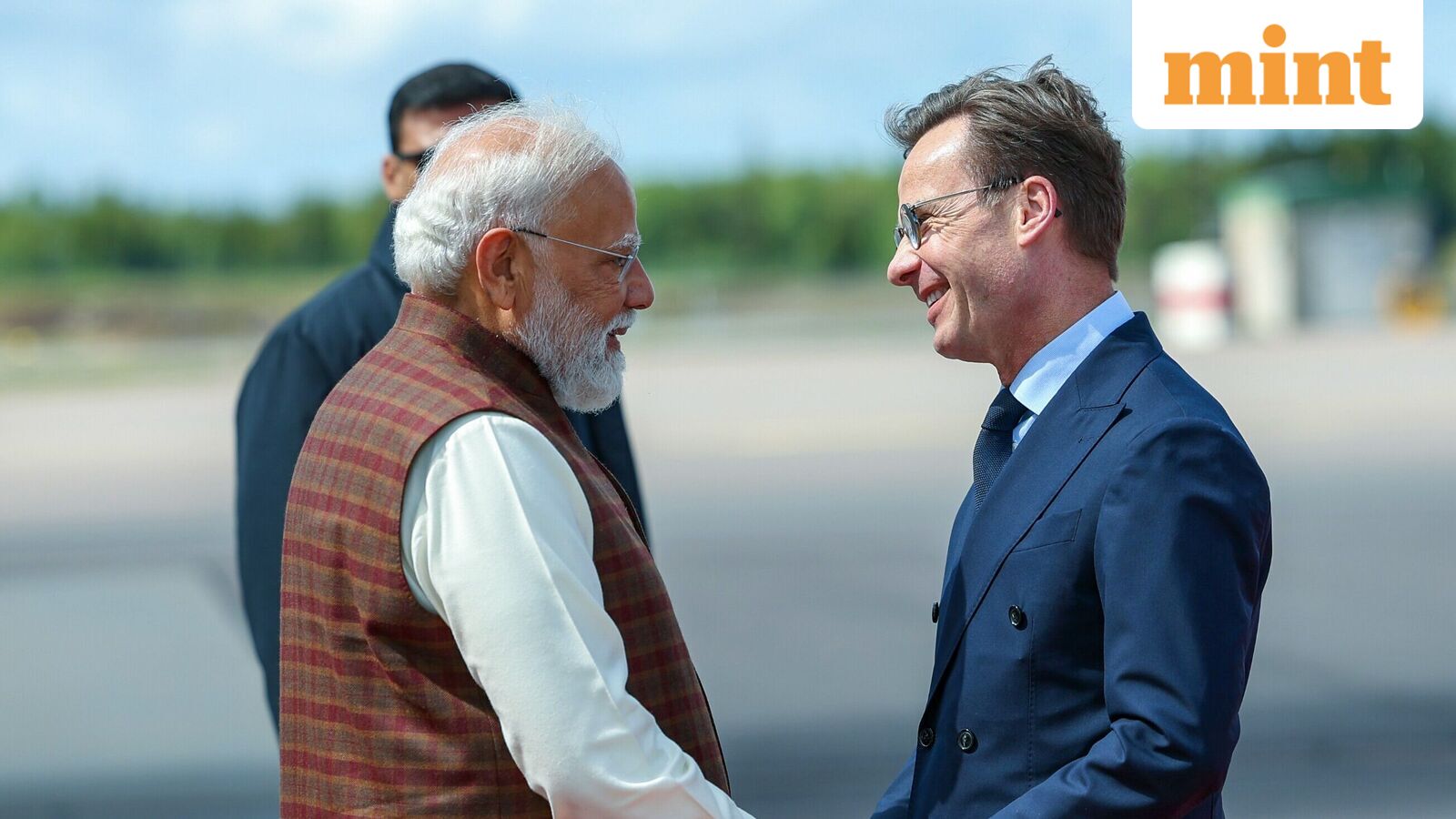
Modi lands in Gothenburg for two-day talks on defence, AI, green transition, and supply chains. The USD 7.75B bilateral trade base sets the benchmark for sector follow-through.
Continue with
The Diplomatic Signal and Sector Mechanism
Prime Minister Narendra Modi landed in Gothenburg on Sunday for a two-day Sweden visit that opens with trade, technology, defence and green transition on the agenda. Bilateral trade reached USD 7.75 billion in 2025, a baseline that investors must measure any follow-through against. Modi will meet Swedish Prime Minister Ulf Kristersson and European Commission President Ursula von der Leyen at the European Business Round Table, a format that suggests continent-wide investment linkages beyond the bilateral frame.
The naive read treats any diplomatic visit as a near-term catalyst for defence and technology stocks. The better market read is that this is a pre-deal alignment phase. No contracts were signed at the Gothenburg stop. The visit is the second leg of a four-nation Europe tour that already produced 17 agreements with the Netherlands on defence, critical minerals and economic cooperation. Later stops include Norway and Italy, creating a pattern of multi-lateral engagement that has historically preceded concrete sector deals.
Key insight: Diplomatic visits without signed agreements are pre-catalyst noise for sector investors. The signal builds only with follow-through – specific tenders, joint venture filings, or technology transfer announcements in the following 6 to 12 months.
Defence and Technology: The Procurement Diversion Path
India is actively diversifying its defence sourcing away from traditional Russian suppliers. Sweden, home to Saab, Ericsson and a concentrated defence industrial base, offers a politically stable alternative. Modi's social media post explicitly named defence as a priority alongside innovation and investments. The Netherlands agreements already covered defence and critical minerals, so the Sweden leg adds a Nordic complement to that corridor.
The India-Europe Defence Corridor
The 17 agreements with the Netherlands create a template. Those deals covered defence, critical minerals, and economic cooperation. Sweden's defence strengths – fighter aircraft (Gripen), naval systems, surveillance technology – map onto India's known procurement gaps. However (mid-sentence, genuine contrast), no MOUs or contract announcements emerged from the Gothenburg stop. The sector readthrough remains contingent on the follow-up working groups that India's defence ministry typically establishes after such visits.
AI and Startup Cooperation
The agenda includes artificial intelligence, emerging technologies and startups. This points to cross-border venture capital flows and potential demand for Indian IT services firms with European delivery centres. The European Business Round Table meeting with von der Leyen adds a layer of institutional engagement that could accelerate technology transfer agreements. India's deep tech ecosystem – particularly in AI and climate tech – aligns with Sweden's innovation-heavy startup culture. A joint working group on AI, if announced in the coming weeks, would be the first concrete signal.
Green Transition and Supply Chain Readthrough
The joint focus on green transition, resilient supply chains and climate action points to a structural thematic play. India's domestic push for electric vehicles, hydrogen, and renewable energy creates a natural sourcing corridor with Sweden's advanced battery and energy storage industries. The European Union's carbon border adjustment mechanism (CBAM) adds urgency for Indian exporters to align with European environmental standards, and Swedish clean-tech firms are well positioned to provide the technology.