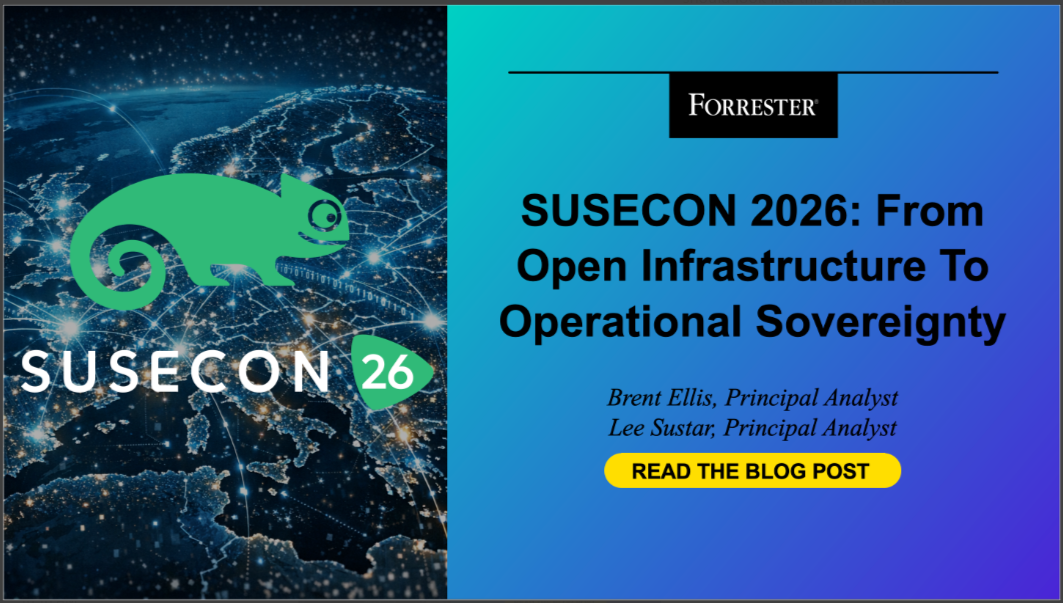
SUSECON 2026 in Prague shifted the company narrative from general open infrastructure toward the specific goal of operational sovereignty. The event moved beyond the platform pillars introduced in Orlando last year to emphasize that technical choice is only valuable if it can be operationalized to withstand external shocks.
Operationalizing Sovereign Control
The core argument presented at the conference centers on the ability of enterprises to maintain workload control despite economic and geopolitical instability. SUSE is positioning its software stack as a hedge against vendor lock-in that carries systemic risk. By focusing on resilience against both technical failure and broader market disruption, the company is attempting to differentiate its offerings from competitors that rely on proprietary cloud ecosystems.
This strategic pivot suggests that SUSE is targeting large-scale enterprise clients who prioritize risk mitigation and data autonomy over the convenience of integrated, closed-loop platforms. The emphasis on sovereignty implies a shift in sales strategy toward government, defense, and highly regulated industries where control over the underlying infrastructure is a primary mandate.
Market Context and Strategic Alignment
For investors monitoring the broader technology landscape, this move mirrors trends seen in stock market analysis regarding the push for localized data processing and reduced reliance on centralized hyperscalers. While companies like NVIDIA profile continue to drive the hardware layer of the AI boom, the software layer is increasingly focused on how these workloads are managed and secured across fragmented environments.
AlphaScala data currently tracks various players in the technology and industrial sectors. For instance, ON Semiconductor Corporation (ON stock page) holds an Alpha Score of 46/100 with a mixed rating, while Bloom Energy Corp (BE stock page) also carries an Alpha Score of 46/100. These scores reflect the ongoing volatility in sectors where operational efficiency and supply chain sovereignty are becoming central to valuation models.
The Path to Implementation
The next concrete marker for this strategy will be the release of specific product roadmaps that translate these sovereignty claims into verifiable technical features. Investors should watch for upcoming technical documentation or integration partnerships that demonstrate how SUSE plans to bridge the gap between its current open-source offerings and the requirements of sovereign-grade infrastructure. The transition from a narrative of choice to a narrative of control requires measurable benchmarks that prove the platform can function independently during periods of significant market or geopolitical stress.