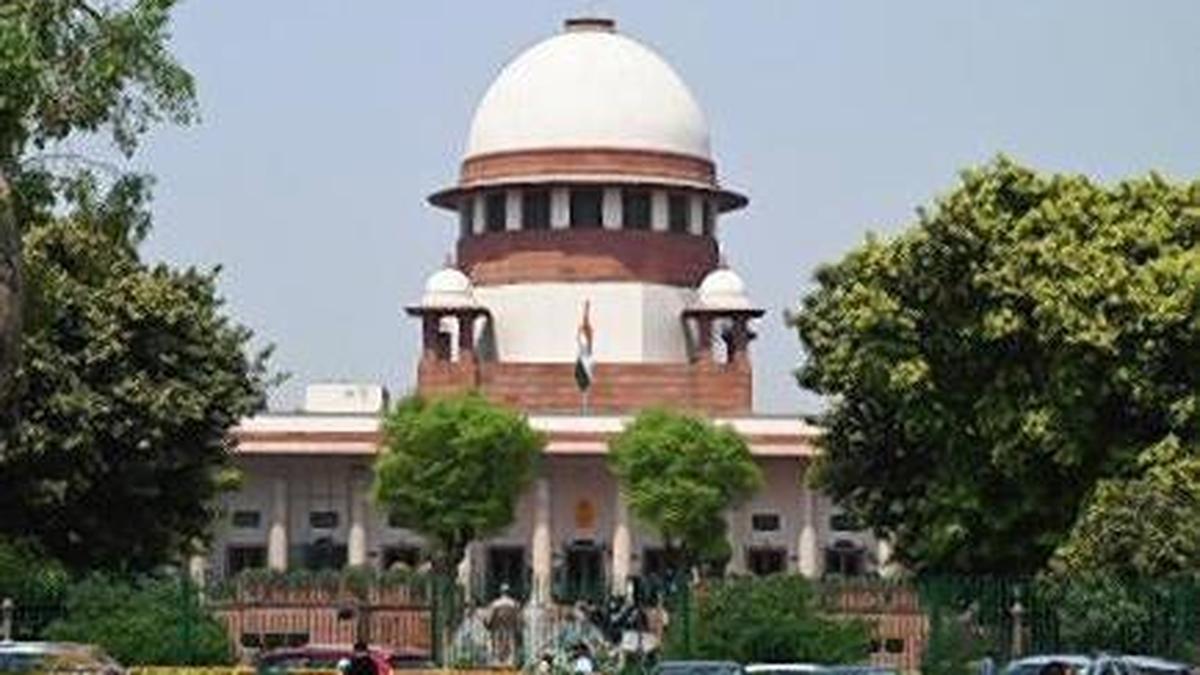
CJI Surya Kant said the court wants a protocol where users access livestreamed proceedings only through court archives, barring misuse and commercial exploitation.
The Chief Justice of India wants a protocol where users can access livestreamed court proceedings only through the courts' own archives, barring wider circulation.
CJI Surya Kant said the court intended "to lay down" a protocol that stops livestreamed audio-visual content from being "misused" or "commercially exploited." He made the comment in response to an application by activists Anjali Bhardwaj and Amrita Johri, who sought changes to a July 24 interim order that banned circulation of livestreamed proceedings on social media and digital platforms.
The July 24 order, issued in a petition by Harshita Grover, prohibited extracting, modifying, disseminating, posting, reposting, uploading, recording, or monetising audio-video recordings without prior permission from the Supreme Court's Secretary General or the Registrar General of the relevant High Court. The court said unregulated circulation made judges, advocates and litigants vulnerable to trolling and reputational harm, eroding public confidence in the judiciary.
The activists, represented by advocates Prashant Bhushan and Cheryl Dsouza, argued the July 24 order reversed the "principle of open justice" upheld by the apex court in multiple judgments. They said open access keeps the judicial process answerable to the public and guards against arbitrariness.
Bhushan proposed that livestreamed content be preserved in court archives, letting users access the authorised version from there. "That is precisely the protocol we want to lay down," Kant responded.
The court allowed the application and asked Bhardwaj and Johri to submit suggestions for framing the protocol. The CJI said the exercise was not adversarial. Digital platforms Meta and WhatsApp have agreed to contribute suggestions. State High Courts and bar bodies across the country have also filed their affidavits.
The activists' application said safeguards should "protect fair and accurate representation, including sharing and dissemination of proceedings that are already open to public view." Their concern was that intentional misuse could be addressed by defining terms and conditions for re-use and sharing, rather than banning those activities based on who the user was.
Drafted by a large language model from the source reporting linked above, then screened by automated publishing checks. It is not read by a journalist before publication. Some articles cite our Alpha Score. Verify prices and figures against the original source. Educational coverage, not personalized advice.