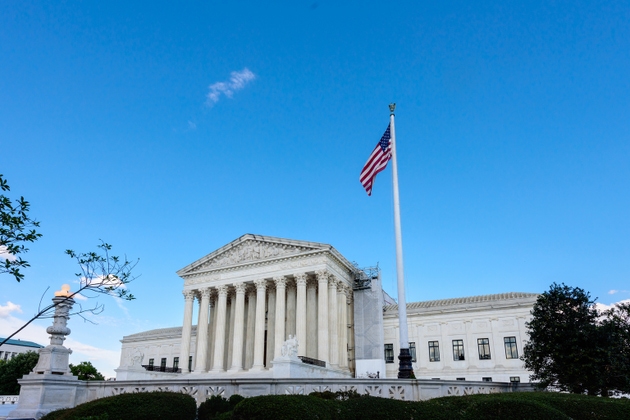
Supreme Court Roundup Review Shifts Bayer Litigation Narrative

The Supreme Court is weighing a critical appeal from Bayer regarding Roundup litigation, potentially setting a precedent that could limit future liability and reshape the company's legal risk profile.
HASBRO, INC. currently screens as unscored on AlphaScala's scoring model.
Alpha Score of 58 reflects moderate overall profile with weak momentum, strong value, moderate quality, weak sentiment.
Alpha Score of 52 reflects moderate overall profile with poor momentum, strong value, strong quality, weak sentiment.
Alpha Score of 45 reflects weak overall profile with strong momentum, poor value, poor quality, weak sentiment.
The United States Supreme Court has moved to consider a pivotal appeal concerning Bayer AG and its ongoing Roundup litigation. This development marks a shift in the long-standing legal battle over whether the company’s weed-killing products cause cancer. The court is evaluating whether federal law preempts state-level failure-to-warn claims, a core argument that Bayer has utilized to challenge thousands of pending lawsuits. A ruling in favor of the company would establish a significant legal shield, potentially curbing the volume of future litigation and altering the financial trajectory of the firm.
Legal Preemption and Financial Exposure
The central question before the court involves the intersection of federal regulatory approval and state tort law. Bayer maintains that because the Environmental Protection Agency approved the labeling of its glyphosate-based products, state courts should not be permitted to impose additional warnings. If the Supreme Court accepts this preemption argument, it could effectively invalidate a substantial portion of the remaining claims. This would provide a definitive ceiling on the company’s total liability, which has been a primary source of uncertainty for shareholders since the acquisition of Monsanto.
Conversely, a rejection of this argument would leave the company exposed to a fragmented legal landscape. Bayer has already allocated billions of dollars to resolve past claims, but the persistence of new filings has kept the litigation risk elevated. The outcome of this specific case will dictate whether the company can move toward a final resolution or if it must continue to manage a perpetual cycle of state-level jury trials. Investors are focused on whether this judicial intervention will finally provide the clarity needed to stabilize the balance sheet.
Sector Read-through and Litigation Strategy
The broader chemical and agricultural sectors are monitoring this case for its implications on regulatory compliance. If federal preemption is upheld, it could set a precedent for other companies facing similar product liability challenges. This would fundamentally change the risk profile for firms operating under federal oversight, potentially reducing the likelihood of successful state-level litigation against products that have already cleared national safety standards.
Bayer’s ability to navigate this legal environment remains the primary driver of its valuation. The market has long priced in the costs of the Roundup litigation, but the unpredictability of jury awards in state courts has prevented a full recovery in the stock price. The Supreme Court’s decision will serve as a definitive marker for the company’s long-term operational health. For those tracking broader industrial and chemical sector trends, this case serves as a critical test of how federal law interacts with consumer protection litigation in the modern era.
AlphaScala data currently tracks various firms across the technology and communication sectors, including T stock page with an Alpha Score of 58/100, NOW stock page at 52/100, and ON stock page at 45/100. While these firms operate in different industries, the broader stock market analysis suggests that legal and regulatory clarity remains a primary catalyst for capital allocation. The next concrete marker for Bayer will be the formal scheduling of oral arguments, which will provide the first real insight into the court’s appetite for overturning existing precedents.
AI-drafted from named sources and checked against AlphaScala publishing rules before release. Direct quotes must match source text, low-information tables are removed, and thinner or higher-risk stories can be held for manual review.