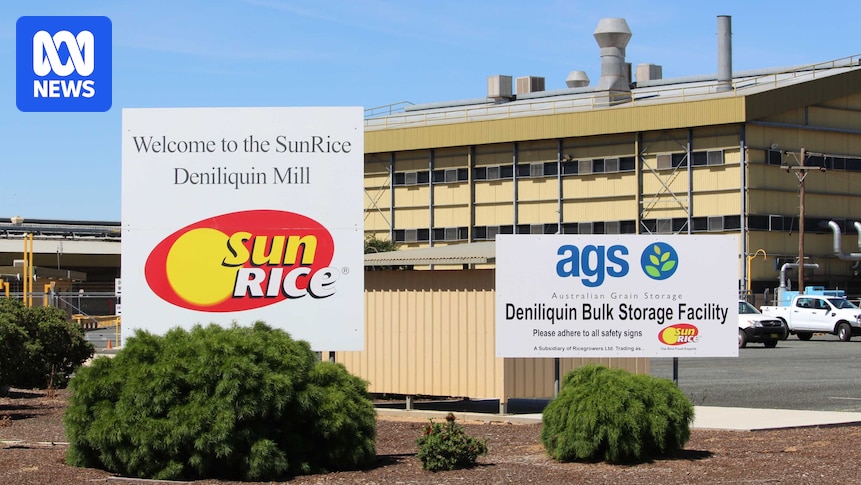
SunRice cuts shifts at Leeton and Deniliquin mills as drought and water buybacks slash rice supply. Hundreds of jobs at risk, with zero water allocations for the coming season.
SunRice will reduce milling shifts at its Leeton and Deniliquin plants, a direct response to dwindling rice supply from drought and ongoing water buybacks by the federal government. The company typically employs 650 people across the Riverina region. The exact number of job losses from the cuts is not yet clear.
Leeton's mill moves from 24/7 production to 16-hour shifts, five days a week. Deniliquin drops from 24-hour days to eight-hour shifts, five days a week. The moves follow a sustained drop in local rice supply. Last summer's crop came in at 180,000 tonnes, the smallest since the 2019-2020 drought, which also triggered job cuts at SunRice.
The immediate read: less processing capacity means less rice moving from growers to distributors. The deeper one involves government water policy and the Murray-Darling Basin Plan. SunRice CEO Paul Serra said the company had started consultation with employees and continues to advocate to government about the adverse impacts of current water policy settings.
The Albanese government acknowledged the announcement was concerning for workers and their families. A government spokesperson pointed to infrastructure investment, voluntary water purchases, and community adjustment assistance as part of a balanced approach. "You can't have sustainable communities without a sustainable environment," the spokesperson said.
Local officials pushed back hard. Leeton Shire Council general manager Jackie Kruger said the cuts were a direct result of the government buying water from irrigators to meet Basin Plan targets. "The relentless pursuit of water buybacks had to catch up at some point," she said. Edward River Mayor Ashley Hall said the consequences would ripple beyond the mill workers to trucking, mechanics, auto electricians, and local schools.
ABARES, the government's agricultural research bureau, forecast in a 2024 report that rice would be the crop most affected by continued voluntary water purchases. Ricegrowers Association of Australia president Peter Hermann said the warnings had been ignored. "Our sense is that there's some people … only interested in political consequences," he said. "They're not so worried about land, water and communities and even jobs."
The coming season faces zero water allocations for general security irrigators in the Murray and Murrumbidgee valleys, which includes most rice growers. Drought conditions persist. That means the supply squeeze is unlikely to ease in the near term, even if a wetter spring arrives.
United Workers Union director of food and beverage Mel Gatfield said the decision would create significant uncertainty for long-serving employees, many of whom now face the prospect of relocating to find work. SunRice said it is exploring redeployment options within the company.
The federal member for Farrer, One Nation's David Farley, said water surplus to environmental needs should be released for growing rice. "I believe there would be enough that would underwrite the production capacity and secure the jobs for the rice millers and the cotton ginners as well," he said.
Prepared with AlphaScala editorial tooling from the source reporting linked above. Indexable analysis may include a cited Alpha Score value. Publishing checks screen each story before release. Educational coverage, not personalized advice.