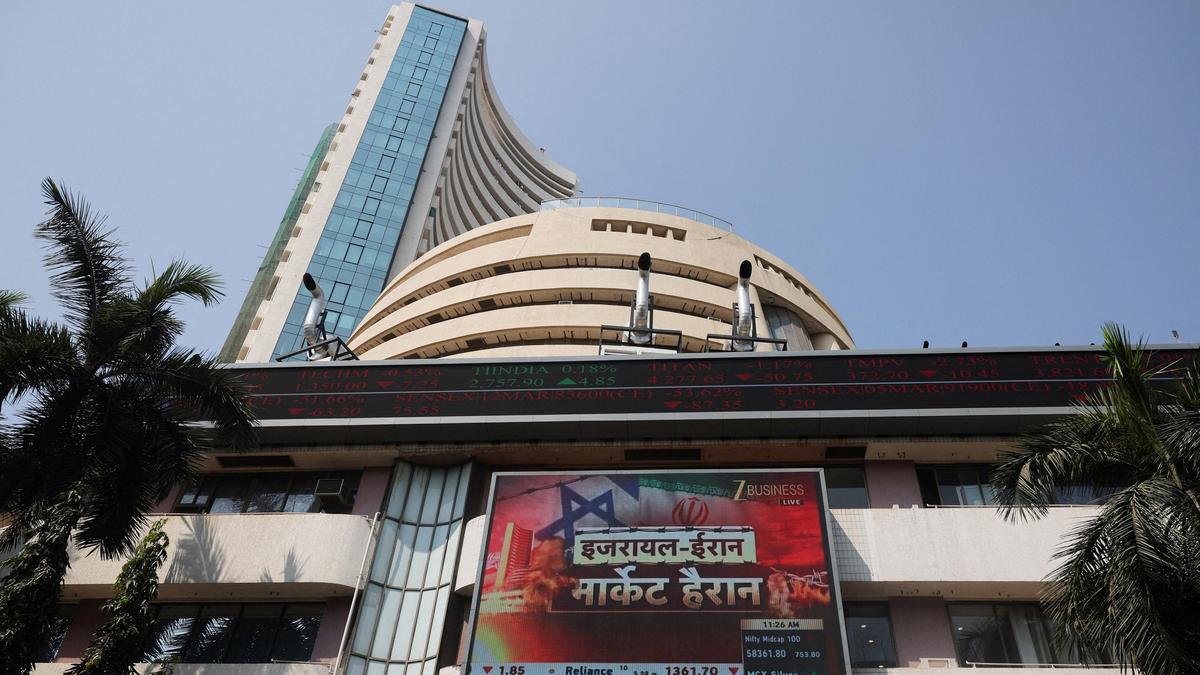
The recent hike in Securities Transaction Tax (STT) has triggered a structural migration in India's equity derivatives market, fundamentally altering the competitive landscape between the National Stock Exchange (NSE) and the Bombay Stock Exchange (BSE). As of April, the STT on futures contracts surged to 0.05 percent from 0.01 percent, while the levy on options premiums climbed to 0.15 percent from 0.10 percent. This tax adjustment, intended to dampen speculative excess, has instead acted as a catalyst for volume redistribution, favoring the exchange with the lower cost-of-carry and transaction fee structure.
The Mechanics of Volume Migration
The market data from April reveals a stark divergence in performance. BSE’s average daily notional turnover (ADT) in the Futures & Options (F&O) segment expanded by nearly 20 percent month-on-month to reach ₹269 lakh crore. Conversely, the NSE saw its notional ADT contract by approximately 26 percent to ₹216 lakh crore. This shift pushed BSE’s share of total notional F&O turnover to 55 percent, up from 44 percent in March, while the NSE’s dominance in this specific metric receded to 45 percent from 56 percent.
This migration is not merely a function of tax sensitivity but a response to deliberate fee arbitrage. In the futures segment, the NSE imposes a charge of ₹1.83 per ₹1 lakh of turnover, whereas the BSE levies no fee. For options, the disparity is even more pronounced: the NSE charges ₹36 per ₹1 lakh, compared to the BSE’s ₹5 per ₹1 lakh on stock options. For high-frequency and low-margin retail traders, these cost differentials are the primary driver of execution venue selection. The math for these participants has become increasingly difficult, leading to a filtration effect where weaker, cost-sensitive hands are being forced out of the NSE ecosystem.
Competitive Positioning and Regulatory Tailwinds
Beyond transaction costs, regulatory changes have inadvertently bolstered the BSE’s competitive standing. The Securities and Exchange Board of India (Sebi) recently mandated that exchanges limit themselves to a single weekly expiry. This consolidation of liquidity has worked in favor of the BSE, which has successfully captured trading interest in index derivatives like the Sensex. While the NSE retains a 66 percent share in total options premium turnover, the BSE’s ability to maintain flat average daily premium turnover at ₹33,150 crore—while the NSE’s dropped 35 percent to ₹61,417 crore—signals a shift in momentum.
Market analysts note that the improvement in BSE volumes on non-expiry days is a critical indicator of sustained interest rather than transient volatility. The following table illustrates the comparative decline in NSE metrics against the resilience of the BSE during the April transition period:
| Metric | NSE Change (m-o-m) | BSE Change (m-o-m) |
|---|
| Notional ADT | -26% | +20% |
| Options Premium Turnover | -28% | +6% |
| Avg. Daily Premium Turnover | -35% | Flat |
Risk Factors and Future Outlook
While the current trend favors the BSE, the sustainability of this volume shift remains subject to broader macroeconomic and regulatory risks. Feroze Azeez of Anand Rathi Wealth highlights that while retail activity remains resilient due to the inherent excitement of short-term trading, the introduction of tighter Reserve Bank of India (RBI) leverage norms could suppress overall market volumes by 8 to 10 percent. Such a contraction would likely impact both exchanges, though the BSE’s lower cost base provides a defensive moat against a total collapse in liquidity.
For institutional observers, the next phase of this evolution will likely be driven by the launch of Specialized Investment Funds. These vehicles, which offer increased flexibility for active derivative usage, are expected to bring more strategy-driven flows into the market. If these funds prioritize the BSE’s lower-cost environment, the current market share split could solidify. However, should the NSE respond with further fee adjustments or product innovation, the current trend of volume migration could face a reversal. Investors should monitor whether the BSE can maintain its 55 percent share in notional turnover as the market adjusts to the new STT reality and potential RBI-led deleveraging.
State Street Corporation (STT) currently holds an Alpha Score of 66/100, reflecting a moderate outlook within the financials sector. While the ticker STT is often associated with the global custody bank, the domestic Indian market dynamics described here highlight the broader sensitivity of financial infrastructure providers to transaction-based revenue models. For those tracking broader stock market analysis, the ability of an exchange to retain liquidity during tax-induced volatility remains a primary indicator of long-term platform viability.