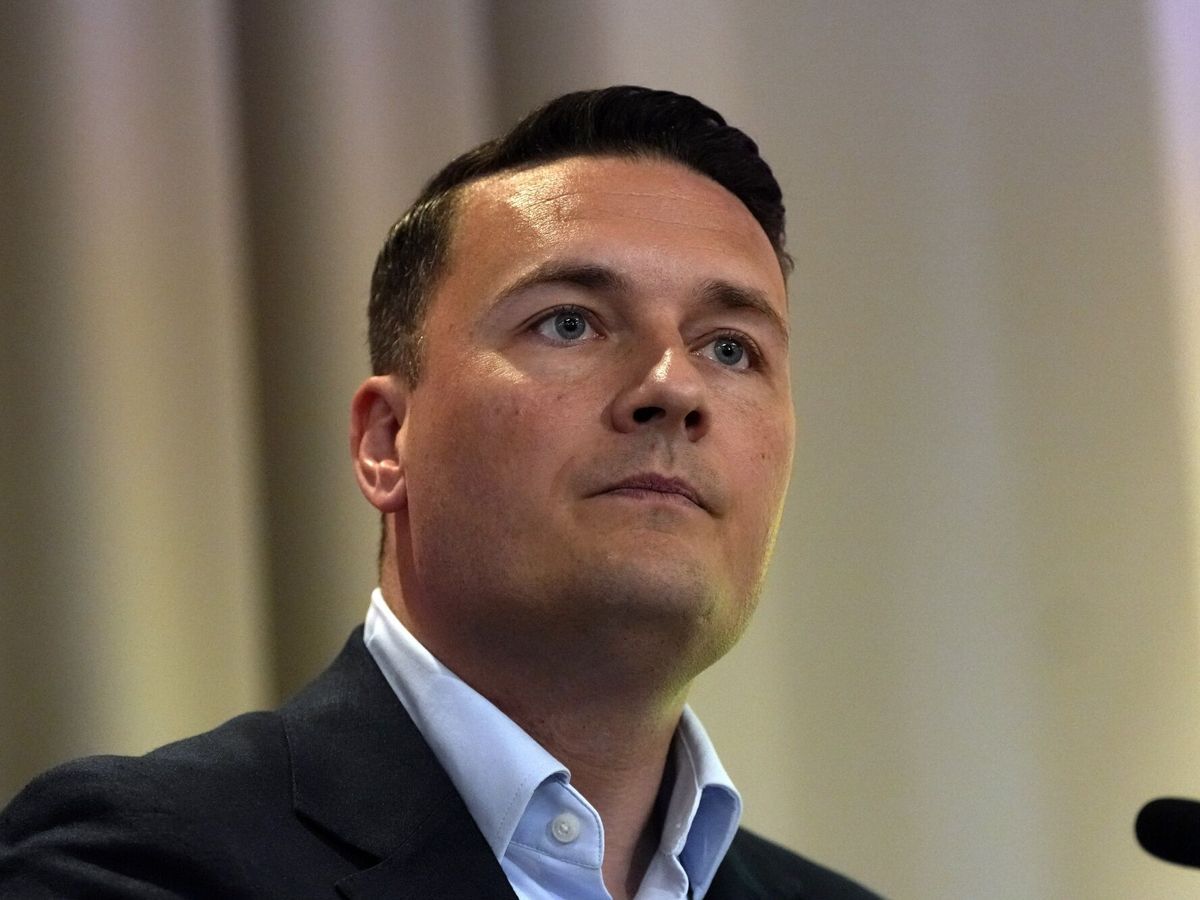
Wes Streeting used his first public appearance since resigning as UK health secretary last week to call for Britain to rejoin the European Union. The declaration thrusts Brexit back into the spotlight at a delicate moment for potential leadership rival Andy Burnham and introduces a new layer of political uncertainty for UK equities.
Streeting said leaving the EU was “a catastrophic mistake” and that the country’s future lies “one day, back in the European Union.” Speaking at a Labour-aligned conference in London on Saturday, he argued that progressives are “increasingly losing faith that Labour is capable of rising to the challenge” and demanded “a battle of ideas” within the party.
Streeting's Rejoin-EU Call as a Market Catalyst
The speech adds to a growing list of political unknowns for UK markets. The FTSE 100 has already been absorbing the impact of Labour's bruising performance in May's local elections. The party lost ground to Nigel Farage’s Reform party in those contests. Streeting’s push to rejoin the EU–a position that remains unpopular with swing voters–risks deepening Labour’s internal divide and delaying any coherent economic agenda.
The Leadership Contest Dynamics
Streeting’s call for a “proper contest” with the best candidates directly challenges Keir Starmer’s authority. Culture Secretary Lisa Nandy criticised the move on Sky News’ Sunday Morning with Trevor Phillips show, saying Labour should resist “reopening the Brexit wars.” She called Streeting’s position “a bit odd” and argued that “if rejoining the EU is the answer, then essentially what we’re saying to people is life was fine in 2015.” Her comments highlight the reluctance among senior cabinet ministers to revive the Brexit debate while the party struggles to regain voter trust on domestic issues like housing and living standards.
Burnham's Makerfield Dilemma
Burnham entered the leadership frame on Thursday by announcing plans to contest the parliamentary seat of Makerfield in northwest England. That by-election, triggered by Labour lawmaker Josh Simons resigning, is set for June 18. Winning the seat is Burnham’s route back to Westminster and a prerequisite for any future leadership bid.
Makerfield presents a strategic problem for Burnham. Around two-thirds of voters there backed Brexit in the 2016 referendum. Reform is making inroads into what was long a Labour stronghold. Streeting’s rejoin-EU stance could force Burnham to take a clearer position, complicating his campaign. Burnham adopted a cautious tone in an ITV News interview on Saturday. “In the long-term there is a case for that, though I’m not advocating that in this by-election,” he said. “What I am saying is focus now domestically.”
FTSE 100 Political Risk Premium
The political noise arrives as the FTSE 100 consolidates in a narrow range after the local election shock. The index rallied earlier in 2025 on strong commodity prices and a weaker pound. Post-election uncertainty, however, has stalled momentum. Volume has tapered, and price action now tests a zone that has acted as both support and resistance over the past three months.
Practical rule: Political risk is often priced prematurely
Risk to watch: The FTSE 100’s current price may already discount a stable Labour government. Streeting’s speech introduces the risk that the party either fractures or adopts policies–such as rejoining the EU–that would require years of negotiation and create regulatory uncertainty for UK-listed companies with European supply chains.
Sector Exposures
- UK banks (Lloyds, Barclays) – sensitive to UK growth and interest rate expectations. A divided Labour party could delay fiscal reforms.
- Domestic-focused retailers – vulnerable to weakened consumer confidence if political uncertainty rises.
- Export-heavy industrials – benefit from a weaker pound, yet a protracted Brexit debate could add cost uncertainty.
Confirmation and Invalidation for UK Equities
Confirmation of a bearish shift: A decisive close below the recent support zone (the late-April low) on expanding volume would signal that political uncertainty is now the dominant driver. Sectors most exposed to EU trade–financials, industrials, and consumer discretionary–would likely lead the move lower.
Invalidation of the Brexit-risk thesis: If Burnham’s cautious tone placates voters in Makerfield and Streeting gains no further traction, the FTSE 100 could break above its post-election high. A clear move above that level, accompanied by rising relative strength, would indicate that markets are pricing out the leadership contest risk.
By-Election as Trigger
The June 18 by-election is the most concrete near-term catalyst. Burnham’s performance–and Streeting’s implied endorsement of the rejoin position–will be measured against Reform’s vote share. A strong Reform showing in a former Labour stronghold would amplify concerns that the party is losing its working-class base. That outcome would further pressure UK equities.
Next Decision Point: June 18 Makerfield By-Election
Bottom line for traders: Political uncertainty is a headwind for UK equities until the by-election clarifies the leadership race. The iShares MSCI United Kingdom ETF (EWU) offers a liquid proxy for positioning. A close below the recent support zone would be the confirmation trigger for a tactical short. Conversely, if Burnham wins Makerfield comfortably and distances himself from the rejoin-EU call, the index may rally on reduced political risk premium.
For a broader perspective on how political events can shift sector weighting, see our [stock market analysis](/markets/stocks](/markets/stocks).
The risk of a leadership contest now hangs over any potential market catalyst. With no major UK economic releases until the June MPC meeting, the by-election and the ensuing Labour debate will dominate the narrative for UK equities. Traders should watch for any additional cabinet ministers aligning with or against Streeting. That will determine whether the party’s internal battle becomes the market’s battle.