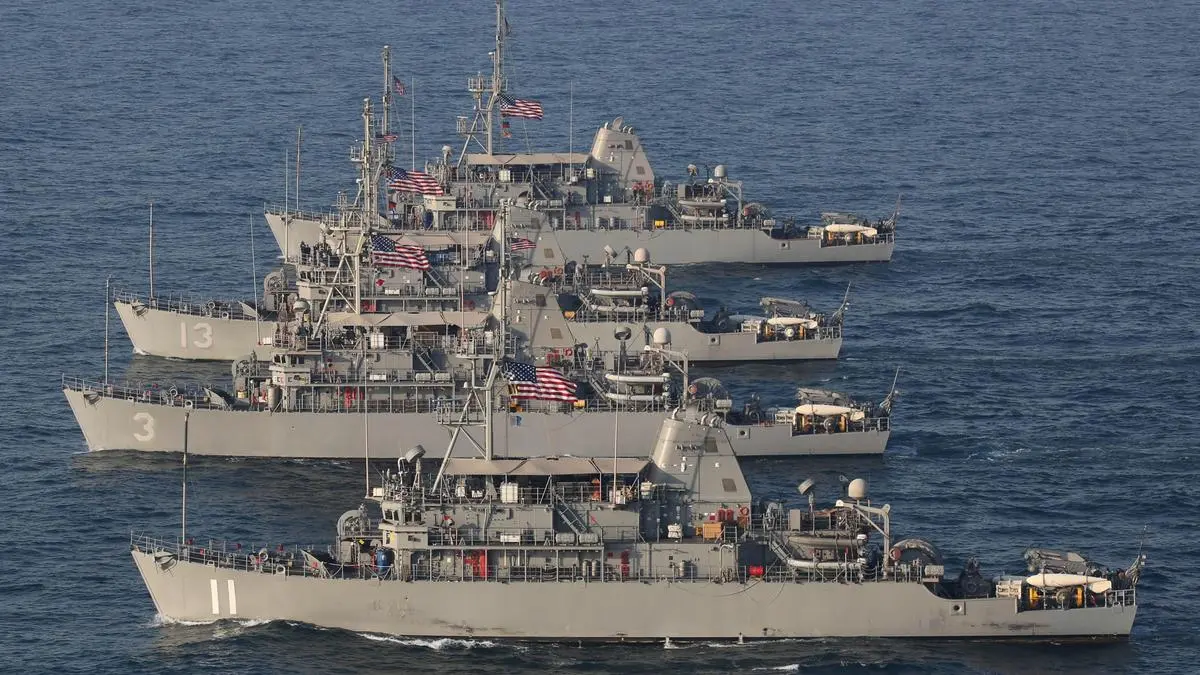
The United States Navy has initiated active mine-clearing operations within the Strait of Hormuz, a critical maritime chokepoint responsible for the transit of a significant portion of the world's seaborne crude oil. This tactical shift follows heightened regional tensions and concerns regarding the security of international shipping lanes. By addressing the presence of explosive ordnance, the U.S. aims to maintain the flow of energy exports that are essential to global supply chains.
Maritime Transit and Supply Security
The Strait of Hormuz serves as the primary conduit for oil producers in the Persian Gulf to reach global markets. Any physical obstruction or perceived threat of disruption in this narrow waterway forces tanker operators to reassess transit routes or adjust insurance premiums for vessels entering the region. The current mine-clearing effort is a direct response to the risk of supply bottlenecks that could tighten global crude availability. When transit security is compromised, the immediate impact is often felt in the spot market for tanker freight, as operators demand higher rates to compensate for the increased risk of navigating contested waters.
Geopolitical Influence on Crude Flows
Energy markets remain sensitive to any disruption in the Persian Gulf, as the region accounts for a substantial share of daily global oil production. The presence of mines creates a persistent risk premium that influences how energy traders price near-term contracts. If these clearing operations are prolonged or if new threats emerge, the resulting uncertainty can lead to volatility in crude pricing. The stability of this route is a foundational element of global energy security, and the current U.S. naval activity highlights the fragility of these maritime corridors.
- The Strait of Hormuz facilitates the movement of millions of barrels of oil per day.
- Mine-clearing operations are intended to mitigate the risk of physical damage to commercial tankers.
- Increased naval presence can influence insurance costs and shipping schedules for energy exporters.
Beyond the immediate energy sector, broader market sentiment is often influenced by developments in technology and infrastructure. For instance, companies like Unity Software Inc. operate within a different risk profile, as noted in our U stock page. Unity Software Inc. currently holds an Alpha Score of 43/100, reflecting a mixed outlook in the technology sector. While the energy market focuses on physical transit, broader equity markets often react to the macroeconomic implications of regional instability.
For further analysis on how energy logistics interact with broader market trends, see our commodities analysis or our crude oil profile. The next concrete marker for this situation will be the updated status reports from the U.S. Navy regarding the safety of the shipping lanes and any subsequent adjustments to commercial shipping insurance rates for tankers operating in the region.