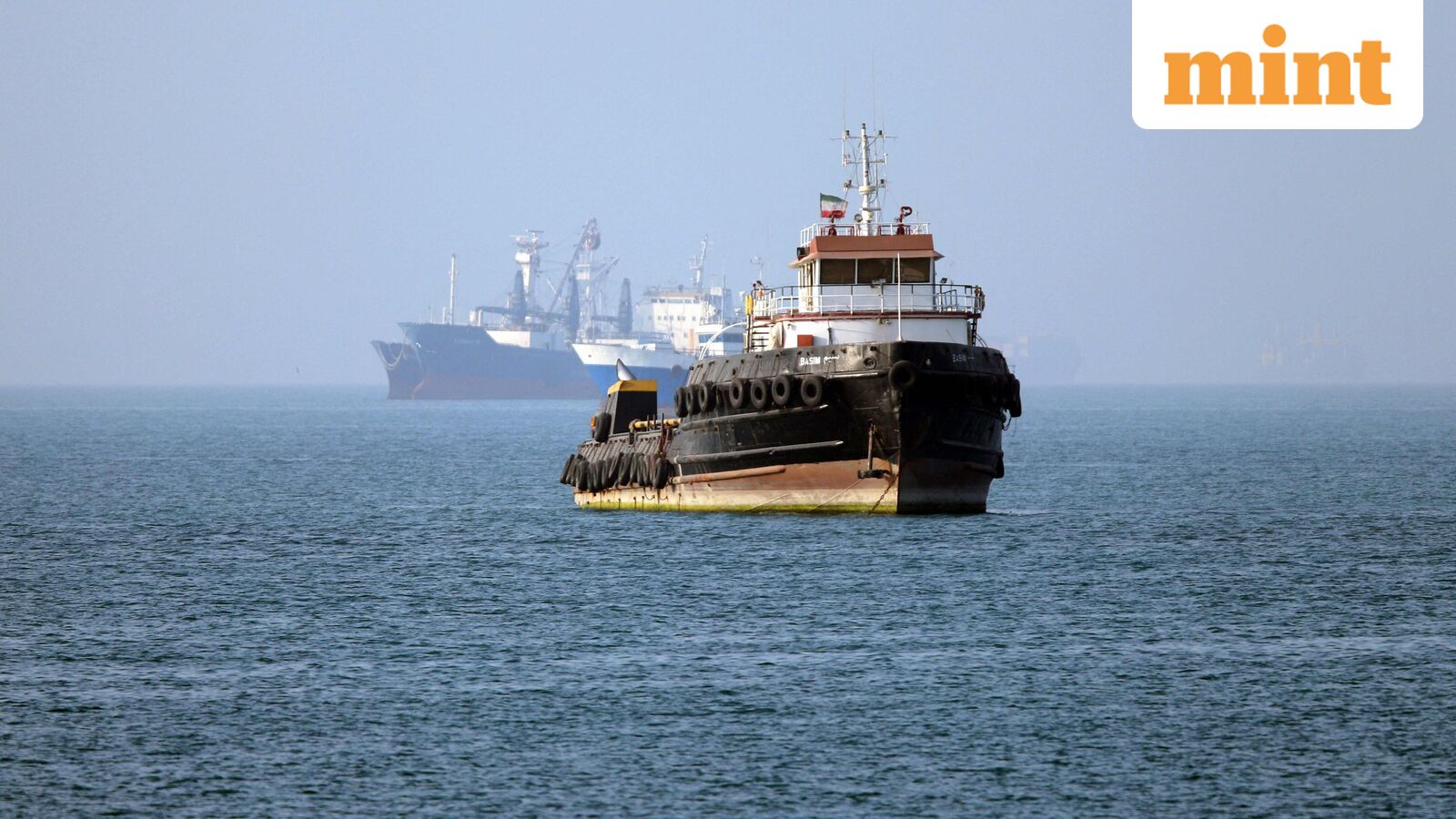
The fragile four-week ceasefire between the United States and Iran has effectively collapsed following a significant escalation of hostilities in the Persian Gulf on Monday. The conflict, centered on the Strait of Hormuz, has expanded to include the United Arab Emirates (UAE), which reported the engagement of 12 ballistic missiles, three cruise missiles, and four drones launched from Iranian territory. The UAE defense ministry confirmed that these defensive actions resulted in three moderate injuries, while separate strikes in Oman damaged four vehicles and injured two expatriate workers in the coastal town of Bukha.
Escalation Mechanism and Strategic Positioning
The current volatility stems from a direct confrontation over the control and navigation of the Strait of Hormuz, a critical maritime chokepoint for global energy flows. President Donald Trump has initiated efforts to secure passage for commercial vessels, a move Tehran characterizes as "US military adventurism." Iranian officials, while denying a pre-planned program to target specific oil facilities, have explicitly blamed the US military for the resulting instability. The tactical reality is that the Strait is now an active theater of kinetic engagement, moving beyond posturing into direct strikes on commercial assets.
South Korea’s Ministry of Foreign Affairs confirmed that the HMM Namu, a Korean-operated vessel, suffered an explosion and fire while anchored near the UAE. This incident marks a critical threshold in the conflict, as it is the first time a commercial vessel from the South Korean fleet has sustained damage in the region. The immediate market read-through suggests that shipping insurance premiums and transit risks for tankers operating in the Persian Gulf will likely spike, potentially creating a supply-side shock for energy markets if transit through the Strait becomes untenable.
Sector Read-Through and Asset Exposure
For investors monitoring the broader real estate and infrastructure sectors, the regional instability introduces significant uncertainty regarding capital expenditure and operational continuity for firms with exposure to Middle Eastern energy logistics. While companies like Welltower Inc. (Alpha Score 52/100) and KIMCO Realty Corp (Alpha Score 55/100) operate primarily in domestic markets, the macro-economic impact of a sustained energy price spike often ripples through REIT valuations via inflation expectations and interest rate volatility. The stock market analysis framework suggests that any prolonged disruption to the Strait of Hormuz will force a re-evaluation of global logistics costs, impacting everything from manufacturing inputs to consumer goods pricing.
Catalyst Path and De-escalation Markers
The path forward depends on whether the current kinetic exchange remains localized or triggers a broader regional conflict. The United Kingdom and Saudi Arabia have issued formal calls for de-escalation, with the British Prime Minister emphasizing the need for Iran to engage in meaningful negotiations to preserve the remaining framework of the ceasefire. However, the immediate operational reality is that the UAE has shifted its education system to remote learning for the remainder of the week, signaling that the government anticipates continued instability.
Market participants should focus on the following indicators to assess the duration of this risk event:
- Transit Volume: Any sustained reduction in tanker traffic through the Strait of Hormuz will serve as a primary indicator of heightened risk premiums.
- Diplomatic Engagement: The success or failure of the requested negotiations will determine if the conflict remains a series of skirmishes or evolves into a sustained regional war.
- Military Posture: Continued activity by US warships in the Strait will likely be met with further Iranian responses, maintaining the current cycle of escalation.
Risk Assessment and Valuation Impact
The situation remains highly fluid. A failure to establish a new, more robust ceasefire will likely force a flight to safety in global markets, pressuring equities while potentially boosting safe-haven assets. The primary risk is not merely the localized damage to vessels or facilities, but the potential for a systemic disruption to the global energy supply chain. Investors should remain skeptical of any immediate claims of stability until commercial transit through the Strait of Hormuz returns to normalized, unhindered levels. Any further reports of damage to commercial vessels will likely act as a catalyst for increased volatility across energy-sensitive sectors, necessitating a defensive posture until the regional security environment stabilizes.