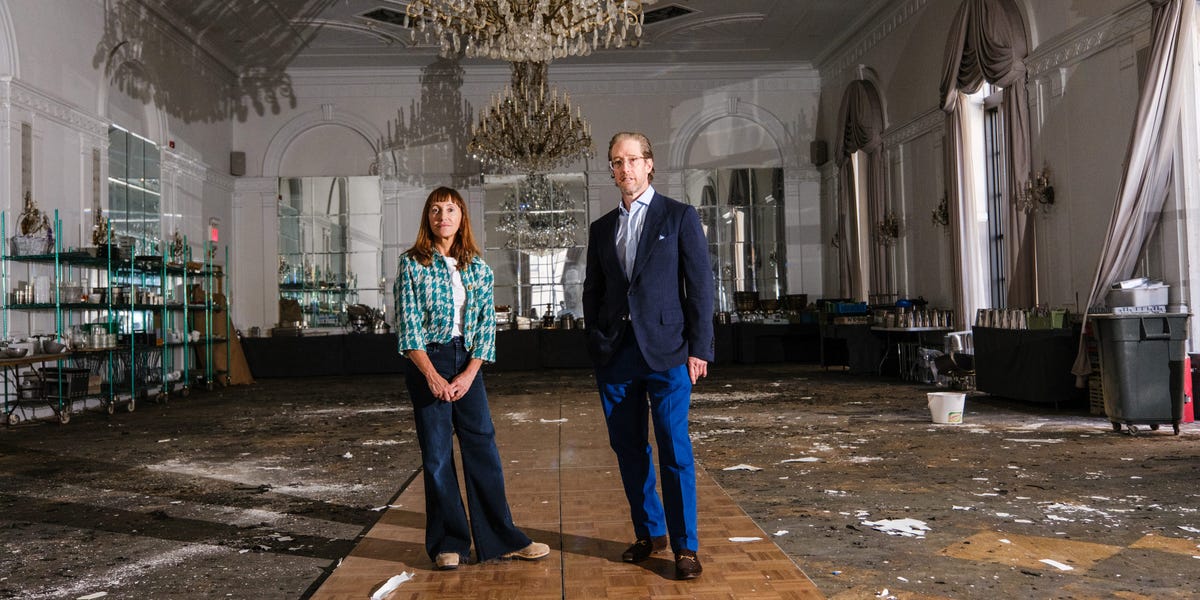
The conversion of Manhattan's Stewart Hotel into hundreds of affordable homes is not a single real-estate transaction. It is a policy experiment. The partnership between developers, nonprofits, and New York City government creates a template for hotel-to-apartment conversions in a city where housing supply has not kept pace with demand.
The Stewart Hotel Conversion as a Market Test
The 1920s-era Stewart Hotel sits in prime Manhattan. Under the current plan, the building will be reconfigured into hundreds of affordable housing units, financed through public subsidies and private capital. David Schwartz, a participant in the partnership, stated that there is no quick fix for the housing crisis. Turning unused properties into apartments might help. The project moves beyond the typical debate about new construction. New York has a severe shortage of affordable units. Ground-up development faces high land costs, long approval timelines, and community opposition. Hotel conversions offer a faster path – provided the economics work. The Stewart Hotel is the first large-scale test of that premise in the current cycle.
Why Hotel-to-Apartment Economics Are Tricky
The naive read holds that empty hotels are abundant post-pandemic and converting them is cheaper than building from scratch. The better market read is more complex. Hotels are designed for short stays, with small rooms, shared amenities, and minimal kitchens. Converting them into permanent housing requires reconfiguring floor plans, adding kitchenettes, upgrading plumbing and electrical systems, and meeting residential building codes. The cost savings come from avoiding foundation and structural work. The per-unit cost can still be high.
New York City is providing tax incentives and direct subsidies to bridge the gap. Without that public support, the conversion would not pencil out at affordable rent levels. The mechanism is a public-private partnership where the city absorbs some risk in exchange for long-term affordability covenants. For developers, the appeal is a lower-cost entry into the residential market without the land-acquisition headache. For the city, the benefit is faster delivery of units than traditional affordable housing projects.
The key variable is zoning. Hotels are often zoned for commercial use, not residential. The city must grant variances or rezone the property. The Stewart Hotel conversion will set a precedent for how willing the city is to do that for other properties. If the project succeeds, it could unlock a pipeline of similar conversions across the five boroughs.
The Affected Players and Their Risks
Three groups have direct exposure. Developers gain a new asset class: conversion-ready hotels acquired at a discount and repositioned as affordable housing. Nonprofit housing organizations gain inventory without building from the ground up. New York City gains a policy win – a visible demonstration that it is addressing the housing crisis without massive new construction.
Each group carries specific risk. Developers face cost overruns from unforeseen structural issues in a century-old building. Nonprofits rely on the city's continued funding commitment, which depends on annual budget cycles. The city risks setting a precedent that encourages speculative hotel acquisitions, driving up prices and reducing the affordability benefit.
- Developers: Acquisition cost risk, code compliance costs, timeline delays.
- Nonprofits: Reliance on annual budget appropriations, dependence on city zoning decisions.
- New York City: Policy credibility on the line; potential for replication if successful.
The decision point for all three is the same: will the Stewart Hotel conversion finish on budget and lease up quickly? If it does, the model will be replicated. If costs balloon or units sit vacant, the policy loses credibility.
What Would Confirm or Weaken the Thesis
Confirmation would come from two signals. First, the Stewart Hotel conversion completes within 18–24 months and achieves occupancy above 90% at affordable rent levels. Second, the city announces a second hotel conversion project using the same framework. That would indicate the model is scalable.
Weakening signals include cost overruns that require additional city funding, community opposition that delays construction, or a change in city administration that deprioritizes hotel conversions. Also watch for rising hotel occupancy rates. If demand for hotel rooms rebounds strongly, owners may choose to keep properties as hotels rather than sell for conversion, reducing the pipeline.
The next concrete decision point is the city's fiscal year budget. It will show whether affordable housing funding is maintained or expanded. Without that funding, the Stewart Hotel conversion remains an isolated case rather than a template.
For now, the project is a sharp test of whether public-private partnerships can deliver affordable housing faster than traditional methods. The outcome will influence how developers, investors, and policymakers approach the intersection of commercial real estate and housing policy in dense urban markets.