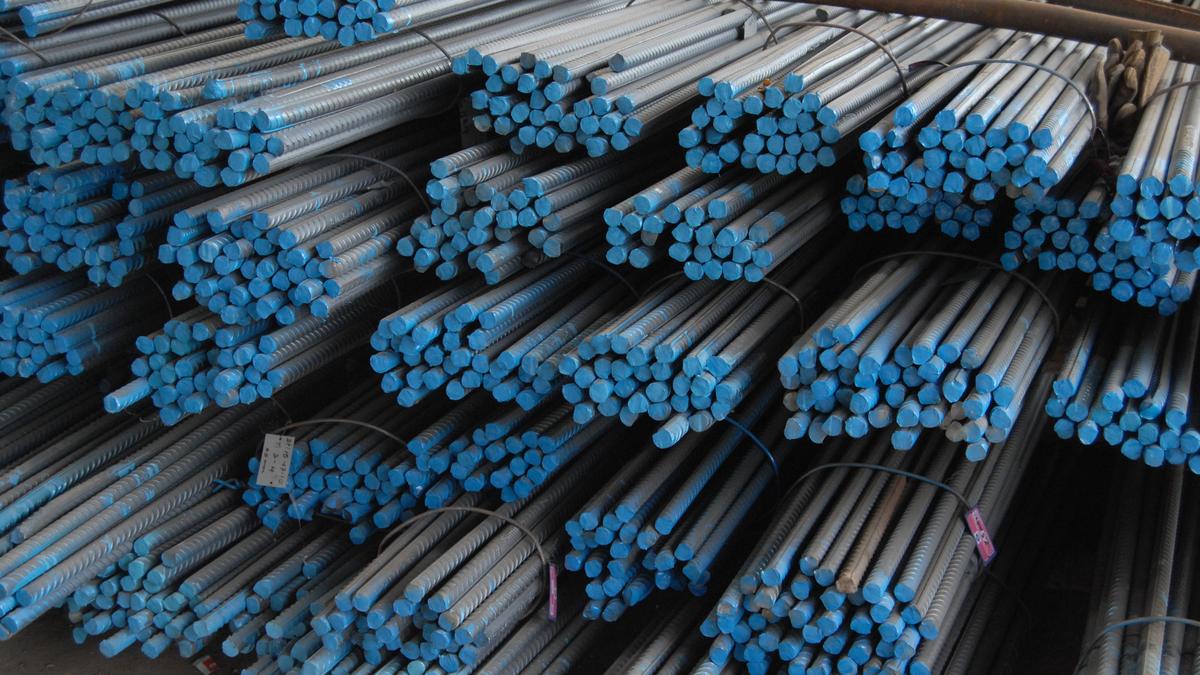
Steel Exchange India Limited has secured a five-year renewal of its approval from the Military Engineer Services (MES) under the Ministry of Defence. This regulatory milestone, confirmed via a filing to the BSE and NSE, validates the company’s ongoing capability to supply TMT bars for critical institutional infrastructure projects. The renewal encompasses Fe 500D and Fe 500D HCRM grade TMT bars in sizes from 8 mm to 32 mm, all manufactured at the company’s integrated facility in Sriram Puram, Vizianagaram, Andhra Pradesh. By maintaining this status, the firm retains access to a restricted vendor pool that requires stringent adherence to IS 1786:2008 standards and recurring oversight by defence authorities.
Institutional Barriers and Operational Scope
The MES approval process functions as a significant barrier to entry within the Indian steel sector. Unlike open-market retail segments, the institutional procurement channel demands consistent technical compliance and operational transparency. For Steel Exchange India, which operates under the Vizag Profiles Group, this renewal acts as a quality certification that extends beyond simple product specifications. The company utilizes TEMPCORE technology to meet these requirements, integrating its sponge iron, billet, and rolling mill capacities to maintain supply chain control. The necessity for periodic inspections by MES officials ensures that the company cannot deviate from its established manufacturing protocols without risking its vendor status, effectively locking the firm into a high-compliance operational framework.
Market Positioning and Volatility Profile
As of late Wednesday morning, Steel Exchange India shares traded at ₹10.27 on the NSE, reflecting a 2.50 per cent gain. Despite this move, the company’s market capitalisation remains modest at approximately ₹1,280.90 crore. The stock exhibits a high-volatility profile, underscored by an annualised volatility rate of 52.35 per cent and an applicable margin rate of 75 per cent. While the stock has appreciated by roughly 30 per cent over the past twelve months, it continues to trade below its 52-week high of ₹11.55, which was reached in July 2025. This price action suggests that while institutional renewals provide a floor for long-term revenue visibility, they do not necessarily insulate the equity from the broader liquidity risks associated with small-cap steel manufacturers.
Evaluating the Supply Chain Moat
Investors should distinguish between the operational stability provided by the MES renewal and the underlying financial health of the company. The SIMHADRI TMT brand is now positioned to continue its participation in government-led infrastructure initiatives, which are generally less sensitive to the cyclical price wars seen in the retail construction market. However, the reliance on captive power generation and integrated plant efficiency means that any disruption in raw material costs or energy inputs could compress margins despite the secure order flow. The renewal does not guarantee volume; it only guarantees eligibility. Future performance will depend on the company’s ability to scale production at the Sriram Puram plant while managing the high-volatility risks inherent in its current capital structure. For those tracking stock market analysis, this event serves as a case study in how regulatory accreditation functions as a primary competitive advantage for smaller industrial players. The firm’s ability to navigate the 75 per cent margin requirement while maintaining its defence-grade output will be the primary indicator of its operational resilience in the coming quarters.