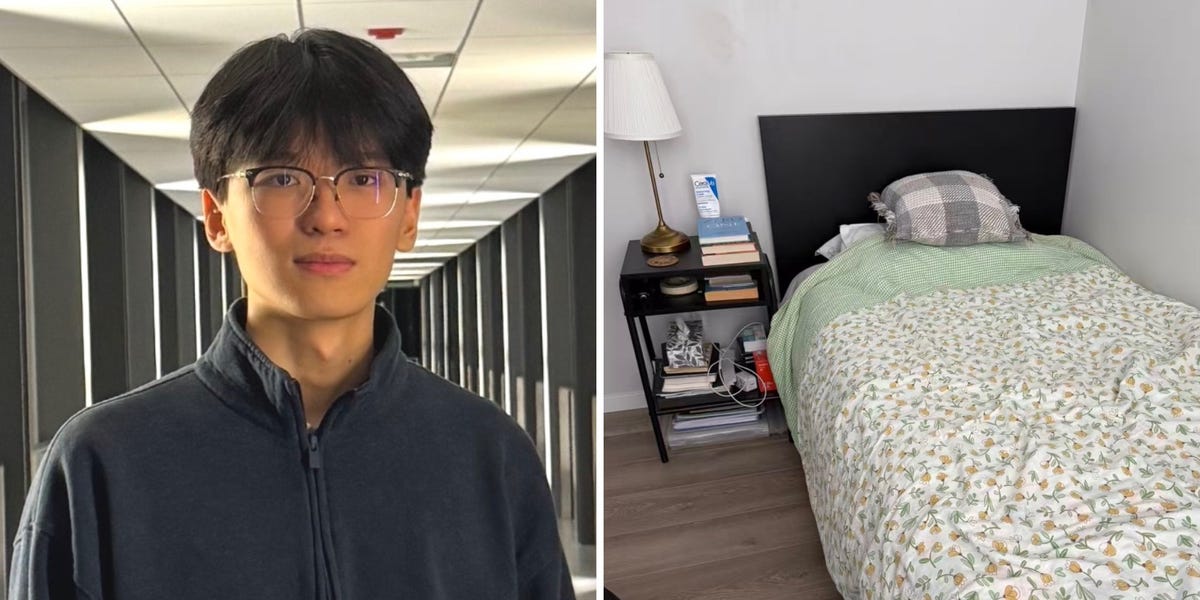
Three young AI startup founders tracked their sleep for four days. Results ranged from 5 hours to a strict 7-hour routine with magnesium and a Whoop band.
The AI founder set has built a culture around extreme schedules and sober living. Sleep habits, though, divide the group.
Silicon Valley offers two competing sleep philosophies. The biohacker camp says rest optimizes performance. The hustle camp says founders should work through the night. Business Insider tracked three young founders for four days, asking them to text details of their prior night's sleep each morning.
The results show a split.
Lance Yan, the 19-year-old founder of the AI startup Traverse, often gets 5 to 6 hours of sleep. He knows sleep is important – Bryan Johnson spoke to his Y Combinator batch – but work comes first. "If there's any work, I usually end up staying on longer and dragging it out," he said.
His Y Combinator schedule was worse. "We would wake up when it was dark, and go to sleep when it was sunny," Yan said. He still works late and doomscrolls in bed before falling asleep, then starts working almost immediately when he wakes up. "There has to be a balance between chilling and locking in," he said.
Kavitta Ghai takes the opposite approach. The 29-year-old cofounder of the ed-tech startup Nectir will not pull an all-nighter. She can see the effect of sleep deprivation in her work and cognitive function, she said. She stops everything to get 7 hours.
Ghai's best thinking comes in the late evening and early morning, so she often does not sleep until 3 a.m. Her chief of staff knows: no meetings until 11 a.m. Nectir is remote and will stay remote, she said, so employees can work on their own schedules. "It allows people to do their work on their schedule," she said.
She is exacting about sleep. Magnesium every night. Temperature between 66 and 68 degrees. A sleep mask and a Whoop band. She does not touch the bed until bedtime. She falls asleep in under 3 minutes.
Boris Skurikhin, the 26-year-old cofounder of the AI startup Docket, sits in the middle. He has an expensive mattress with no bed frame – he has one but has not assembled it yet. "I will do it soon," he said. "I keep telling myself this."
He gets in bed around midnight and watches a documentary or a long YouTube video. He does not scroll. He is not one to cut sleep. He described a "grindmaxxer" in his coworking space who works constantly and never sleeps. "He was also the hospitalmaxxer," Skurikhin said. "It's just not healthy."
Drafted by a large language model from the source reporting linked above, then screened by automated publishing checks. It is not read by a journalist before publication. Some articles cite our Alpha Score. Verify prices and figures against the original source. Educational coverage, not personalized advice.