Stocks● Neutral
Startup Accelerator Stepping Up: $1M Revenue Milestone
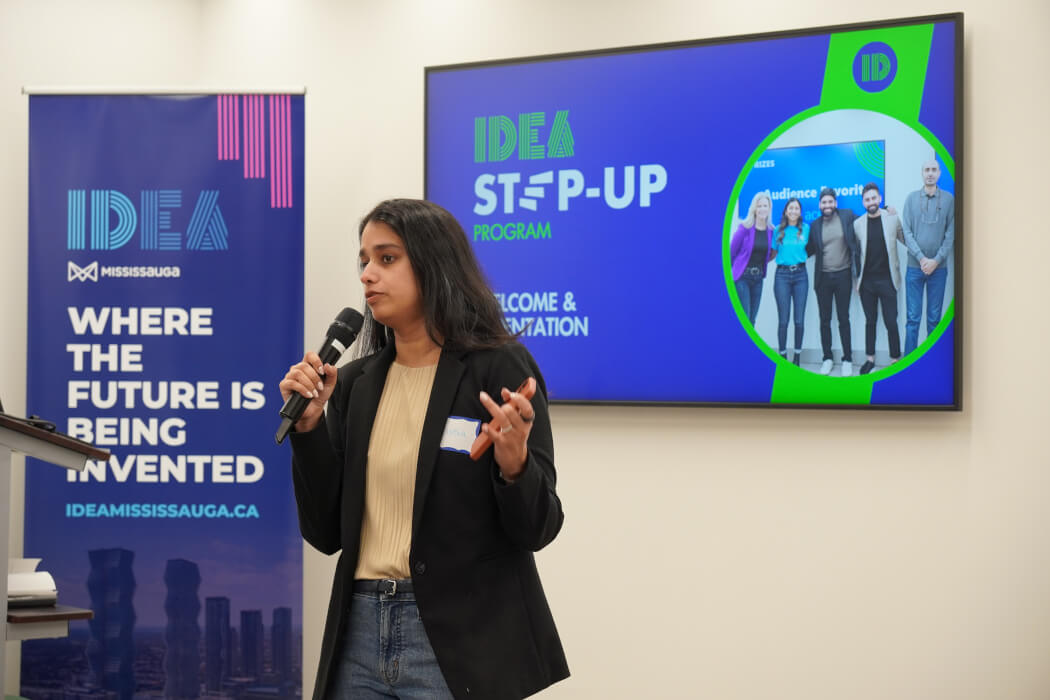
Food Mamba crossed $1M revenue in 6 months. Step-Up program alumni raised $15M. Here is what the messy-middle accelerator teaches about scaling discipline and pre-seed valuation.
Continue with
The IDEA Mississauga Step-Up Program is not your typical accelerator – it is a hybrid venture studio designed to bridge the gap between early traction and scale. The latest cohort, wrapping up in June, produced a standout case: Food Mamba, a corporate catering platform that crossed the $1-million revenue mark within six months of joining the program. That number, alongside the program's cumulative $15 million in capital raised by alumni over two years, changes the investment case for pre-seed companies in the Mississauga ecosystem.
What the Food Mamba Result Tells You About Scaling Discipline
The Naïve Read: Fast Growth Means a Great Product
The simple take is that Food Mamba hit $1 million in revenue because its corporate catering tech met demand. The company now serves 300+ corporate clients, works with 200 restaurant vendors, and employs a full-time staff of nine (five in Canada, four in Pakistan). That looks like a classic product-market fit story: founders built something people wanted, and the market responded.
The Better Read: The "Messy Middle" Is Where Execution Risk Kills Growth
The program's thesis – and the reason its Step-Up structure exists – is that the transition from building a product to building a repeatable business is where most startups stall. Alieu Jallow, Entrepreneurship & Innovation Specialist at IDEA, frames it directly: founders often have a high-level sense of what they need but have not drilled down into the systems required to get there. The program focuses on fundraising, strategy, sales, and hiring as foundational practices, not as abstract concepts.
Risk to watch: Revenue acceleration without operational discipline tends to invert unit economics. The Step-Up model targets that risk before it compounds.
How the Cohort Mix Shapes the Investment Case
Sector Targeting Explains the Capital Efficiency
Step-Up targets life sciences, advanced manufacturing, and tech – sectors where Mississauga already has an established ecosystem but where companies lack the structured support to scale. The program deliberately limits cohorts to 10–12 companies and replaces traditional workshops with working sessions Jallow calls "conversations." That small size allies with the capital efficiency seen in the alumni data: $15 million raised across two years implies each company raised about $1–2 million, which is typical for pre-seed/seed rounds in those sectors.
The Hands-On Layer: Executives-in-Residence
Beyond mentoring, the program embeds senior leaders inside the businesses through its Executives-in-Residence provision. Founders access up to $200,000 in resources, support, and perks. That direct support reduces the failure rate in the messy middle, which historically has been a graveyard for fast-growing but operationally weak startups.