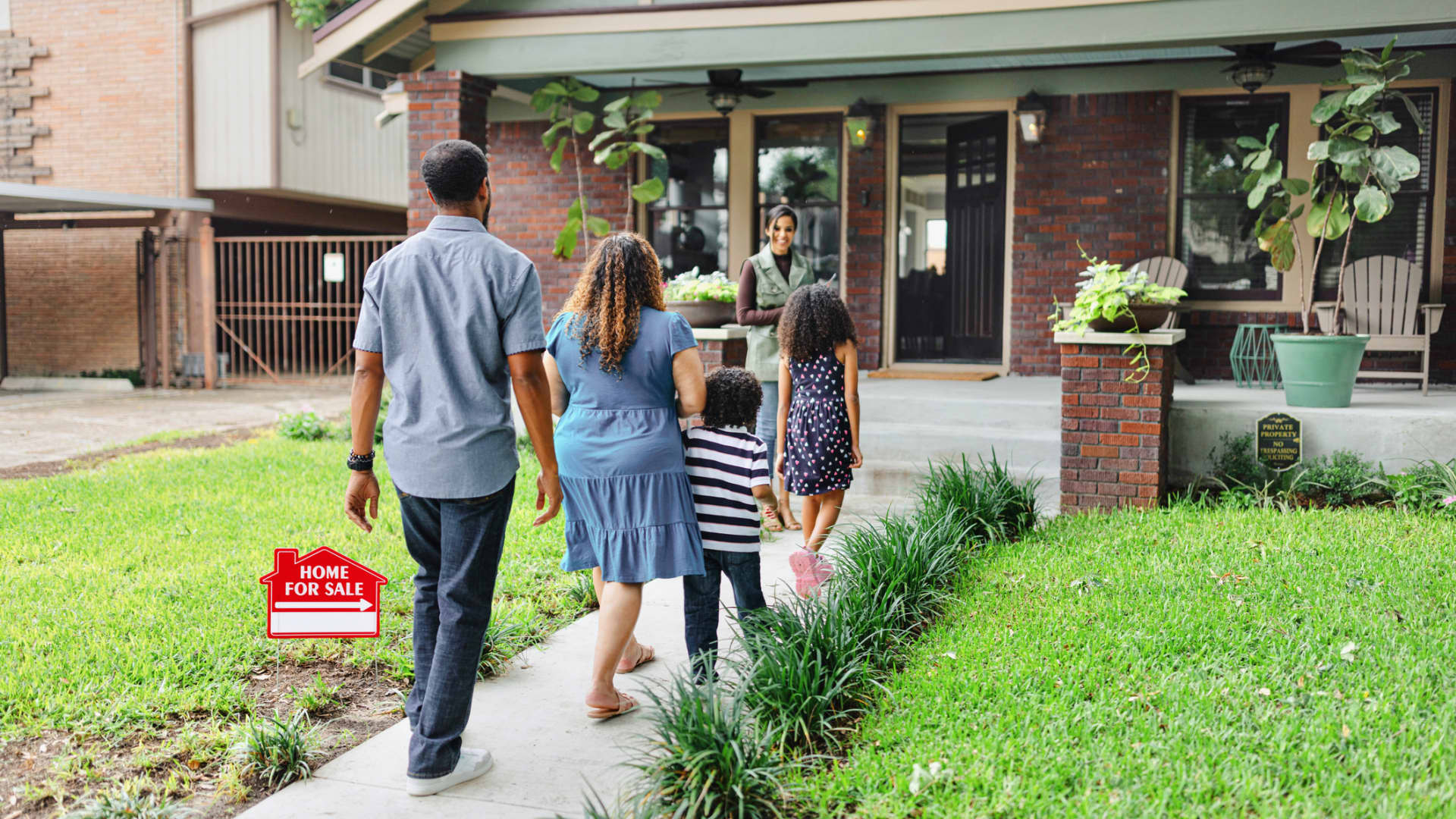
Sales of starter homes fell 5.4% in May from a year earlier, despite a 4.5% increase in available inventory, according to a Zillow report. The typical starter home – defined as the lowest-priced third of properties – was valued at $202,000 nationally in May, up 2.3% from a year ago.
"Starter-home buyers have more choices, more price cuts and less competition," said Kara Ng, a senior economist at Zillow and author of the report. "The unfortunate reason for that advantage is that starter-home buyers are either unwilling or unable to purchase a home."
Inflation is making it harder for would-be buyers to save for a down payment, Ng said, even as rent growth has slowed.
Luxury homes tell a different story. Sales of properties in the top 5% of values, with a national median of about $1.9 million, rose 6.2% year over year in May, the report found.
The split mirrors the K-shaped recovery many economists cite: stock market gains are lifting demand at the high end, while rising everyday costs squeeze lower-income households.
The broader housing market is still expensive. The median price of an existing home hit an all-time high of $440,600 in June, up 49.2% from June 2020, the National Association of Realtors reported. That was 1.8% higher than a year earlier, a pace well below the double-digit annual increases during the pandemic.
Higher mortgage rates compound the problem. The average 30-year fixed-rate mortgage stood at 6.75% Wednesday, according to Mortgage News Daily, after dipping below 6% in late February. The Iran War and the related inflation risk pushed them back up.
"Buyers are up against these nearly 7% mortgage rates and can't afford to buy at these high rates and high prices," said Daryl Fairweather, chief economist at Redfin.
If rates dropped to 5%, Fairweather said, sales would pick up almost immediately. She called that scenario "pretty far-fetched" given interest rates appear likely to stay elevated.
The math on rate moves is straightforward. A 6.75% rate on a $202,000 mortgage produces a monthly principal-and-interest payment of $1,310, Bankrate's calculator shows. At 5%, that payment falls to $1,084. At 3%, it drops to $852.
Luxury buyers are less affected by mortgage rates because they "can sell stock or liquidate assets in order to buy a home without having to even get a mortgage," Fairweather said. Borrowers in that bracket also tend to be less sensitive to the rate.
Property taxes and insurance, often bundled into monthly payments, have also climbed sharply since 2019, according to data provider Cotality.
The bipartisan 21st Century ROAD to Housing Act, signed into law in July, targets the supply side. It combines dozens of measures to encourage construction, expand financing access and limit purchases by large institutional investors.
The effect on buyers will take time. As of 2025, the U.S. faced a shortage of more than 4 million homes, according to Realtor.com. Most economists say reversing that deficit is a multiyear effort.
In the meantime, young buyers face a trade-off, Fairweather said. "Do they want to live somewhere that has the best job opportunities, or do they want to live where home ownership will be much easier to access at a younger age but they might not earn as much over their lifetime?"