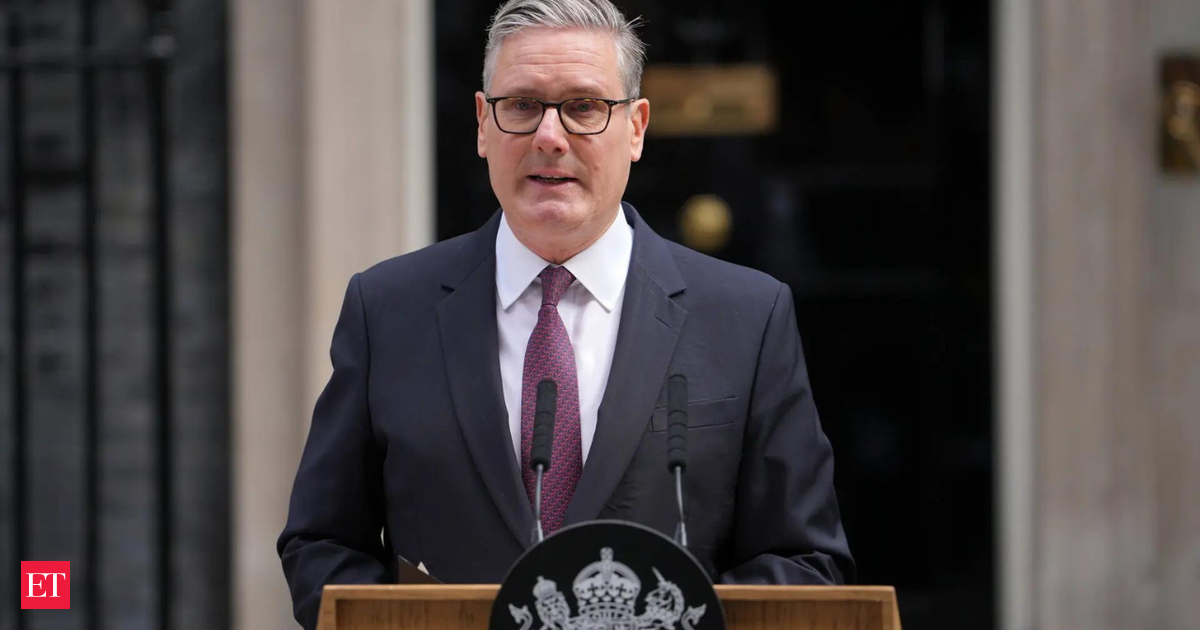
UK Prime Minister Keir Starmer resigned Monday after a rebellion within the Labour Party, triggering a leadership contest that will determine both the party's next leader and the country's next prime minister before Parliament returns in September.
Starmer becomes the sixth British PM to leave office in less than a decade, a stretch of political churn that has weighed on UK asset valuations. The pound slipped 0.3% against the dollar in late London trading as the news broke, though volumes were light.
The immediate focus lands on Labour's National Executive Committee (NEC), which will oversee the succession. Nominations open July 9 and close July 16, just before Parliament's summer recess. Candidates need backing from Labour MPs and party affiliates. If multiple candidates qualify, the contest moves to a vote among Labour members. The party wants a winner before September.
Until then, Starmer remains in a caretaker role. Because Labour holds a parliamentary majority, the next Labour leader automatically becomes prime minister without a general election. The winner will travel to Buckingham Palace to be invited by the King to form a government.
The leadership field is taking shape. Labour rival Andy Burnham strengthened his standing by winning a parliamentary seat, fueling speculation he could mount a serious challenge. Others are expected to enter before the nomination deadline.
Market questions
The core uncertainty for traders is whether the next leader doubles down on Starmer's fiscal discipline or pivots toward higher spending. Starmer's government kept a tight lid on borrowing, which helped stabilise UK gilt yields after the Truss-era turmoil. A shift to a more expansionary platform could revive gilt volatility and pressure sterling.
History offers a loose guide. The post-Truss leadership contest (which produced Sunak) saw gilt yields fall as markets priced in fiscal orthodoxy. The current race lacks that clear signal. The field includes candidates with divergent tax-and-spend preferences, and the process is opaque until candidates declare and publish platforms.
The path that matters
A contested race with no front-runner would stretch the timeline and prolong policy uncertainty – negative for GBP and rate-sensitive sectors. A quick coronation, by contrast, would reduce the risk premium.
Burnham's rise as a potential candidate is a wildcard. He has advocated for more public investment and tighter regulation on utilities and housing. If he wins, infrastructure and renewable energy stocks could see a short-term boost on spending expectations, while developers and regulated utilities face headwinds.
None of this is priced yet. UK assets have been drifting on global macro drivers – a strong dollar, weak European data – with the political angle underappreciated. The July 9–16 nomination window is the next concrete marker. A crowded field would confirm the dollar-positive, gilt-negative scenario. A single candidate emerging early would favor a relief rally in sterling and shorter-dated gilts.
The leadership race unfolds in parallel with the broader political backdrop: Labour's slim poll lead has eroded, and the next general election must be called by January 2029. Whoever wins the contest will inherit a party that is far from secure in power.
Nominations close July 16. Parliament returns September. The pound will move on every development along the way.