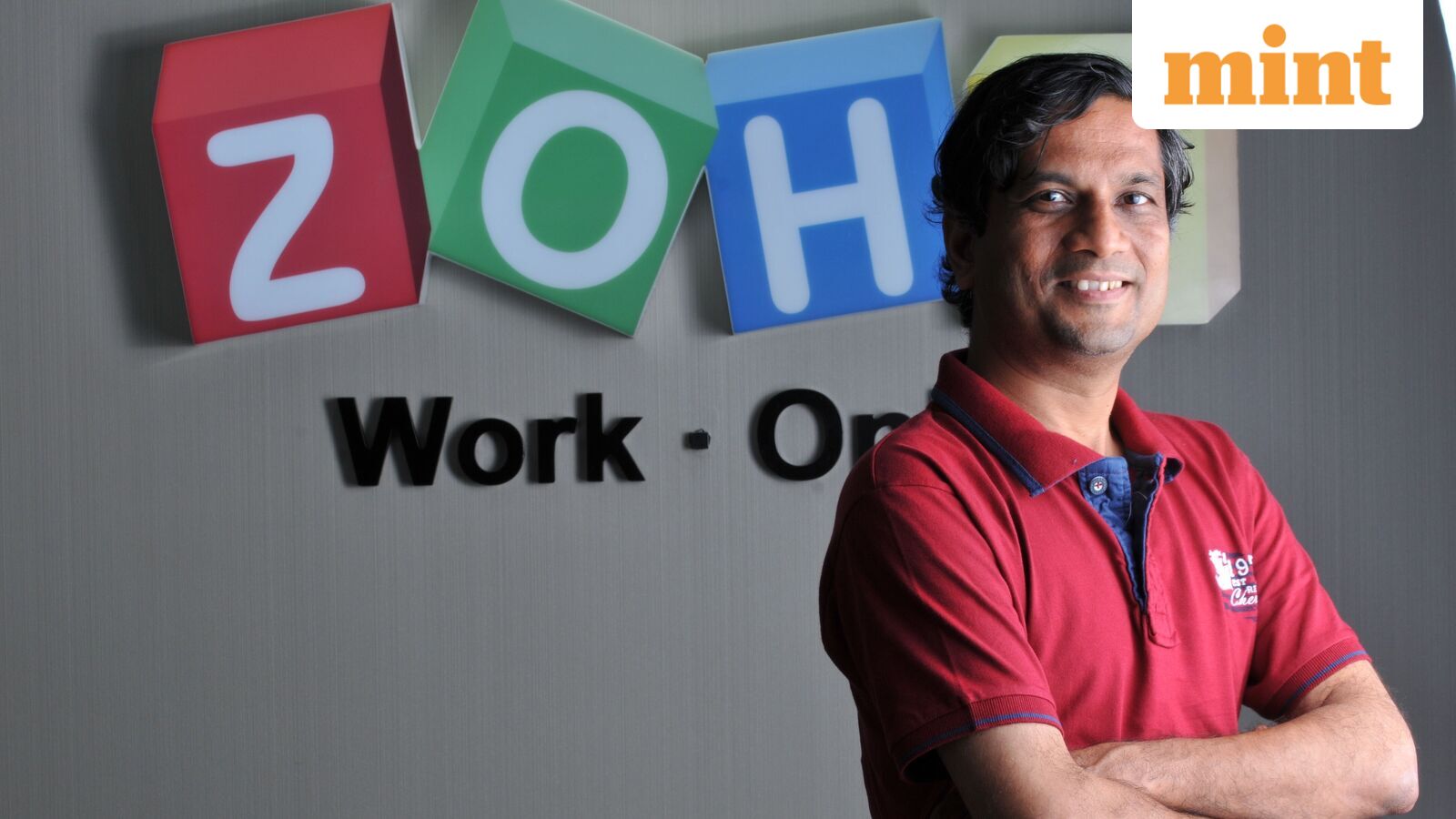
In the current cycle of hyper-accelerated technological disruption, the traditional metrics of corporate valuation—capital reserves, headcount, and market share—often obscure the underlying fragility of a business model. Sridhar Vembu, the co-founder of Zoho Corporation, recently distilled the essence of long-term survival into a singular focus: the internal capacity to recover from failure and the agility to reshape operations in response to new realities. For the market observer, this is not merely a philosophical stance on personal development; it is a direct critique of the capital-intensive, venture-dependent growth models that currently dominate the software-as-a-service (SaaS) sector.
The Mechanism of Bootstrapped Resilience
Most modern tech firms rely on external venture capital to fuel customer acquisition costs (CAC) and rapid scaling. When market liquidity tightens or interest rates rise, these firms face immediate existential pressure. Zoho, by contrast, has remained debt-free and bootstrapped since its inception in 1996. By avoiding external funding, Vembu eliminated the pressure to prioritize quarterly growth targets over operational sustainability. This structure allows the company to pivot its R&D focus—such as his recent transition from CEO to Chief Scientist to lead AI initiatives—without the immediate scrutiny of public shareholders or venture partners demanding short-term returns on capital.
When evaluating companies in the software space, investors often overlook the "cost of capital" embedded in the business model. Firms like CRM or HUBS operate under different constraints than a private, bootstrapped entity. While the former must maintain aggressive growth to justify high valuation multiples, the latter can prioritize "transnational localism." This strategy, which involves decentralizing operations into rural regions, serves as a hedge against the rising costs of talent and infrastructure in major tech hubs. For the trader, the lesson is clear: a company that does not rely on external capital is inherently more capable of surviving a prolonged period of market volatility.
Valuation and the Myth of Static Assets
Market participants frequently treat intellectual property and current product suites as fixed assets. However, in an era where AI can render entire software categories obsolete overnight, these assets are depreciating. Vembu’s framework suggests that the only truly appreciating asset is the organizational capacity to learn and reconfigure. In the context of stock market analysis, this implies that valuation models should place a higher premium on management teams that demonstrate a history of operational pivots rather than those that simply possess a large, static patent portfolio.
Consider the difference between a firm that builds walls—rigid, expensive, and difficult to maintain—and one that builds windmills. A firm that builds walls is one that relies on a single product line or a specific, narrow market segment. When that segment is disrupted, the firm crumbles. A firm that builds windmills is one that uses its internal talent to capture the energy of disruption. This is the difference between a company that requires constant capital injections to stay relevant and one that generates its own momentum through internal innovation.
Risk Exposure and the Operational Pivot
For those tracking the broader tech sector, the risk is not just the failure of a specific product, but the failure of an entire business model to adapt to the shift toward asynchronous, AI-driven work. The 2020s have proven that global supply chains and labor markets are subject to sudden, non-linear shocks. Companies that have not built "mental and emotional bandwidth" into their leadership teams are likely to struggle when the next wave of change hits.
AlphaScala data currently reflects a cautious outlook on several major software players, with CRM holding an Alpha Score of 41/100 and HUBS at 37/100. These scores reflect the difficulty these firms face in maintaining growth while navigating the current shift in enterprise spending. By contrast, real estate-linked entities like WELL show an Alpha Score of 53/100, indicating that different sectors are currently absorbing market pressures with varying degrees of success.
The Catalyst for Future Performance
What would confirm the value of this adaptive approach? Look for companies that are actively reducing their reliance on external debt or venture funding while simultaneously increasing their investment in internal R&D. A company that is willing to cannibalize its own revenue streams to adopt new technologies is a company that is building the "windmills" Vembu describes. Conversely, a company that doubles down on legacy products to protect margins is a company that is building walls.
Investors should monitor the R&D-to-revenue ratio as a proxy for this adaptability. If a firm is spending heavily on R&D but failing to launch new, competitive products, it is likely suffering from a lack of internal agility. If a firm is lean, debt-free, and consistently shifting its focus toward emerging technologies, it is likely to be the one that survives the next cycle of disruption. The ultimate test for any management team is not how they perform during a bull market, but how they reshape their business when the environment changes. Those who prioritize the internal capacity to recover from failure will always be better positioned than those who rely on external capital to mask their lack of flexibility.