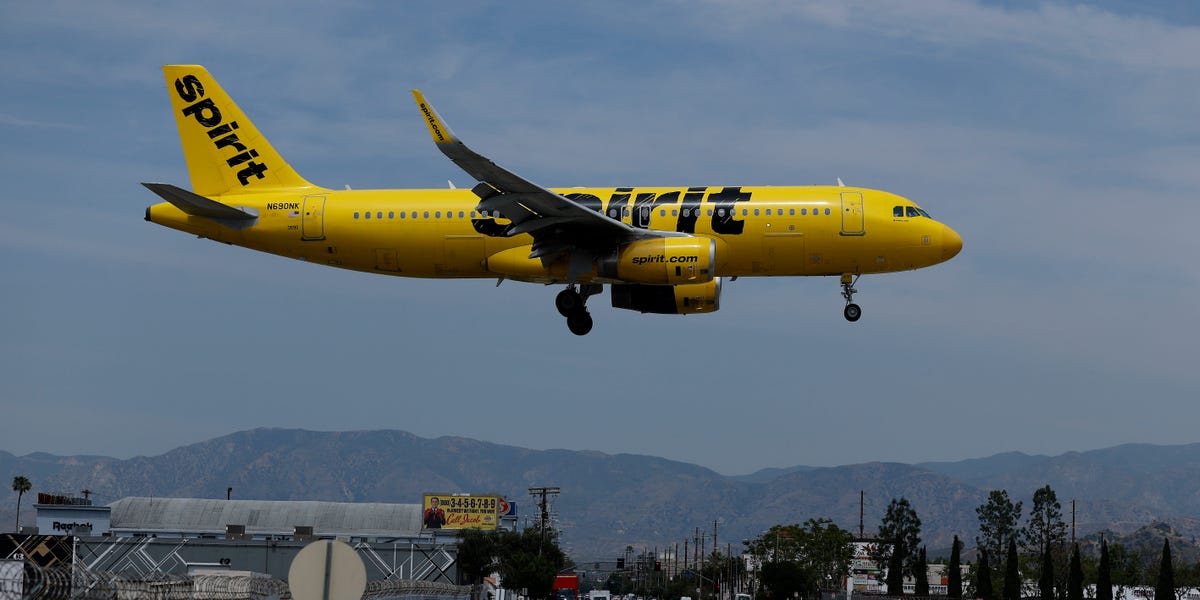
Spirit Airlines Faces Structural Uncertainty Amid Potential Federal Intervention

The prospect of federal intervention in Spirit Airlines has shifted the narrative from a standard corporate restructuring to a broader debate on government involvement in aviation solvency.
Alpha Score of 45 reflects weak overall profile with strong momentum, poor value, poor quality, weak sentiment.
HASBRO, INC. currently screens as unscored on AlphaScala's scoring model.
Alpha Score of 51 reflects moderate overall profile with poor momentum, strong value, strong quality, weak sentiment.
Alpha Score of 47 reflects weak overall profile with moderate momentum, poor value, moderate quality. Based on 3 of 4 signals — score is capped at 90 until remaining data ingests.
The prospect of federal intervention in Spirit Airlines has shifted the narrative from a standard corporate restructuring to a broader debate on government involvement in aviation solvency. President Donald Trump recently signaled an openness to the government taking an equity stake in the carrier, a move that introduces significant questions regarding the company's long-term operational viability and the precedent such an action sets for the sector.
Operational Viability and Government Equity
The core issue facing Spirit Airlines remains the fundamental sustainability of its business model under current debt and liquidity constraints. While a government-backed equity stake could provide a short-term lifeline, it does not address the underlying competitive pressures or the structural costs that have hampered the airline's performance. The market is now forced to weigh whether federal assistance serves as a bridge to a viable future or merely delays a necessary consolidation or liquidation process.
Industry observers remain divided on the efficacy of this approach. The primary concerns center on whether government intervention can successfully navigate the complexities of airline operations without distorting market competition. If the state becomes a stakeholder, the company must balance its commercial obligations with potential political mandates, which could complicate future strategic pivots or fleet management decisions.
Sector Read-Through and Competitive Dynamics
The potential bailout of a single carrier creates a ripple effect across the broader aviation sector. If the government establishes a framework for equity-based support, other struggling airlines may seek similar arrangements, potentially altering the competitive landscape for established players. This shift could lead to a scenario where inefficient operators are kept afloat by federal capital, preventing the natural market correction that typically follows periods of overcapacity or poor financial management.
Investors are currently assessing the following risks associated with this potential policy shift:
- The dilution of existing shareholder equity if the government receives preferential terms for its stake.
- The imposition of operational restrictions that limit the airline's ability to adjust routes or pricing to meet demand.
- The long-term impact on credit ratings and debt servicing costs for the broader airline industry.
AlphaScala Market Context
While the aviation sector has historically relied on various forms of federal support during periods of systemic crisis, the current situation with Spirit Airlines is distinct due to its specific financial distress rather than a macro-level industry collapse. Our internal analysis suggests that the market is pricing in a high degree of volatility as it awaits concrete details on the structure of any proposed intervention. The lack of a clear precedent for this specific type of equity-based bailout leaves the valuation of the stock highly sensitive to political rhetoric rather than traditional fundamental metrics.
For those tracking the broader impact of such interventions, it is useful to monitor how valuation shifts drive renewed interest in mid- and small-cap segments when capital allocation becomes unpredictable. The next concrete marker for this situation will be the formal filing of any assistance proposal or a definitive statement from the Department of Transportation regarding the conditions of a potential bailout. Until then, the company remains in a state of limbo where its operational strategy is secondary to the evolving political discourse.
AI-drafted from named sources and checked against AlphaScala publishing rules before release. Direct quotes must match source text, low-information tables are removed, and thinner or higher-risk stories can be held for manual review.