SPCX’s first day after its IPO ended better than some expected. The stock didn’t crater despite the company’s current profitability and valuation concerns. The S&P 500 and Nasdaq opened weak, then stabilized – a recovery the analyst Monica Kingsley had flagged for clients.
At the same time, peace-deal chatter started circulating over the weekend. By Monday, expectations that nothing would happen had faded. Markets began pricing a deal that would not derail or send oil spiking, Kingsley noted. The key driver now sits in the dollar and bond markets.
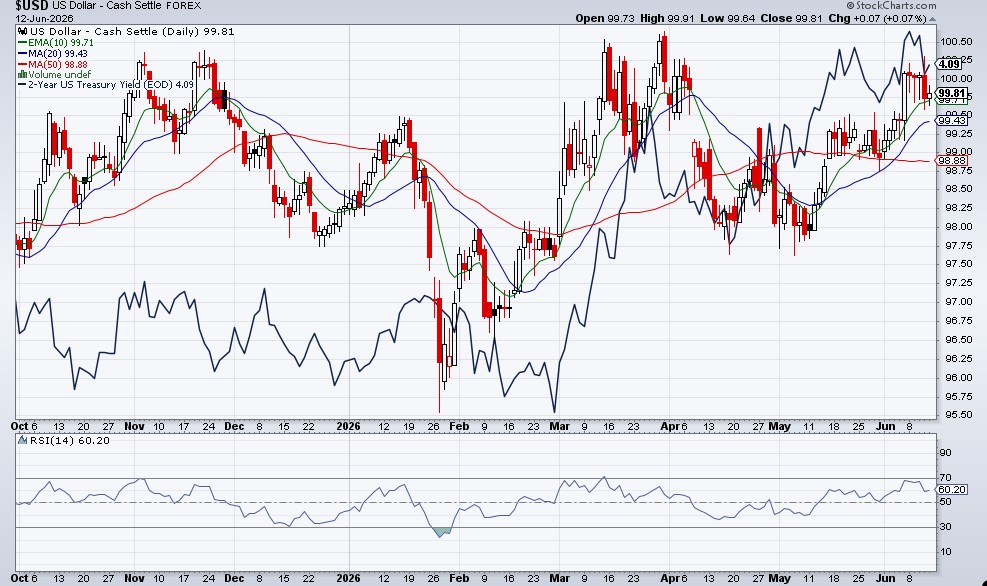
The dollar is rising, pushed by higher yields. Those yields are climbing alongside inflation expectations. That pairing – a strong dollar plus rising real yields – tends to pressure commodities and equities in different ways. For oil, the peace deal removes a geopolitical risk premium without adding a supply shock. For stocks, the dollar strength could tighten financial conditions even if the Fed stays on hold.
Kingsley’s charts (via StockCharts) show a dollar index that looks constructive on a breakout above recent range. The implication for gold and copper is a headwind unless yields soften. The peace deal narrative, whatever its resolution, is now acting as a catalyst for dollar positioning.
The practical read: watch the dollar-yield couplet more than the headline risk. If the dollar extends its breakout, oil and metals will need a separate catalyst to rally. If the peace deal falls apart, oil gets a bid and the dollar’s rally slows. Either way, the initial move is priced.