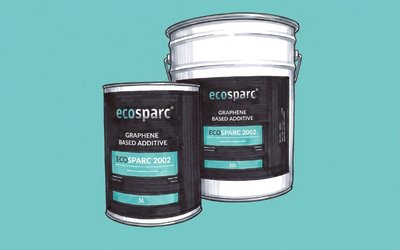
Sparc Technologies has reached a definitive commercial milestone with the announcement that AkzoNobel will integrate the ecosparc additive into its Interzone 954 protective coating product line. The rollout is scheduled for the Australian market beginning in May 2026. This agreement transitions the technology from the development and testing phase into a standardized industrial application within a major global coatings portfolio.
Scaling Graphene Integration in Industrial Coatings
The integration of ecosparc into Interzone 954 represents a shift in how graphene-enhanced additives are deployed in heavy-duty industrial environments. Interzone 954 is widely utilized for its durability in harsh conditions, and the inclusion of Sparc’s additive is intended to improve performance metrics for protective coatings. By securing a release date with a multinational partner, Sparc moves past the hurdle of proving efficacy in laboratory settings to establishing a verifiable supply chain for its proprietary material.
This development provides a clear signal regarding the adoption curve for advanced materials in the protective coatings sector. While many graphene-based technologies remain in pilot programs, the commitment to a specific commercial launch date suggests that the technical validation process has met the requirements of large-scale industrial manufacturers. The success of this product in the Australian market will likely serve as a primary indicator for potential expansion into other global regions where AkzoNobel maintains a significant footprint.
Strategic Implications for Material Suppliers
For smaller technology firms, the path to revenue often depends on the ability to embed proprietary additives into the established distribution networks of industry incumbents. The partnership with AkzoNobel mitigates the need for Sparc to build independent manufacturing and sales infrastructure for the coating product itself. Instead, the company can focus on the scaling of its additive production to meet the requirements of the 2026 launch.
Investors should monitor the lead-up to the May 2026 release for updates on production capacity and potential secondary agreements. As the industry continues to evaluate the cost-benefit ratio of graphene-enhanced materials, the performance data generated by the commercial release of Interzone 954 will be critical. This case study in material integration highlights the importance of aligning with established players to achieve market penetration in the competitive industrial chemicals space. For broader context on how industrial firms manage their supply chains and product innovation cycles, see our latest stock market analysis.
Market Context and Next Markers
The transition to commercialization requires consistent quality control and volume production capabilities. The next concrete marker for this partnership will be the publication of technical data sheets or performance case studies leading up to the May 2026 launch. These documents will provide the necessary evidence for end-users to justify the adoption of the new coating formulation over traditional alternatives.
While Sparc Technologies operates in a different segment than energy-focused firms like E (ENI SPA), which currently holds an Alpha Score of 65/100, the reliance on industrial partnerships remains a common theme across the energy and materials sectors. The ability to maintain a consistent output of high-grade graphene will be the primary operational challenge for Sparc as it prepares for the 2026 deadline. Future filings should be scrutinized for details on production scale-up and any expansion of the agreement into additional product lines or geographic territories.